
Species Name
White Shark
Scientific Name
Carcharodon carcharias (linnaeus, 1758)
Family Name
Lamnidae
IUCN Status
Vulnerable
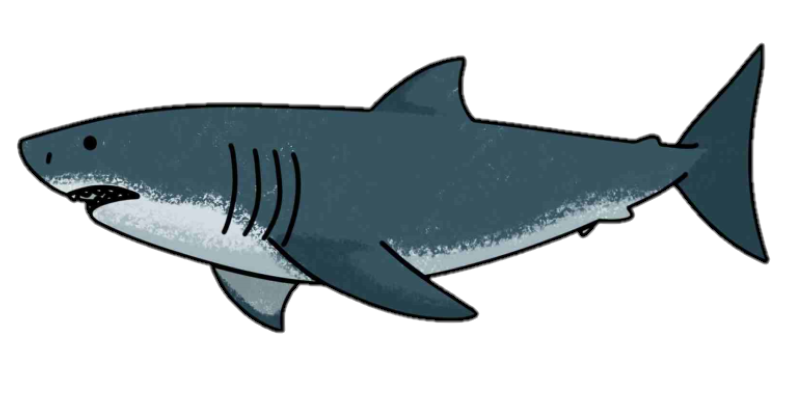
A huge, spindle-shaped shark with conspicuous black eyes, a blunt, conical snout and large, triangular, saw-edged teeth. First dorsal-fin origin usually over the pectoral-fin inner margins. Caudal fin crescentic. Lead-grey to brown or black above, lighter on sides, and abruptly white below. Black spot at rear pectoral fin base.
Biology
Length: The maximum size is undetermined, but estimated at 600–640 cm total length (TL). Males mature at 310–410 cm TL; the majority of females mature at 400–500 cm TL but have been reported as immature at 472–490 cm TL; and, size at birth is 120–150 cm TL.
Gestation Period: Unknown
Litter Size: 2–17
Life Expectancy: In the Northwest Atlantic, Northeast Pacific, and Western Indian Oceans, female age-at-maturity of 30–33 years and maximum age of 30–73 years were reported based on bomb radiocarbon validated ages. Due to the accurate method of bomb radiocarbon ageing, these are possibly more accurate than the previous lower estimates of female age-at-maturity of 7–15 years and maximum ages of 18–30 years. Using the precautionary approach and the validated, most conservative bomb radiocarbon ages of age-at-maturity of 33 years and maximum age of 73 years, generation length is 53 years. The bomb radiocarbon maximum age is accepted as being likely >30 years, minimum of 44 years, and possibly maximum of 73 years. The female age-at-maturity is possibly more contentious and to explore the sensitivity of the global population trend analyses to the younger female age-at-maturity, estimates of female age-at-maturity of 15 years and maximum age of 44 years were also used, that led to a generation length of 29.5 years.
Diet: Feeds on bony fishes, sharks, rays, seals, dolphins and porpoises, sea birds, carrion, squid, octopi and crabs and whales.
Habitat and distribution
Habitat: The White Shark is pelagic and most commonly occurs in temperate continental shelf waters but also ranges into estuaries and the open ocean.
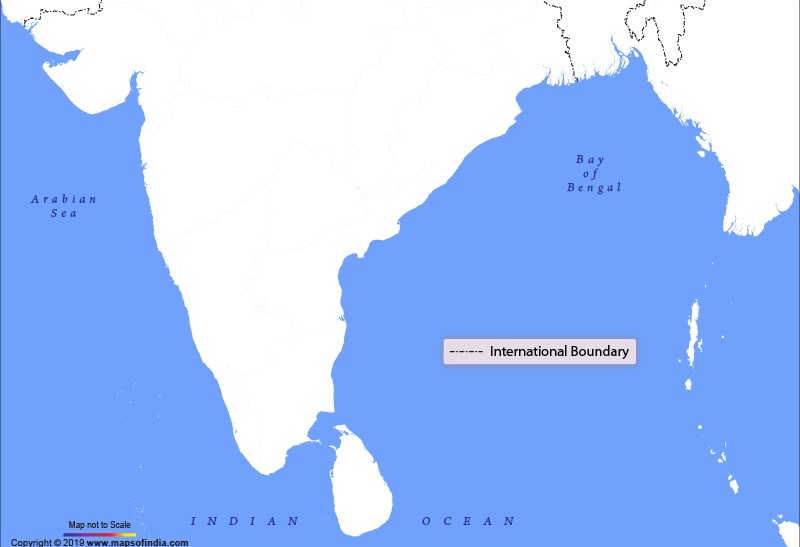
Distribution: The White Shark is wide-ranging throughout most temperate and tropical oceans but occurs most frequently in temperate waters.
Depth: 0-1200 m
Landing sites:
Commercial Value
The White Shark fins and jaws have a high market value with large fins used as display items. Small white shark fins are also present in the international fin trade. Jaws may be retained domestically as curios. The meat may be used fresh for either local consumption or exported internationally.
Threats
The White Shark is caught as bycatch mostly in inshore fisheries in a range of gears, such as longlines, setlines, gillnets, trawls, hand-held rod and reel, and fish-traps; it is rarely caught in offshore pelagic fisheries. The species has a relatively high post-release survival in net fisheries. The White Shark is targeted in beach protection programs in Australia and South Africa that use drum-lines and gillnets; however, in some instances these programs release live sharks. A shark control program in Réunion Island targets Tiger Sharks (Galeocerdo cuvier) and Bull Sharks (Carcharhinus leucas), with no captures of White Sharks reported to date.
References
Humphries, P. (1986)
Observations on the ecology of Galaxiella pusilla (Mack) (Salmoniformes: Galaxiidae) in Diamond Creek, Victoria. Proc. R. Soc. Vic. 98:133-137.
Compagno, L.J.V., D.A. Ebert and M.J. Smale (1989)
Guide to the sharks and rays of southern Africa. New Holland (Publ.) Ltd., London. 158 p.
Long, D.J. (1991)
Apparent predation by a white shark Carcharodon carcharias on a pygmy sperm whale Kogia breviceps. Fish. Bull. 89:538-540.
Ebert, D.A., Fowler, S. and Compagno, L. (2013)
Sharks of the World. A Fully Illustrated Guide. Wild Nature Press, Plymouth, United Kingdom.
Last, P.R. and Stevens, J.D. (2009)
Sharks and Rays of Australia, 2nd edition. CSIRO, Melbourne, Australia.
Bruce, B., Bradford, R., Bravington, M., Feutry, P., Grewe, P., Gunasekera, R., Harasti, D., Hillary, R. and Patterson, T. (2018)
A national assessment of the status of white sharks. National Environmental Science Programme, Marine Biodiversity Hub, CSIRO.
Bruce, B.D. (2008)
The biology and ecology of the white shark, Carcharodon carcharias. In: Camhi, M.D., Pikitch, E.K. and Babcock, E.A. (eds), Sharks of the Open Ocean, pp. 69-76. Blackwell Publishing Ltd, Oxford, UK.
Cailliet, G.M., Natanson, L.J., Weldon, B.A. and Ebert, D.A. (1985) Preliminary studies on the age and growth of the white shark Carcharodon carcharias, using vertebral bands. Southern California Academy of Sciences, Memoirs 9: 49–60.
CITES (2004)
Proposal for inclusion of Carcharodon carcharias in Appendix II. CoP13 Prop. 32. Rev 1. Bangkok, Thailand. Available at: https://www.cites.org/eng/cop/13/prop/index.php.
Compagno, L.J.V. (2001)
Sharks of the World. An annotated and illustrated catalogue of the shark species known to date. Volume 2. Bullhead, mackerel and carpet sharks (Heterodontiformes, Lamniformes and Orectolobiformes). FAO, Rome.
Francis, M.P. (1996)
Geographic distribution of marine reef fishes in the New Zealand region. N.Z. J. Mar. Freshwat. Res. 30(1-2): 35-55.
Pardini, A.T., Jones, C.S., Noble, L.R., Kreiser, B., Malcolm, H., Bruce, B.D., Stevens, J.D., Cliff, G., Scholl, M.C., Francis, M., Duffy, C. and Martin, A.P. 2001. Philopatric females and roving male great white sharks. Nature 412: 139–140.
Pratt, H.L. Jr. (1996)
Reproduction in the male white shark (Carcharodon carcharias). In: A.P. Klimley and D.G. Ainley (eds), Great white sharks: Ecology and Behaviour, Academic Press, Orlando, USA.
Shivji, M.S., Chapman, D.D., Pikitch, E.K. and Raymond, P.W. (2005) Genetic profiling reveals illegal international trade in fins of the great white shark, Carcharodon carcharias. Conservation Genetics 66(6): 1035-1039.
Soldo, A., Bradai, M.N. and Walls, R.H.L. (2016)
Carcharodon carcharias. Mediterranean. The IUCN Red List of Threatened Species 2016: e.T3855A16527829. (Accessed: 4 February 2019).
Springer, S. (1939)
The great white shark, Carcharodon carcharias (Linnaeus), in Florida waters. Copeia: 114-115.
Tanaka, S. (2011)
Age, growth and genetic status of the white shark (Carcharodon carcharias) from Kashima-nada, Japan. Marine and Freshwater Research 62: 548-556.
Uchida, S., Toda, M., Teshima, K. and Yano, K. (1996)
Preliminary Report on near-term foetuses from a white shark caught in Kochi, Japan. In: A.P. Klimley and D.G. Ainley (eds), Great white sharks: Ecology and Behaviour, Academic Press, Orlando, USA.
Wintner, S.P. and Cliff, G. (1999)
Age and growth determination of the white shark, Carcharodon carcharias, from the east coast of South Africa. Fishery Bulletin 97(153-169).