
Species Name
Porbeagle
Scientific Name
Lamna nasus (bonnaterre, 1788)
Family Name
Lamnidae
IUCN Status
Vulnerable
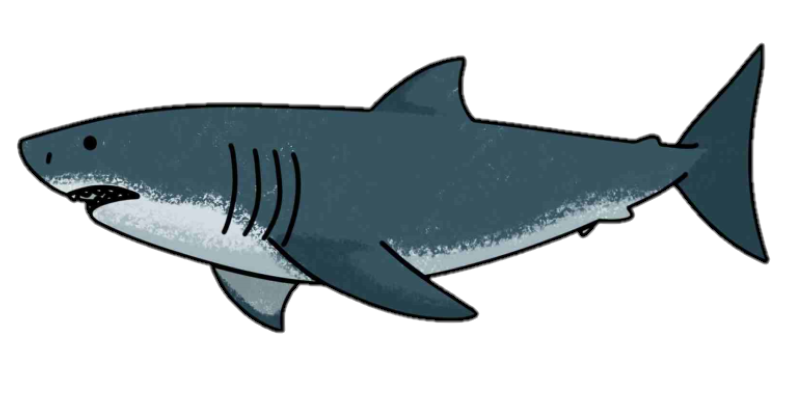
A stout, spindle-shaped shark with large black eyes, a sharp, conical snout, long gill slits, and small, smooth-edged, narrow teeth with side cusps. Strong keels on the caudal peduncle, short secondary keels on the caudal base, and a crescentic caudal fin; the insertion of the small second dorsal fin is above the insertion of the anal fin. Dark grey dorsally, white ventrally, without blotches; rear tip of 1st dorsal abruptly white.
Biology
Length: It reaches a maximum size of 357 cm total length (TL), though maximum size is likely larger in the North Atlantic as individuals >230 cm TL are rare in the Southwest Pacific. Males mature at 140–165 cm TL in the Southern Hemisphere and 155–177 cm TL in the North Atlantic, females mature at about 170–195 cm TL in the Southern Hemisphere and 200–219 cm TL in the North Atlantic. Size at birth of 68–78 cm TL.
Gestation Period: 8-9 months
Litter Size: 1-5
Life Expectancy: Female age at maturity is 13 and 16.5 years and maximum age is 26 and 60 years; generation length is therefore 19.5 and 38.3 years, respectively.
Diet: Feeds on small and medium-sized pelagic schooling species, other sharks, squid and demersal fishes (cod, white hake, red hake, haddock and cusk.
Habitat and distribution
Habitat: Occurs inshore to offshore fishing banks and occasionally to open ocean areas. It is migratory, moves generally along the continental shelves (inshore to surface during simmer) and winters offshore in deeper water. Most abundant on continental offshore fishing banks but also found far from land in ocean basins and occasionally close inshore.
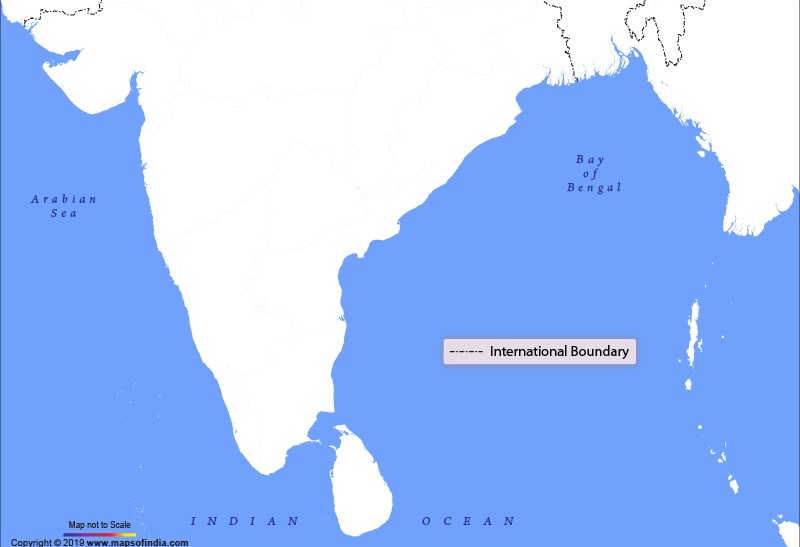
Distribution: The Porbeagle has an anti-tropical and disjunct distribution, occurring in the North Atlantic and Southern Hemisphere in temperate and cold-temperate waters (Ebert et al. 2013). Porbeagles do not occur in the North Pacific, where they are replaced by the congener, the Salmon Shark (Lamna ditropis).
Depth: 0-1809 m
Landing sites:
Commercial Value
The Porbeagle is used for its fins, liver oil, and high-quality meat. Together with the Salmon Shark, the two species accounted for 0.2% of the fin imported in Hong Kong in 2014. In some counties, such as Spain, Porbeagle meat accounts for a significant proportion, at 15%, of all shark meat imported annually.
Threats
The Porbeagle is caught globally as target and bycatch in commercial and small-scale pelagic longline, purse seine, and gillnet fisheries. Most of the catch is taken as bycatch of large-scale pelagic fleets in offshore and high-seas waters. It may also be captured in coastal longlines, gillnets, trammel nets and sometimes trawls, as well as on rod on reel, particularly in areas with narrow continental shelves. The Northeast Atlantic stock has the longest history of commercial exploitation with the highest catches during the 1930s and 1950s.
Porbeagles are often retained for their meat and fins, although fishing and/or retention is prohibited in some areas. Under-reporting of catches in the pelagic and domestic fisheries is likely. The species is highly valued by recreational fishers, and although many practice catch and release, recreational fishing could be a threat due to post-release mortality. The post-release mortality on commercial longlines has been reported as 10–75%.
References
Camhi, M.D., Pikitch, E.K. and Babcock, E.A. (2008)
Sharks of the Open Ocean: Biology, Fisheries and Conservation . John Wiley & Sons.
Campana, S.E. and Joyce, W.N. (2004)
Temperature and depth associations of porbeagle shark (Lamna nasus) in the northwest Atlantic. Fish. Oceanogr. 13: 52–64.
Campana, S.E., Gibson, A.J.F., Dorey, A. and Joyce, W. (2013)
Population dynamics of Northwest Atlantic porbeagle (Lamna nasus), with an assessment of status and projections for recovery. Research Document 2012/096. Canadian Science Advisory Secretariat, Fisheries and Oceans Canada.
Campana, S.E., Joyce, W., Fowler, M. and Showell, M. (2016)
Discards, hooking, and post-release mortality of porbeagle (Lamna nasus), shortfin mako (Isurus oxyrinchus), and blue shark (Prionace glauca) in the Canadian pelagic longline fishery. ICES Journal of Marine Science 73(2): 520–528.
Campana, S.E., Natanson, L.J. and Myklevoll, S. (2002)
Bomb dating and age determination of large pelagic sharks. Can. J. Fish. Aquat. Sci. 59: 450–455.
CITES (2013)
Sixteenth meeting of the Conference of the Parties Bangkok (Thailand), 3-14 March 2013. CoP16 Com I Rec. 11 (Rev. 1) .
Clarke, S.C., McAllister, M.K., Milner-Gulland, E.J., Kirkwood, G.P., Michielsens, C.G.J., Agnew, D.J., Pikitch, E.K., Nakano, H. and Shivji, M.S. (2006b)
Global estimates of shark catches using trade records from commercial markets. Ecology Letters 9: 1115-1126.
Clarke, S., Magnusson, J.E., Abercrombie, D.L., McAllister, M. and Shivji, M.S. (2006a)
Identification of shark species composition and proportion in the Hong Kong shark fin market using molecular genetics and trade records. Conservation Biology 20: 201-211.
Cortés, E., Domingo, A., Miller, P., Forselledo, R., Mas, F., Arocha, F., Campana, S., Coelho, R., Da Silva, C., Hazin, F.H.V., Holtzhausen, H., Keene, K., Lucena, F., Ramirez, K., Santos, M.N., Semba-Murakami, Y. and Yokawa, K. (2015)
Expanded Ecological Risk Assessment of pelagic sharks caught in Atlantic pelagic longline fisheries. SCRS/2012/167. Collect. Vol. Sci. Pap. ICCAT, 71(6): 2637-2688.
Curtis, T.H., Laporte, S., Cortes, E, DuBeck, G. and McCandless, C. (2016)
Status review report: Porbeagle Shark (Lamna nasus). Final Report to National Marine Fisheries Service, Office of Protected Resources.
Dent, F. and Clarke, S. (2015)
State of the global market for shark products. FAO Fisheries and Aquaculture Technical Paper No. 590. Food and Agriculture Organization of the United Nations (FAO), Rome, Italy. 187 pp.
Ebert, D.A., Fowler, S. and Compagno, L. (2013)
Sharks of the World. A Fully Illustrated Guide. Wild Nature Press, Plymouth, United Kingdom.
Fields, A.T., Fischer, G.A., Shea, S.K.H., Zhang, H., Abercrombie, D.L., Feldheim, K.A., Babcock, E.A. and Chapman, D.D. (2017)
Species composition of the international shark fin trade assessed through retail-market survey in Hong Kong. Conservation Biology 32(2): 376–389.
Forselledo, R. (2012)
Distribucion, estructura poblacional y aspectos reproductivos del tiburon Pinocho Lamna nasus (Bonnaterre, 1788) en el Atlantico Sudoccidental. Tesis de Licenciatura en Ciencias Biologicas, Facultad de Ciencias,Universidad de la Republica.
Francis, M. P. (2015)
Size, maturity and age composition of porbeagle sharks observed in New Zealand tuna longline fisheries. New Zealand Fisheries Assessment Report 2015/16. Ministry for Primary Industries.
Francis, M.P. and Duffy, C. (2005)
Length at maturity in three pelagic sharks (Lamna nasus, Isurus oxyrinchus and Prionace glauca) from New Zealand. Fishery Bulletin 103: 489–500.
Francis, M.P. and Stevens, J.D. (2000)
Reproduction, embryonic development and growth of the porbeagle shark, Lamna nasus, in the South-west Pacific Ocean. Fishery Bulletin 98: 41–63.
Francis, M.P., Campana, S.E., and Jones, C.M. (2007)
Age under-estimation in New Zealand porbeagle sharks (Lamna nasus): is there an upper limit to ages that can be determined from shark vertebrae? Marine and Freshwater Research 58(1): 10-23.
Francis, M.P., Natanson, L.J. and Campana, S.E.
In press. Porbeagle (Lamna nasus). In: E.K. Pikitch, & M. Camhi (eds). Sharks of the open ocean. Blackwell Scientific Publications.
Hoyle, S.D., Edwards, C.T.T., Roux, M.-J., Clarke, S.C. and Francis, M.P. (2017)
Southern Hemisphere porbeagle shark stock status assessment. WCPFC-SC13-2017/SA-WP-12 (rev. 2). Scientific Committee Thirteenth Regular Session, Rarotonga, Cook Islands 9-17 August 2017. Western and Central Pacific Fisheries Commission.
International Commission for the Conservation of Atlantic Tunas (ICCAT). (2010)
Report of the 2009 Porbeagle stock assessments meeting. SCRS/2009/014. Collect. Vol. Sci. Pap. ICCAT, 65(6):1909-2005 (2010).
IUCN (2019)
The IUCN Red List of Threatened Species. Version 2019-3. Available at: www.iucnredlist.org. (Accessed: 10 December 2019).
Jensen, C.F., Natanson, L.J., Pratt, H.L., Kohler, N.E. and Campana, S.E. (2002)
The reproductive biology of the porbeagle shark, Lamna nasus, in the western North Atlantic Ocean. Fish. Bull. 100: 727–738.
Kitamura, T. and Matsunaga, H. (2010)
Population structure of porbeagle (Lamna nasus) in the Atlantic Ocean as inferred from mitochondrial DNA control region sequences. Collective Volume of Scientific Papers . ICCAT 65: 2082-2087.
Natanson, L.J., Mello, J.J. and Campana, S.E. (2002)
Validated age and growth of the porbeagle shark, Lamna nasus, in the western North Atlantic Ocean. Fish. Bull. 100: 266–278.
Reyes, P. R., Torres-Florez, J. P. (2009)
Diversidad, distribución, riqueza y abundancia de condrictios de aguas profundas a través del archipiélago patagónico austral, Cabo de Hornos, Islas Diego Ramírez y el sector norte del paso Drake. Revista de Biología Marina y Oceanografía 44: 243-251.
Skomal, G., Marshall, H., Chisholm, J., Natanon, L., Bernal, D. (2009)
Habitat utilization and movement patterns of porbeagle sharks (Lamna nasus) in the western North Atlantic. ICCAT/SCRS/2009/024.
Standing Committee on Research and Statistics (SCRS) (2014)
Report of the Standing Committee on Research and Statistics, Madrid, Spain, 29 September – 3 October 2014. International Commission for the Conservation of Atlantic Tunas (ICCAT).
Testerman, C.M. (2014)
Molecular ecology of globally distributed sharks. PhD thesis. Nova Southeastern University.
Weigmann, S. (2016)
Annotated checklist of the living sharks, batoids and chimaeras (Chondrichthyes) of the world, with a focus on biogeographical diversity. Journal of Fish Biology 88(3): 837-1037.
Winker, H., Carvalho, F. and Kapur, M. (2018)
JABBA: Just Another Bayesian Biomass Assessment. Fisheries Research 204: 275–288.