
Species Name
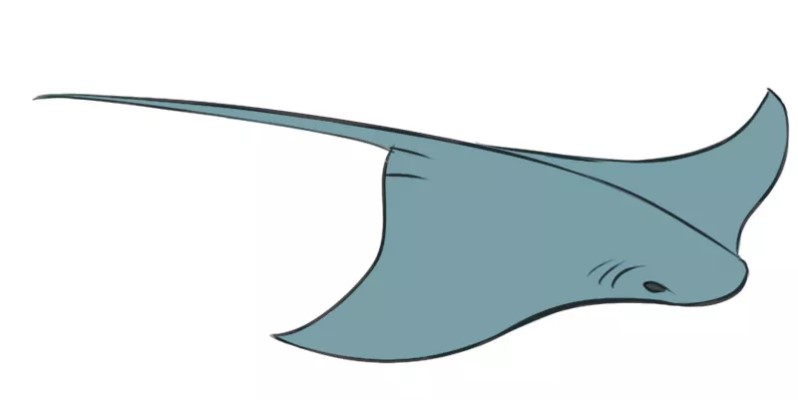
Longhead Eagle Ray
Scientific Name
Aetobatus flagellum (bloch & schneider, 1801)
Family Name
Aetobatidae
IUCN Status
Endangered
Dorsal without spots or rings; long rostral lobe (longest in adult males) and narrowly pointed; disc very broad and short, its length 55-70% WD; pectoral fins weakly falcate and joining head at eye level, separate from rostral lobe; posterior margins moderately concave, rear tips free and broadly rounded; spiracles large, dorsolateral and visible in dorsal view; mouth ventral, its width narrower than preoral length; nasal curtain large, deeply notched centrally and with a curtain-like fringe; teeth plate-like in a single row, the upper teeth transverse, lower chevron-shaped; disc entirely smooth, no denticles or thorns; tail elongate, whip-like, ca. 1.2-2.8 times WD when undamaged; dorsal-fin small and raked back, apex broadly rounded, free rear tip short with origin behind pelvic-fin insertions; caudal stings 1 or 2, longest greater than preoral length. Colour uniform brownish or greenish brown, mostly white ventrally, pectoral tips and posterior margins of disc mostly pale brownish.
Biology
Length: It reaches a maximum size of 90 cm disc width (DW), males are mature by 50 cm DW, and females are mature by 75 cm DW. Size-at-birth is ~23 cm DW
Gestation Period: Unknown
Litter Size: Small (Unknown)
Life Expectancy: Inferred as 7 years
Diet: Probably feeds on hard-shelled and bottom-dwelling invertebrates.
Habitat and distribution
Habitat: The Longhead Eagle Ray is benthopelagic on the inner continental shelf.
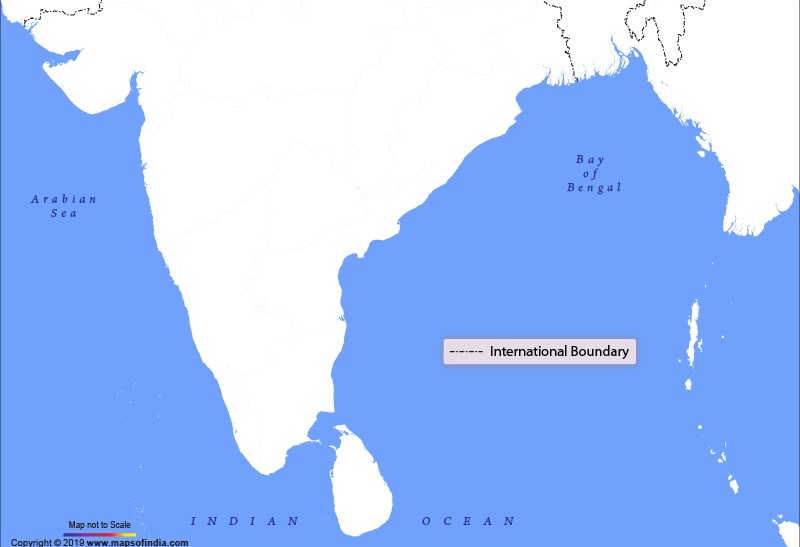
Distribution: The Longhead Eagle Ray has a patchy distribution in the Eastern and Western Indian Oceans and Western Central Pacific from the Arabian/Persian Gulf to Myanmar and in the waters surrounding Borneo down to the Java Sea.
Depth: 0-40 m
Landing sites: Machilipatnam, Nizampatnam, Vodarevu, Pakala, Veraval, Mangrol, Porbander, Okha, Junglighat, Burmanallah, Wandoor, and Dignabad, Royapuram Fishing Harbour, Cuddalore Fishing Harbour, Nagapattinam Fishing Harbour
Commercial Value
The meat of the Longhead Eagle Ray is consumed locally in Indonesia and Malaysia. This species is possibly landed at the markets in Singapore (there while Aetobatus species are landed but not identified to species level) and sold to local grocery stores. They are occasionally landed throughout the Southeast Asian portion of their range and the meat is consumed fresh or dried and salted for human consumption. In Bangladesh, the skins from large rays are exported to Myanmar to be made into accessories (e.g. handbags). Smaller rays are retained for their meat but the skins are too small to be utilized. Small rays are often dried whole for local consumption and export. There has been some increase in the demand of ray meat in cosmopolitan areas and some anecdotal information suggests in restaurants as well. In the Gulf of Oman this species is of low value and likely to be discarded. However, it is utilized in Pakistan and India. The meat is usually sold either fresh or dried for human consumption. In Pakistan, the wings (pectoral fins) of adults are frozen and exported to Thailand and Malaysia. In India, there is a specialized market selling only rays in Thalassery, north of Cochin. The skin of large rays is often processed and used for leather in India. Ray meat, both fresh and dry salted, is increasing in demand and therefore price in India.
Threats
Throughout its distribution, the Longhead Eagle Ray is caught in coastal fisheries by demersal trawl, tangle nets, set nets, gill nets, droplines, longlines, and Danish seines. It is taken as retained bycatch in industrial and artisanal fisheries. This species is threatened by being caught in inshore gillnets across its range while aggregating.
References
Blaber, S., Dichmont, C.M., White, W.T., Buckworth, R.C., Sadiyah, L., Iskandar, B., Nurhakim, S., Pillans, R.D., Andamari, R., Dharmadi and Fahmi (2009)
Elasmobranchs in southern Indonesian fisheries: the fisheries, the status of the stocks and management options. Reviews in Fish Biology and Fisheries 19: 367–391.
Last, P.R., W.T. White, M.R. de Carvalho, B. Séret, M.F.W. Stehmann and G.J.P. Naylor (2016)
Rays of the world. CSIRO Publishing, Comstock Publishing Associates. i-ix + 1-790.
Last, P.R., White, W.T., Caira, J.N., Dharmadi, Fahmi, Jensen, K., Lim, A.P.K., Manjaji-Matsumoto, B.M., Naylor, G.J.P., Pogonoski, J.J., Stevens, J.D., Yearsley, G.K. (2010)
Sharks and Rays of Borneo. CSIRO Marine and Atmospheric Research, Collingwood.
Weigmann, S. (2016)
Annotated checklist of the living sharks, batoids and chimaeras (Chondrichthyes) of the world, with a focus on biogeographical diversity. Journal of Fish Biology 88(3): 837-1037.
White, W.T. and Dharmadi (2007)
Species and size compositions and reproductive biology of rays (Chondrichthyes, Batoidea) caught in target and non-target fisheries in eastern Indonesia. Journal of Fish Biology 70: 1809-1837.
White, W. T. and Moore, A.B.M (2013) Redescription of Aetobatus flagellum (Bloch & Schneider, 1801), an endangered eagle ray (Myliobatoidea: Myliobatidae) from the Indo–West Pacific. Zootaxa 3752: 199–213.
White, W.T., Last, P.R., Stevens, J.D., Yearsley, G.K., Fahmi and Dharmadi (2006)
Economically Important Sharks and Rays of Indonesia. Australian Centre for International Agricultural Research, Canberra, Australia.