
Species Name
Whitespotted Eagle Ray
Scientific Name
Aetobatus narinari (euphrasen, 1790)
Family Name
Aetobatidae
IUCN Status
Endangered
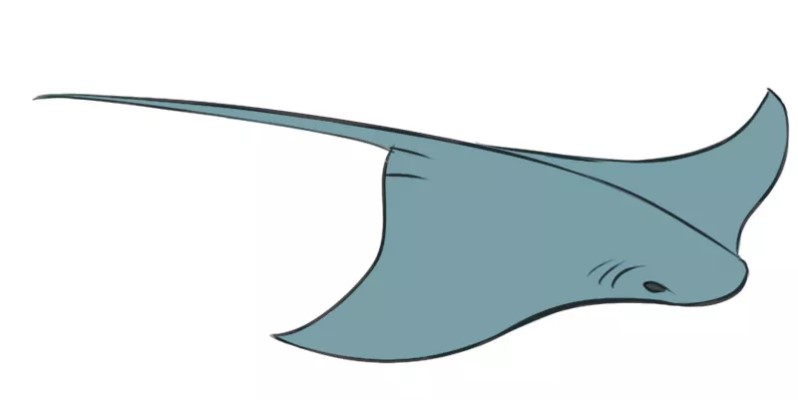
An eagleray with a long snout, flat and rounded like a duck's bill, a thick head, and a pectoral disc with sharply curved, angular corners, and no caudal fin; jaws usually with single row of flat, chevron-shaped teeth. Each tooth a crescent-shaped plate joined into a band. Numerous white spots on black or bluish disc; white below. Long whiplike tail, with a long spine near the base, behind small dorsal fin. No spines on disk.
Biology
Length: It reaches a maximum size of approximately 230 cm disc width (DW); males mature at 127–129 cm DW and females mature at 134.9 cm DW. Size-at-birth is estimated at 18–36 cm DW.
Gestation Period: 12 months
Litter Size: 1-5
Life Expectancy: Estimated generation length is 10 years.
Diet: Feeds on polychaetes, bivalves, gastropods, cepahlopods, shrimps and small fishes.
Habitat and distribution
Habitat: The Whitespotted Eagle Ray is benthopelagic over the continental shelf. It frequently enters lagoons and estuaries and is often associated with coral reef ecosystems.
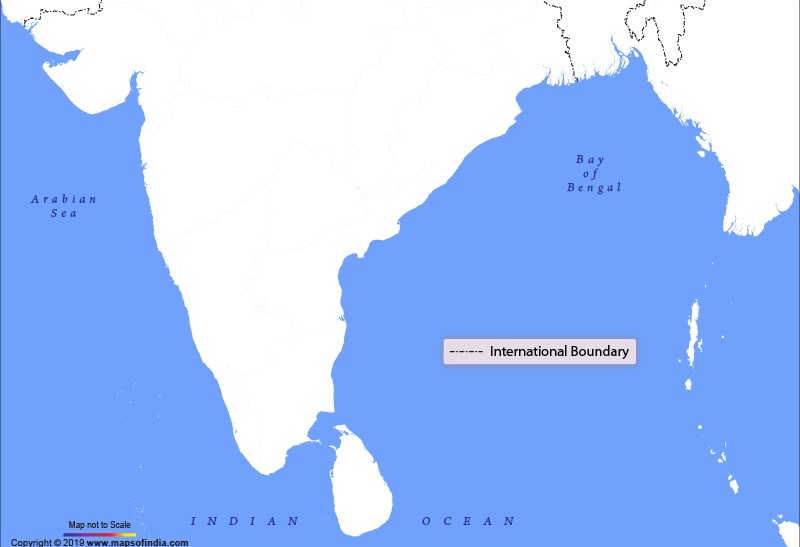
Distribution: The Whitespotted Eagle Ray occurs in the Atlantic Ocean. In the Western Central and Southwest Atlantic it ranges from Cape Hatteras, North Carolina, USA to Rio de Janeiro, Brazil, including the Gulf of Mexico, the Bahamas, and the Caribbean Islands. In the Eastern Central and Southeast Atlantic this species is thought to range from Mauritania south to Angola, and possibly South Africa.
Depth: 0-60 m
Landing sites: Thoothukudi
Commercial Value
This species is consumed locally or sold fresh or salted and dried. It is highly valued in eastern Venezuela where it is used in traditional cooking. It is a popular public aquarium species.
Threats
Whitespotted Eagle Rays occur in coastal inshore waters where fishing pressure is substantial through portions of the species' range, particularly in the Gulf of Mexico, Caribbean Sea, and Eastern Central and Southeast Atlantic Ocean along the coast of Africa. The species often enters estuarine waters where fishing pressure is high. The swimming behaviour of this species makes it susceptible to a range of fishing gear throughout the water column, especially inshore gillnet fisheries, which are intensive throughout most of its range. This species is taken in target artisanal gillnet fisheries and industrial shrimp trawl fisheries.
References
Ajemian, M.J., Powers, S.P. and Murdoch, T.J.T. (2012)
Estimating the Potential Impacts of Large Mesopredators on Benthic Resources: Integrative Assessment of Spotted Eagle Ray Foraging Ecology in Bermuda. PLoS ONE 7: e40227.
Bassos-Hull, K., Wilkinson, K.A., Hull, P.T., Dougherty, D.A., Omori, K.L., Ailloud, L.E., Morris, J.J. and Hueter, R.E. (2014)
Life history and seasonal occurrence of the spotted eagle ray, Aetobatus narinari, in the eastern Gulf of Mexico. Environmental Biology of Fishes 97: 1039–1056.
Kyne, P.M., Dudgeon, C.L., Ishihara, H., Dudley, S.F.J. & White, W.T. 2016.
Aetobatus ocellatus. The IUCN Red List of Threatened Species 2016: e.T42566169A42566212. Available at: https://dx.doi.org/10.2305/IUCN.UK.2016-1.RLTS.T42566169A42566212.en.. (Accessed: 8 October 2020).
Last, P., White, W., de Carvalho, M., Séret, B., Stehmann, M. and Naylor, G. (2016)
Rays of the World. CSIRO Publishing, Clayton.
Sales, J.B.L., de Oliveira, C.N., dos Santos, W.C.R., Rotundo, M.M., Ferreira, Y., Ready, J., Sampaio, I., Oliveira, C., Cruz, V.P., Lara-Mendoza, R.E. and da Silva Rodrigues-Filho, L.F. (2019)
Phylogeography of eagle rays of the genus Aetobatus: Aetobatus narinari is restricted to the continental western Atlantic Ocean. Hydrobiologia 836: 169–183.
Tagliafico, A., Rago, N., Rangel, S. and Mendoza, J. (2012)
Exploitation and reproduction of the spotted eagle ray (Aetobatus narinari) in the Los Frailes Archipelago, Venezuela . Fishery Bulletin 110(3): 307–316.
Vasconcellos, M., Diegues, A.C. and Kalikoski, D.C. (2011)
Coastal Fisheries of Brazil. In: Salas, R. Chuenpagdee, A. Charles and J.C. Seijo (eds), Coastal fisheries of Latin America and the Caribbean, pp. 73-116. FAO, Rome.