
Species Name
Bigeye Thresher
Scientific Name
Alopias superciliosus (lowe, 1841)
Family Name
Alopiidae
IUCN Status
Vulnerable
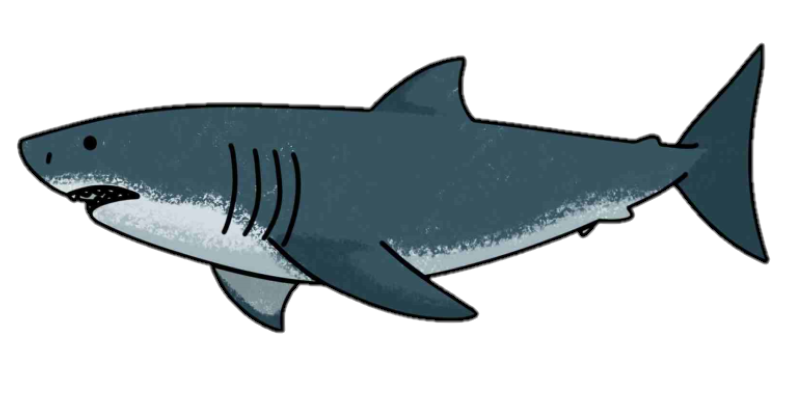
A large thresher with very large eyes, an indented forehead, a broad caudal tip, and curved broad-tipped pectoral fins; 1st dorsal fin further back than in other threshers. Upper lobe of caudal fin very long and strap-like almost or quite equal to length of rest of shark; lower lobe short but well developed. Purplish grey above, cream below, posterior edges of pectoral and pelvic fins and sometimes first dorsal fin dusky; light color of abdomen not expanded over pectoral-fin bases.
Biology
Length: It reaches a maximum size of 484 cm total length (TL); males mature at 245–300 cm TL; females mature at 282–355 cm TL. Size at birth is 64–140 cm TL.
Gestation Period: 12 months
Litter Size: 2-4 (usually 2)
Life Expectancy: Observed female age-at-maturity is 12–13 years and maximum age 20 years in Taiwan, Northwest Pacific. These Taiwanese age data were used to generate growth curves that encompass a wider age and size range than the observed data, and thus were used to estimate female age-at-maturity at 9 years and maximum age at 28 years; generation length is therefore 18.5 years.
Diet: Feeds on pelagic fishes (lancetfishes, herring, mackerel and small billfishes and bottom fishes and squids.
Habitat and distributions
Habitat: The Bigeye Thresher is found in coastal waters over continental shelves, sometimes close inshore in shallow waters, and on the high seas in the epipelagic and mesopelagic zones far from land; it is also caught near the bottom in deep water on continental slopes.
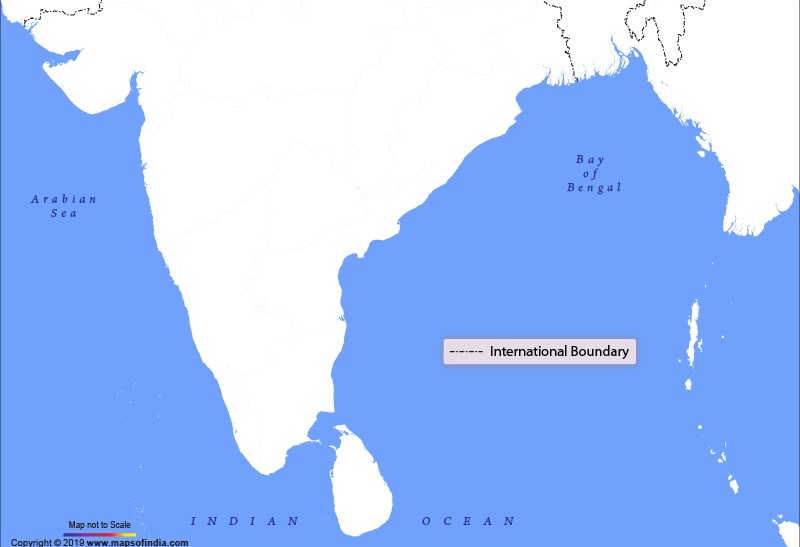
Distribution: The Bigeye Thresher occurs worldwide in tropical and temperate seas.
Depth: 0-955 m
Landing site: Royapuram Fishing Harbour, Cuddalore Fishing Harbour, Nagapattinam Fishing Harbour, Thoothukudi, Threshpuram, Tharuvaikulam, Vembar, Vellapatti, Junglighat, Burmanallah, Wandoor, Dignabad, Cochin Fisheries Harbour
Commercial Value
The species is used for its meat, fins, liver oil, and skin. Three species of thresher shark, Bigeye Thresher, Pelagic Thresher, and Common Thresher (A. vulpinus), collectively accounted for 2–3% in 1991–2001 and 0.5% in 2014, of the fins imported in Hong Kong.
Threats
The Bigeye Thresher is caught globally as target and bycatch in commercial and small-scale pelagic longline, purse seine, and gillnet fisheries. Most catch is taken as bycatch of commercial pelagic fleets in offshore and high-seas waters. It is also captured in coastal longlines, gillnets, trammel nets, and sometimes trawls, particularly in areas with narrow continental shelves. The Bigeye Thresher generally spends time near the surface at night where it is exposed to fisheries capture but it likely has some refuge during the day, when it generally dives to greater depths than those at which most commercial tuna fleets operate.
References
Camhi, M.D., Pikitch, E.K. and Babcock, E.A. (2008)
Sharks of the Open Ocean: Biology, Fisheries and Conservation . John Wiley & Sons.
Compagno, L.J.V. (2001)
Sharks of the world. An annotated and illustrated catalogue of shark species known to date. Volume 2. Bullhead, Mackerel and Carpet Sharks (Heterodontiformes, Lamniformes and Orectolobiformes). FAO, Rome.
Ebert, D.A., Fowler, S. and Compagno, L. (2013)
Sharks of the World. A Fully Illustrated Guide. Wild Nature Press, Plymouth, United Kingdom.
Fields, A.T., Fischer, G.A., Shea, S.K.H., Zhang, H., Abercrombie, D.L., Feldheim, K.A., Babcock, E.A. and Chapman, D.D. 2017.
Species composition of the international shark fin trade assessed through retail-market survey in Hong Kong. Conservation Biology 32(2): 376–389.
Chen, P. and Yuan, W. (2006)
Demographic analysis based on the growth parameter of sharks. Fisheries Research 78(2-3): 374–379.