
Species Name
Common Thresher
Scientific Name
Alopias vulpinus (bonnaterre, 1788)
Family Name
Alopiidae
IUCN Status
Vulnerable
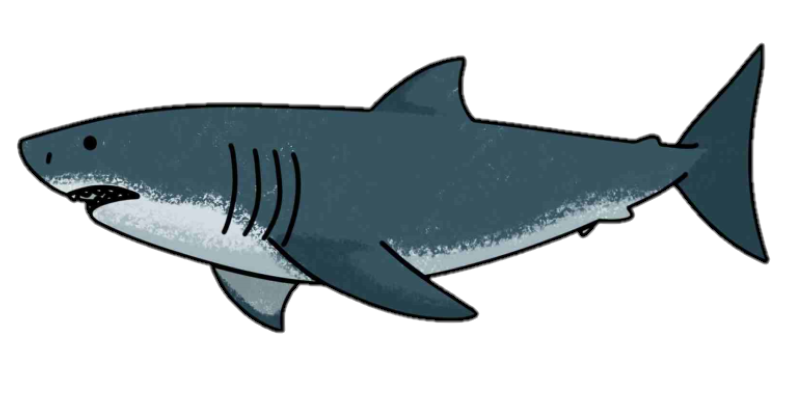
A large thresher with relatively small eyes, curved, narrow-tipped pectoral fins, a narrow-tipped caudal fin, and a conspicuous white patch over the pectoral fin bases. Brown, grey, blue-grey, or blackish on back and underside of snout, lighter on sides and abruptly white below; a white area extends from the abdomen over the pectoral-fin bases; pectoral-, pelvic-, and dorsal fins blackish, white dots sometimes present on pectoral-, pelvic-, and caudal- fin tips.
Biology
Length: The species reaches a maximum size of 573 cm total length (TL), and possibly 635 cm TL; size at birth is 120–150 cm TL, males mature at 260–420 cm TL, and females mature at 260–465 cm TL.
Gestation period: 1 year
Litter Size: 2-6 pups
Life Expectancy: 13 years (female maturity), maximum age is 38 years (bomb-radiocarbon validates ages from the Northwest Atlantic)
Diet: Feeds on schooling fishes (including mackerels, bluefishes, clupeids, needlefishes, lancetfishes and lanternfishes), squid, octopi, pelagic crustaceans, and rarely seabirds.
Habitat and distribution
Habitat: Coastal over continental and insular shelves and epipelagic far from land. It is more frequently found close to land and in temperate waters. Young often close inshore and in shallow bays.
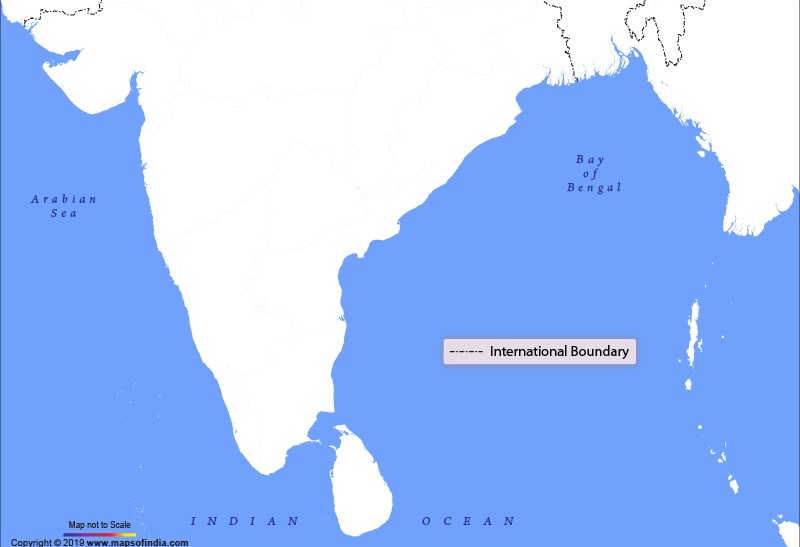
Distribution: The Common Thresher occurs worldwide in tropical to cold-temperate seas. Occurrence of the Common Thresher in the equatorial and northern tropical Indian Ocean could be mis-identification with the Pelagic Thresher.
Depth: 0-650 m
Landing sites: Thoothukudi, Threshpuram, Tharuvaikulam, Vembar, Vellapatti, Cochin Fisheries Harbour
Commercial Value
The species is used for its meat, fins, liver oil, and skin. Three species of thresher shark, Common Thresher, Bigeye Thresher, and Pelagic Thresher, collectively accounted for 2–3% in 1991–2001 and 0.5% in 2014, of the fin imported in Hong Kong.
Threats
The Common Thresher is caught globally as target and bycatch in commercial and small-scale pelagic longline, purse seine, and gillnet fisheries. Most catch is taken as bycatch of industrial pelagic fleets in offshore and high-seas waters. It is also captured in coastal longlines, gillnets, trammel nets and sometimes trawls, particularly in areas with narrow continental shelves.
The species is generally retained for the meat and fins, unless regulations prohibit retention. Under-reporting of catches in the pelagic and domestic fisheries is likely. The species is highly valued by big-game recreational fishers, and although many practice catch and release, recreational fishing could be a threat due to post-release mortality that has been estimated for the Common Thresher as 78% for tail-hooked and 0% for mouth-hooked animals (i.e. all mouth-hooked animals survived). At vessel mortality of 66.7% was estimated on Portuguese longlines in the Atlantic.
References
Lisa J. Nathanson and Brian J. Gervelis (2013)
The Reproductive Biology of the Common Thresher Shark in the Western North Atlantic Ocean.
Compagno, L.J.V., D.A. Ebert and M.J. Smale (1989)
Guide to the sharks and rays of southern Africa. New Holland (Publ.) Ltd., London. 158 p.
Last, P.R. and Stevens, J.D. (2009)
Sharks and Rays of Australia. CSIRO Division of Fisheries, Hobart.
Compagno, L.J.V. (1984)
FAO Species Catalogue. Vol. 4. Sharks of the world. An annotated and illustrated catalogue of shark species known to date. Part 1 - Hexanchiformes to Lamniformes. FAO Fish.
Camhi, M.D., Pikitch, E.K. and Babcock, E.A. (2008)
Sharks of the Open Ocean: Biology, Fisheries and Conservation . John Wiley & Sons.
Clarke, S.C., McAllister, M.K., Milner-Gulland, E.J., Kirkwood, G.P., Michielsens, C.G.J., Agnew, D.J., Pikitch, E.K., Nakano, H. and Shivji, M.S. (2006b)
Global estimates of shark catches using trade records from commercial markets. Ecology Letters 9: 1115-1126.
Clarke, S., Magnusson, J.E., Abercrombie, D.L., McAllister, M. and Shivji, M.S. (2006a)
Identification of shark species composition and proportion in the Hong Kong shark fin market using molecular genetics and trade records. Conservation Biology 20: 201-211.