
Species Name
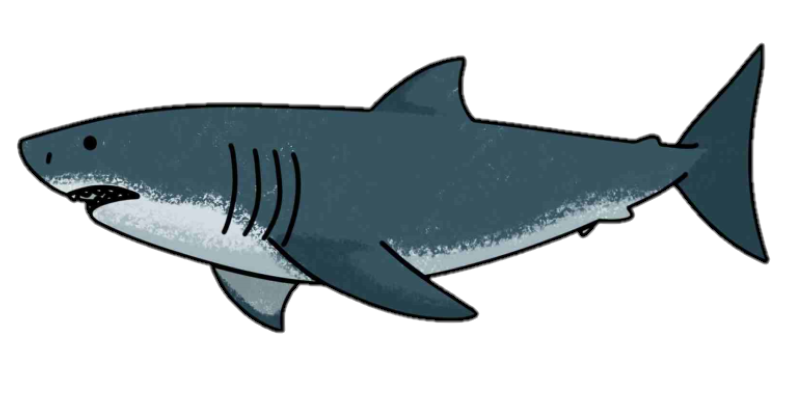
Indonesian Houndshark
Scientific Name
Hemitriakis indroyonoi (white, compagno & dharmadi, 2009)
Family Name
Triakidae
IUCN Status
Endangered
Hemitriakis indroyonoi is separable from the other congeners, H. abdita, H. complicofasciata, H. falcata, H. japanica and H. leucoperiptera, by a combination of vertebral counts, morphometric characters, and juvenile colouration.
Biology
Length: It reaches a maximum size of 129 cm total length (TL), males mature at 92–95 cm TL and females mature at ~100 cm TL, and size-at-birth is 28–30 cm TL.
Gestation Period: Unknown
Litter Size: 6-11
Life Expectancy: Inferred to be 10 years.
Diet: Unknown
Habitat and distribution
Habitat: Presumably occurring on the outer continental shelf and upper slope.
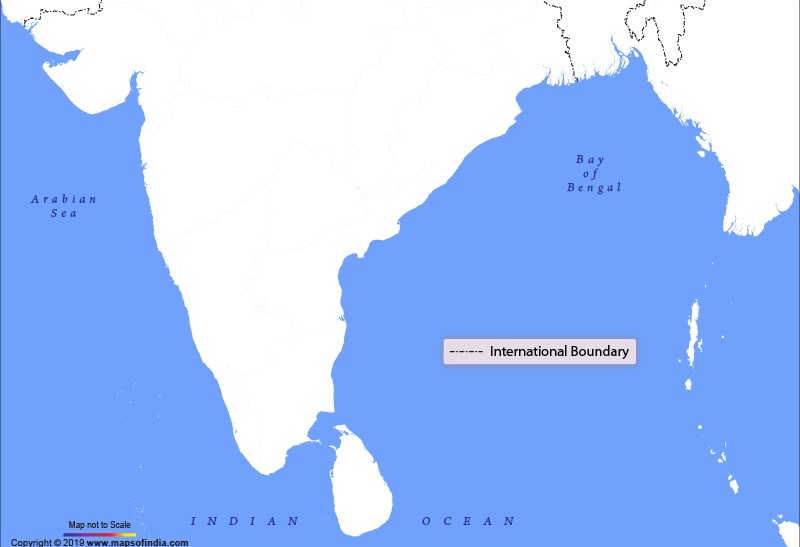
Distribution: The Indonesian Houndshark is known from the Eastern Indian and Western Central Pacific Oceans where it is currently only known from Bali and Lombok, Indonesia and in Campbell Bay off Great Nicobar Island, India. This species may well have a broader or deeper depth distribution.
Depth: 60-100 m
Landing site: Junglighat, Burmanallah, Wandoor, and Dignabad
Commercial Value
The Indonesian Houndshark is used for its meat, which is sold fresh or dried and salted. It is also used for its fins, which are dried and exported but not in demand due to their size. In the Andaman and Nicobar Islands, the meat is used for human consumption and in fish meal production.
Threats
The Indonesian Houndshark is caught as bycatch in demersal longline and demersal gillnets which operate both inshore and in deepwater areas. This species is especially susceptible to heavy fishing pressure as its current known area of occupancy (AOO) is limited to ~72 km² and this does not include any refuge areas. The Indonesian distribution occurs between two heavily populated cities, making it easily accessible to fishers. From March 2010 to January 2011, only 114 individuals were found, despite market surveys looking for this species. Many of these individuals were juveniles, indicating the possibility of recruitment overfishing occurring for this species. In a later survey of artisanal fishers in Lombok in January-December 2016 and April and July 2017, 454 individuals were observed with most of the individuals also juveniles and the first estimation of growth indicating the species likely has a slow growth rate. In Indonesia, small-scale fisheries comprise most (~90%) of fisheries production. In some regions, effort by these small-scale fisheries has tripled when taking population growth into account. Sharks and rays are an important resource in Indonesia and are the main livelihood for some communities. Fishing pressure in Indonesia is intense with the largest chondrichthyan fishery globally and the country has been among the top shark fishing nations for over 20 years.
References
Ebert, D.A., Fowler, S. and Compagno, L. (2013)
Sharks of the World. Wild Nature Press, Plymouth.
Faizah, R., Chodrijah, U., and Dharmadi (2012)
Reproductive biology of Indonesian Houndshark (Hemitriakis indroyonoi) in the Indian Ocean. BAWAL 4(3): 141–147.
Oakes, N. and Sant, G. (2019)
An overview of major shark traders, catchers and species. TRAFFIC, Cambridge, UK.
Ramenzoni, V.C. (2017)
Reconstructing the history and effects of mechanization in a small-scale fishery of Flores, Eastern Indonesia (1917–2014). Frontiers in Marine Science 4(65): doi: 10.3389/fmars.2017.00065.
Sentosa, A. A. and Chodrijah, U. (2020)
Length-weight relationship and growth parameters of Indonesian houndshark (Hemitriakis indroyonoi White, Compagno & Dharmadi, 2009) caught from artisanal fisheries in Southern West Nusa Tenggara Waters. AACL Bioflux 13(3): 1211–1220.
Tull, M. (2014)
The history of fishing in Indonesia. In: Christensen, J. and Tull, M. (eds), Historical Perspectives of Fisheries Exploitation in the Indo-Pacific, Springer, Murdoch.
Tyabji, Z., Wagh, T., Patankar, V., Jabado, R.W. and Sutaria, D. (2020)
Catch composition and life history characteristics of sharks and rays (Elasmobranchii) landed in the Andaman and Nicobar Islands, India. PLOS ONE 15(10): e0231069.