
Species Name
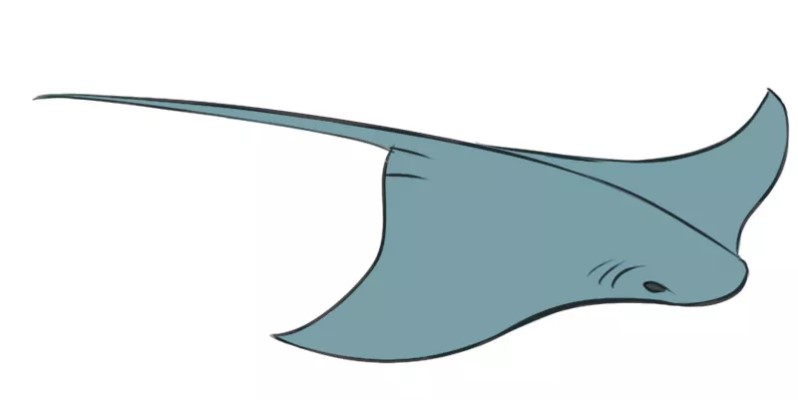
Bottlenose Wedgefish
Scientific Name
Rhynchobatus australiae (whitley, 1939)
Family Name
Rhinidae
IUCN Status
Critically Endangered
While R. australiae can be reliably differentiated from other species of the genus by counts of vertebral centra, the lack of unambiguous external diagnostic features has made species assignment in the field difficult.
Biology
Length: Maximum size is ~300 cm total length (TL); males mature at 110-130 cm TL; females mature at ~155 cm TL. Size at birth is 46–50 cm TL.
Gestation Period: Unknown
Litter Size: 7-9 pups
Life Expectancy: Generation length is estimated as 15 years.
Diet: Feeds on bottom crustaceans, mollusks and bottom-dwelling fishes.
Habitat and distribution
Habitat: The Bottlenose Wedgefish occurs from close inshore to depths of at least 60 m on the continental shelf. It occurs over soft substrates, but can also be associated with coral reefs.
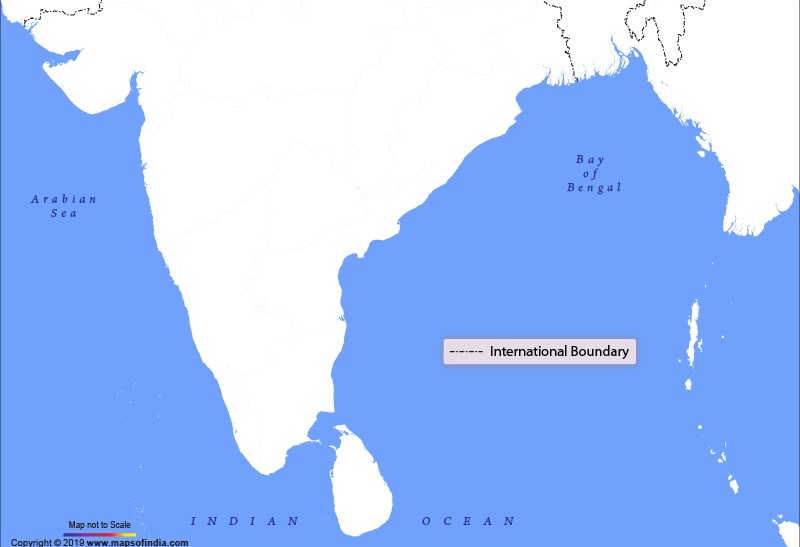
Distribution: The Bottlenose Wedgefish is widespread in the Indo-West Pacific from Mozambique through the Western Indian Ocean, the Arabian Sea, Southeast Asia, and extending north to Taiwan, south to Australia (where it is wide-ranging across the north of the continent), and east to the Solomon Islands. The species' distribution may not be fully defined due to confusion with other members of the Rhynchobatus djiddensis species-complex.
Depth: 0-60 m
Landing sites: Cochin Fisheries Harbour, Junglighat, Mangaluru and Malpe Fisheries Harbours
Commercial Value
Wedgefishes are heavily utilized across their range for the meat and fins. The exception for this species is Australia where wedgefishes are generally not utilized or traded. While little species-specific information is available, the following provides a generalized account of use and trade globally. The meat is of good quality and a food source for many coastal communities in tropical countries where it is generally consumed locally, although it also enters the international trade in dried and salted form. Large whole wedgefishes (>200 cm total length; TL) have been traded for a high value of up to US$680 each, however, smaller specimens can sell for low value. The ‘white’ fins of shark-like rays (including wedgefishes and giant guitarfishes) are considered the best quality fins for human consumption and are among the highest valued in the international shark fin trade. Fin prices in the literature include US$396/kg for wedgefish fins and an average price of US$276/kg and US$185/kg for Qun chi (fins from shark-like rays) in Guangzhou (mainland China) and Hong Kong, respectively. The skin may be dried and traded internationally as a luxury leather product. The eggs of shark-like rays are sometimes dried and consumed locally while the heads may also be dried and used as either fish meal or fertilizer.
Threats
Globally, wedgefishes are subject to intense fishing pressure on their coastal and shelf habitats that is unregulated across the majority of their distributions. Wedgefishes are captured in industrial, artisanal, and subsistence fisheries with multiple fishing gears, including gillnet, trawl, hook and line, trap, and seine net and are generally retained for their meat and fins
References
Jenny L. Giles, Cynthia Riginos, Gavin P. Naylor, Dharmadi, Jennifeer R. Ovenden (2016)
Genetic and phenotypic diversity in the wedgefish Rhynchobatus australiae, a threatened ray of high value in the shark fin trade. Marine Ecology Progress Series.
Hylton, S., White, W.T. and Chin, A. (2017)
The sharks and rays of the Solomon Islands: a synthesis of their biological diversity, values and conservation status. Pacific Conservation Biology 23: 324–334.
Last, P.R. and Stevens, J.D. (2009)
Sharks and Rays of Australia. Second Edition. CSIRO Publishing, Collingwood.
Last, P.R., W.T. White, M.R. de Carvalho, B. Séret, M.F.W. Stehmann and G.J.P. Naylor (2016)
Rays of the world. CSIRO Publishing, Comstock Publishing Associates. i-ix + 1-790.
White, W.T. and Dharmadi (2007)
Species and size compositions and reproductive biology of rays (Chondrichthyes, Batoidea) caught in target and non-target fisheries in eastern Indonesia. Journal of Fish Biology 70: 1809-1837.
Compagno, L.J.V. and P.R. Last (1999)
Rhinidae (=Rhynchobatidae). Wedgefishes. p. 1418-1422. In K.E. Carpenter and V. Niem (eds.) FAO identification guide for fishery purposes. The Living Marine Resources of the Western Central Pacific. FAO, Rome.
Suzuki, T. (2002)
Development of shark fisheries and shark fin export in Indonesia: case study of Karangsong Village, Indramayu, West Java. In: Fowler, S.L., Reed, T.M. and Dipper, F.A. (eds), Elasmobranch Biodiversity, Conservation and Management: Proceedings of the International Seminar and Workshop, Sabah, Malaysia, July 1997, pp. 149–157. IUCN SSC Shark Specialist Group, Gland, Switzerland and Cambridge.