
Species Name
Whitespotted Wedgefish
Scientific Name
Rhynchobatus djiddensis (forsskål, 1775)
Family Name
Rhinidae
IUCN Status
Critically Endangered
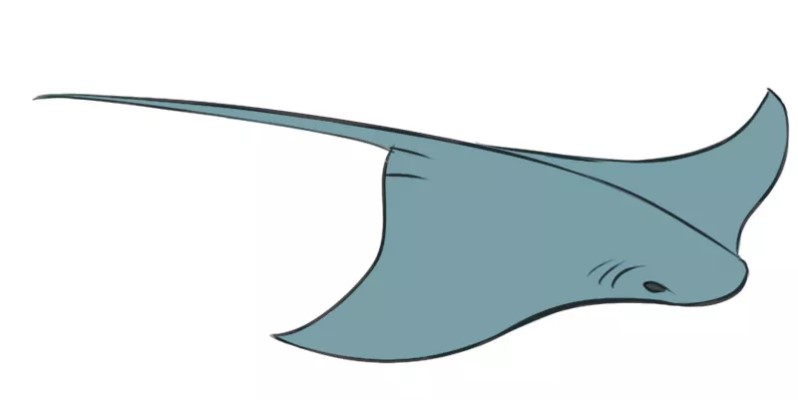
A large guitarfish with large black eyespots on the pectoral bases, a distinctive black cross between the eyes, and rows of small white spots on the upper body; snout pointed and lower caudal lobe short. Olive-green above, white below. Mouths small and contain flattened, pavement-like teeth.
Biology
Length: Maximum size is 310 cm total length (TL) (typically smaller); males mature at ~150 cm TL. Size at birth is ~60 cm TL.
Gestation Period: Unknown
Litter Size: ~4 pups
Life Expectancy: Generation length is inferred as 15 years.
Diet: Feeds on crabs, lobsters, bivalves, small fishes (Ref. 5578) and squids.
Habitat and distribution
Habitat: The Whitespotted Wedgefish occurs from close inshore (including the surf zone).
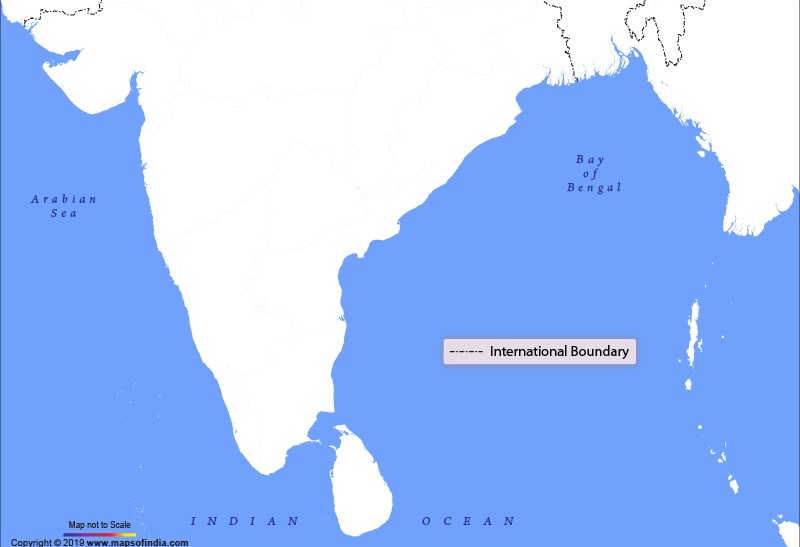
Distribution: The Whitespotted Wedgefish is widespread in the Western Indian Ocean from South Africa to Oman and the Arabian/Persian Gulf, but it may not be present further east. However, the species' distribution may not be fully defined due to confusion with other members of the Rhynchobatus djiddensis species-complex.
Depth: 0-70 m
Landing sites: Digha Mohana, Royapuram Fishing Harbour, Cuddalore Fishing Harbour, Nagapattinam Fishing Harbour, Mumbai (Versova, Sassoon Docks, Satpati, Naigaon, New Ferry Wharf), Veraval
Commercial Value
Wedgefishes are heavily utilized across their range for the meat and fins. While little species-specific information is available, the following provides a generalized account of use and trade globally. The meat is of good quality and a food source for many coastal communities in tropical countries where it is generally consumed locally, although it also enters the international trade in dried and salted form. Large whole wedgefishes (>200 cm total length; TL) have been traded for a high value of up to US$680 each, however, smaller specimens can sell for low value. The ‘white’ fins of shark-like rays (including wedgefishes and giant guitarfishes) are considered the best quality fins for human consumption and are among the highest valued in the international shark fin trade. Fin prices in the literature include US$396/kg for wedgefish fins and an average price of US$276/kg and US$185/kg for Qun chi (fins from shark-like rays) in Guangzhou (mainland China) and Hong Kong, respectively. The skin may be dried and traded internationally as a luxury leather product. The eggs of shark-like rays are sometimes dried and consumed locally while the heads may also be dried and used as either fish meal or fertilizer.
Threats
Globally, wedgefishes are subject to intense fishing pressure on their coastal and shelf habitats that is unregulated across the majority of their distributions. Wedgefishes are captured in industrial, artisanal, and subsistence fisheries with multiple fishing gears, including gillnet, trawl, hook and line, trap, and seine net and are generally retained for their meat and fins. There is a high level of fisheries resource use and increasing fishing pressure across the range of the Whitespotted Wedgefish, and demersal coastal fisheries resources have been severely depleted in significant areas of the Indian Ocean.
References
Barrowclift, E., Temple, A.J., Stead, S., Jiddawi, N.S. and Berggren, P. (2017)
Social, economic and trade characteristics of the elasmobranch fishery on Unguja Island, Zanzibar, East Africa. Marine Policy 83: 128–136.
Bonfil, R. and Abdallah, M. (2004)
Field identification guide to the sharks and rays of the Red Sea and Gulf of Aden. FAO Species Identification Guide for Fishery Purposes. FAO, Rome.
Chen, H.K. (ed.) (1996)
Shark Fisheries and the Trade in Sharks and Shark Products in Southeast Asia. TRAFFIC Southeast Asia Report, Petaling Jaya, Selangor, Malaysia
Dent, F. and Clarke, S. (2015)
State of the global market for shark products. FAO Fisheries and Aquaculture Technical Paper No. 590. Food and Agriculture Organization of the United Nations (FAO), Rome, Italy. 187 pp.
Haque, A.B., Biswas, A.R. and Latifa, G.A. (2018)
Observations of shark and ray products in the processing centres of Bangladesh, trade in CITES species and conservation needs. TRAFFIC Bulletin 30(1): 6–14.
Jabado, R.W., Kyne, P.M., Pollom, R.A., Ebert, D.A., Simpfendorfer, C.A., Ralph, G.M. and Dulvy, N.K. (eds.). (2017)
The conservation status of sharks, rays, and chimaeras in the Arabian Sea and adjacent waters. Environment Agency – Abu Dhabi, UAE and IUCN Species Survival Commission Shark Specialist Group, Vancouver, Canada.
Stobutzki, I.C., Silvestre, G.T., Abu Talib, A., Krongprom, A., Supongpan, M., Khemakorn, P., Armada, N., and Garces, L.R. (2006)
Decline of demersal coastal fisheries resources in three developing Asian countries. Fisheries Research 78: 130-142.
Suzuki, T. (2002)
Development of shark fisheries and shark fin export in Indonesia: case study of Karangsong Village, Indramayu, West Java. In: Fowler, S.L., Reed, T.M. and Dipper, F.A. (eds), Elasmobranch Biodiversity, Conservation and Management: Proceedings of the International Seminar and Workshop, Sabah, Malaysia, July 1997, pp. 149–157. IUCN SSC Shark Specialist Group, Gland, Switzerland and Cambridge.
Compagno, L.J.V., D.A. Ebert and M.J. Smale, (1989)
Guide to the sharks and rays of southern Africa. New Holland (Publ.) Ltd., London. 158 p.