
Species Name
Japanese Butterfly Ray
Scientific Name
Gymnura japonica
Family Name
Gymnuridae
IUCN Status
Not Evaluated
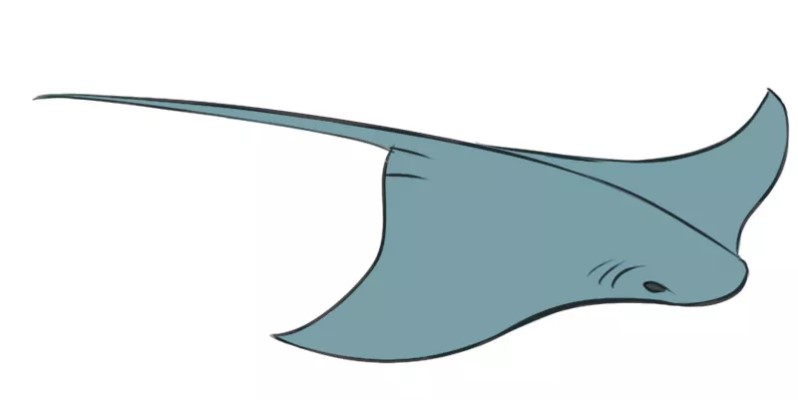
Disc lozenge-shaped, 1.8-2.0 times broader than long. Tail very short, post-cloaca length 23.9-28.2% in disc width. Snout short, no rostral cartilage. Clasper short, no hook. Dorsal surface uniform yellow or brownish grey, with or without rounded light yellow spots.
Biology
Length: It reaches a maximum size of at least 145 cm disc width (DW), and possibly to 180 cm DW, male and female size-at-maturity is unknown. Size-at-birth of 12 cm total length.
Gestation Period: Unknown
Litter Size: 2-8 pups
Life Expectancy: The generation length of the Japanese Butterfly Ray is inferred as 13 years.
Diet: Feeds on benthic animals.
Habitat and distribution
Habitat: Inhabits sandy or muddy bottom in shallow waters.
Distribution: The Japanese Butterfly Ray is endemic to the Northwest Pacific Ocean from Japan to Taiwan, including North and South Korea, and China.
Depth: 0-27 m
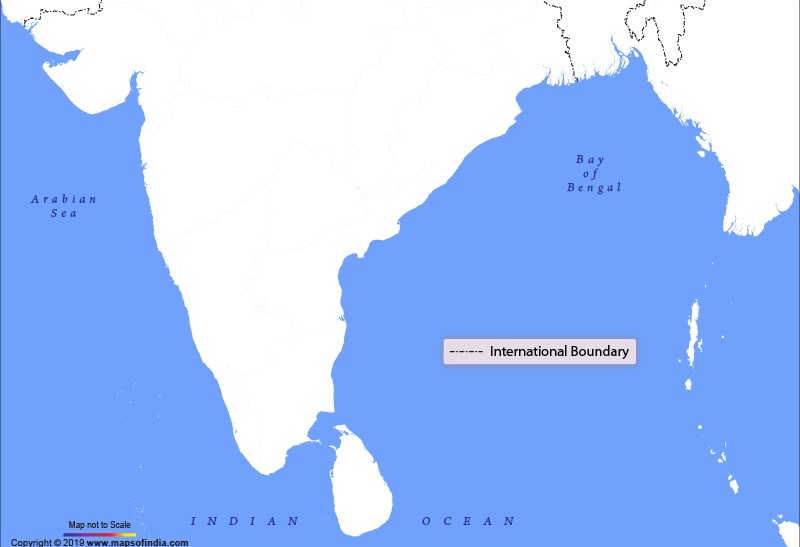
Landing sites: Royapuram Fishing Harbour, Cuddalore Fishing Harbour, Nagapattinam Fishing Harbour
Commercial Value
The low-value meat is used for human consumption and fish meal.
Threats
The Japanese Butterfly Ray is subject to fishing pressure across its entire spatial and depth range. It is taken as bycatch in industrial and artisanal fisheries with multiple fishing gears, including demersal trawl, set net, and gillnet, and retained for human consumption or fish meal in Taiwan and China, and discarded in Japan and possibly South Korea. At-vessel mortality of butterfly rays is 41–46% in trawl fisheries with post-release mortality unknown.
References
Kim, Jin-Koo; Ryu, Jung-Hwa; Jang, Seo-Ha; Han, Keong-Ho; Kim, Beong-Yeob (2022)
Taxonomic Review of a Rare Butterfly Ray Gymnura japonica (Gymnuridae, Chondrichthyes), in Korea
Ellis, J.R., McCully Philips, S.R. and Poisson, F. (2017)
A review of capture and post‐release mortality of elasmobranchs. Journal of Fish Biology 90(3): 653–722.
Yamada, U., S. Shirai, T. Irie, M. Tokimura, S. Deng, Y. Zheng, C. Li, Y.U. Kim and Y.S. Kim, (1995)
Names and illustrations of fishes from the East China Sea and the Yellow Sea. Overseas Fishery Cooperation Foundation, Tokyo, Japan. 288 p.
Yamada, U., Tokimura, M., Horikawa, H. and Nakabo, T. (2007)
Fishes and fisheries of the East China and Yellow Seas. Tokai University Press, Tokyo, Japan.
Nakabo, T. (2013)
Fishes of Japan with Pictorial Keys to the Species. Tokai University Press, Tokyo.
Weigmann, S. (2016)
Annotated checklist of the living sharks, batoids and chimaeras (Chondrichthyes) of the world, with a focus on biogeographical diversity. Journal of Fish Biology 88(3): 837-1037.