
Species Name
Smooth Butterfly Ray
Scientific Name
Gymnura micrura (bloch & schneider, 1801)
Family Name
Gymnuridae
IUCN Status
Near Threatened
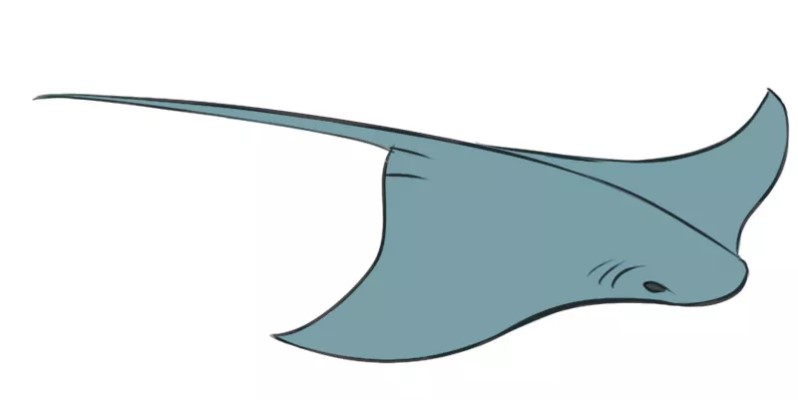
Broad, diamond-shaped ray with a very short tail lacking a dorsal spine. Snout protruding. Front edges of disk concave. Tail with low dorsal and ventral finfolds and 3 - 4 dark crossbars. Upper surface gray, brown, light green or purple with round spots. Lower surface white.
Biology
Length: The largest recorded male was 45 cm disc width (DW) and largest female was 62.9 cm DW but the species is likely to reach a maximum size of approximately 80 cm DW; males mature at 26.9 cm DW and females mature at 40.5 cm DW. Size-at-birth estimated at 13.5–17.5 cm DW.
Gestation Period: Unknown
Litter Size: 1-6
Life Expectancy: Estimated as 5 years (generation length)
Diet: Feeds on fish and shrimps (Ref. 28587); other crustaceans and clams.
Habitat and distribution
Habitat: Prefers neritic waters of the continental shelf and usually found on soft bottoms. May enter brackish estuaries or hyper-saline lagoons.
Distribution: The Smooth Butterfly Ray occurs throughout the Western Central and Southwest Atlantic from Venezuela and Trinidad and Tobago to Rio de Janeiro State, Brazil. It is also recorded in São Paulo and Paraná States, Brazil. There are no confirmed records of this species in Colombia and Panama, and it is not known if the species occurs in the Caribbean Sea, beyond the Venezuelan coast.
Depth: 0-40 m
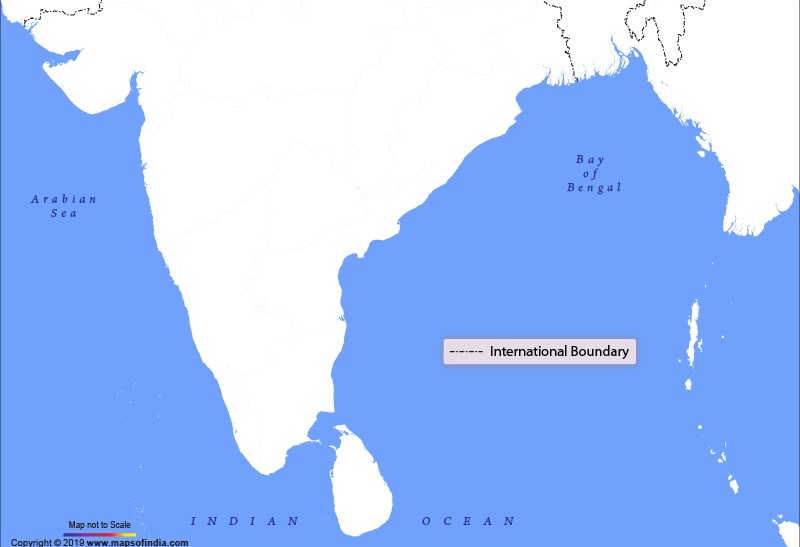
Landing sites: Digha Mohana, Royapuram Fishing Harbour, Cuddalore Fishing Harbour, Nagapattinam Fishing Harbour, Malvan, New Ferry Wharf, Royapuram Fishing Harbour, Cuddalore Fishing Harbour and Nagapattinam Fishing Harbour
Commercial Value
The meat of adult butterfly rays is sold fresh for local consumption throughout South America, but the juveniles tend to be discarded as the wings are thin with little meat.
Threats
This species is taken by industrial and artisanal demersal multispecies trawl, shrimp trawl, beach-seine, and recreational hook and line fisheries. Larger individuals are retained and juveniles tend to be discarded; post-release survival is unknown.
References
Smith, C.L. (1997)
National Audubon Society field guide to tropical marine fishes of the Caribbean, the Gulf of Mexico, Florida, the Bahamas, and Bermuda. Alfred A. Knopf, Inc., New York. 720 p.
Robins, C.R. and G.C. Ray (1986)
A field guide to Atlantic coast fishes of North America. Houghton Mifflin Company, Boston, U.S.A. 354 p.
Bigelow, H.B. and W.C. Schroeder (1953)
Sawfishes, guitarfishes, skates and rays. p. 1-514. In J. Tee-Van et al. (eds.) Fishes of the western North Atlantic. Part two. New Haven, Sears Found. Mar. Res., Yale Univ.
Charvet, P. and Faria, V. (2014)
Southwest Atlantic Ocean. In: Harrison, L.R. and Dulvy, N.K. (eds), Sawfish: A Global Strategy for Conservation, pp. 48–49. International Union for the Conservation of Nature Species Survival Commission's Shark Specialist Group, Vancouver, Canada.
Mejía-Falla, P.A. and Navia, A.F. (2019)
Checklist of marine elasmobranchs of Colombia. Universitas Scientiarum 24(1): 241–276.
Yokota, L. and de Carvalho, M.R. (2017)
Taxonomic and morphological revision of butterfly rays of the Gymnura micrura (Bloch & Schneider 1801) species complex, with the description of two new species (Myliobatiformes: Gymnuridae). Zootaxa 4332(1): http://dx.doi.org/10.11646/zootaxa.4332.1.1.
Yokota, L., Goitein, R., Gianeti, M.D. and Lessa, R.T.P. (2012)
Reproductive biology of the smooth butterfly ray Gymnura micrura. Journal of Fish Biology 81: 1315–1326.