
Species Name
Zonetail Butterfly Ray
Scientific Name
Gymnura zonura (bleeker, 1852)
Family Name
Gymnuridae
IUCN Status
Endangered
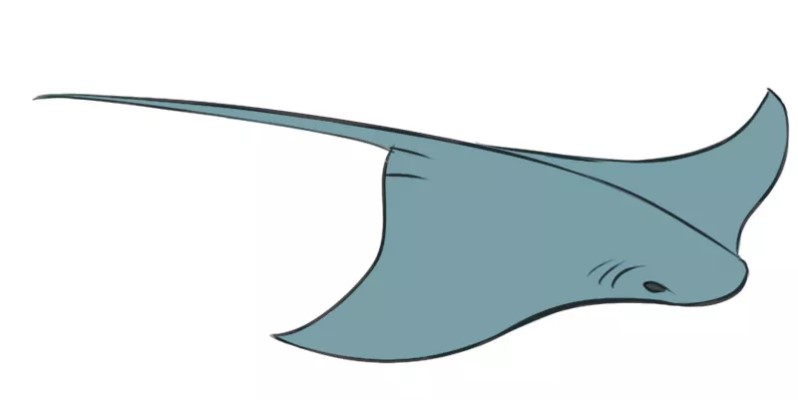
Gymnura zonura has a disc width that is broader than the disc length, tentacles absent on the inner posterior margin of the spiracle. This species has a relatively long tail and dorsal fin present.on the base of the tail. The dorsal surface of the body is uniform brown with small rounded white spots. The skin on the body surface is smooth, caudal stings poorly developed, 8 black bands, and also 7 rounded black spots on the tail.
Biology
Length: It reaches a maximum size of 108 cm disc width (DW), males mature at 48 cm DW and females mature at 78 cm DW. Size at birth is 20-21 cm DW.
Gestation Period: Unknown
Litter Size: 2-4
Life Expectancy: Generation length estimated as 15 years.
Diet: Unknown
Habitat and distribution
Habitat: The Zonetail Butterfly Ray is benthic in inshore waters over soft substrates.
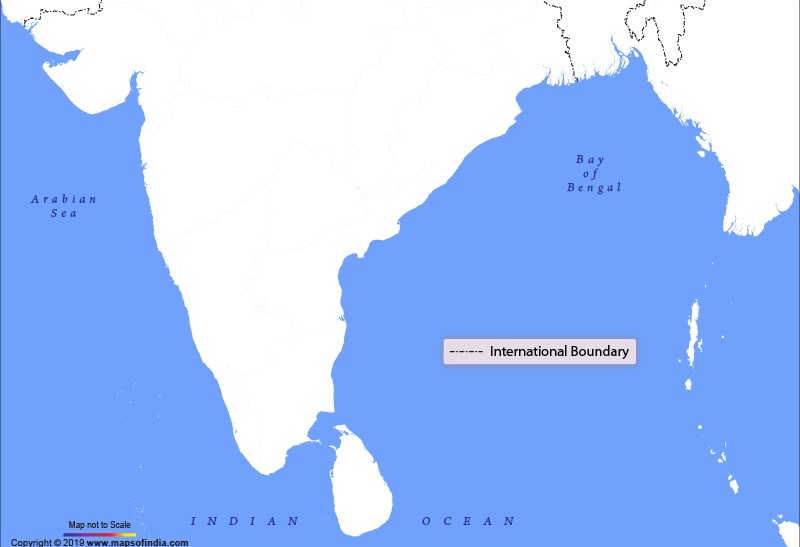
Distribution: The Zonetail Butterfly Ray occurs in the Eastern Indian, and Western and Northwest Pacific Oceans ranging from eastern India and Sri Lanka to Taiwan and the Philippines.
Depth: 0-40 m
Landing sites:
Commercial Value
The meat of the Zonetail Butterfly Ray is consumed fresh or dried and salted. It is valuable in Indonesia but sold at lower costs than other rays in Malaysia. It comprises a majority of the ray catch in the Karimata Strait. In Sri Lanka, this species is used for its meat and as bait for longlines. In India, the meat is usually sold either fresh or dried for human consumption. There is a specialized market selling only rays in Thalassery, north of Cochin. In India, ray meat, both fresh and dry salted, is increasing in demand and therefore price.
Threats
Throughout its distribution, the Zonetail Butterfly Ray is caught in coastal fisheries by demersal trawl, tangle nets, set nets, gill nets, droplines, longlines, and Danish seine. It is taken as retained bycatch in industrial and artisanal fisheries. In China, the number of powered fishing vessels increased from ~10,000 in the late 1960s to ~200,000 in the mid-1990s, along with an increase in vessel size and more modern fishing gear. Since 1989, the catch-per-unit-effort (CPUE) of fish stocks has steadily decreased and large, highly valued species have been replaced by small, less valuable species, with most of the catch now used as feed in aquaculture. The demand for seafood in China is high and increasing, with China one of the largest consumers of seafood products globally; a 6% annual increase per capita fish consumption was evident from 1990 to 2010.
References
Blaber, S., Dichmont, C.M., White, W.T., Buckworth, R.C., Sadiyah, L., Iskandar, B., Nurhakim, S., Pillans, R.D., Andamari, R., Dharmadi and Fahmi (2009)
Elasmobranchs in southern Indonesian fisheries: the fisheries, the status of the stocks and management options. Reviews in Fish Biology and Fisheries 19: 367–391.
Fahmi, Adrim, M., and Dharmadi (2008)
The contribution of rays in the danish seine fisheries operating at the Java Sea. J. Lit. Perikan. Indo. 14(3): 295–301.
Krajangdara, T. (2019)
Sharks and Rays of Thailand. Country Report. Department of Fisheries, Thailand.
Ravi Ranjan Kumar & S. Venu & K. V. Akhilesh & K. K. Bineesh (2021)
Report of zonetail butterfly ray, Gymnura zonura (Bleeker, 1852) and mangrove stingray Urogymnus granulatus (Macleay 1883) (Chondrichthyes: Myliobatiformes) from Andaman waters, India
Last, P., White, W., de Carvalho, M., Séret, B., Stehmann, M. and Naylor, G. (2016)
Rays of the World. CSIRO Publishing, Clayton.
MacKinnon, J.; Verkuil, Y. I.; Murray, N. (2012) IUCN situation analysis on East and Southeast Asian intertidal habitats, with particular reference to the Yellow Sea (including the Bohai Sea). Occasional Paper of the IUCN Species Survival Commission. IUCN, Gland, Switzerland and Cambridge, UK.
Ramenzoni, V.C. (2017)
Reconstructing the history and effects of mechanization in a small-scale fishery of Flores, Eastern Indonesia (1917–2014). Frontiers in Marine Science 4(65): doi: 10.3389/fmars.2017.00065.
White, W.T. and Dharmadi (2007)
Species and size compositions and reproductive biology of rays (Chondrichthyes, Batoidea) caught in target and non-target fisheries in eastern Indonesia. Journal of Fish Biology 70: 1809-1837.