
Species Name
Great Hammerhead
Scientific Name
Sphyrna mokarran (rüppell, 1837)
Family Name
Sphyrnidae
IUCN Status
Critically Endangered
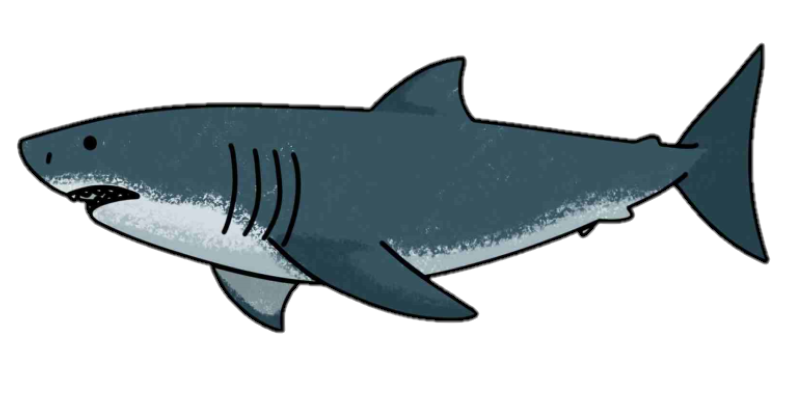
A very large hammerhead also with a notch at the center of the head. Front margin of head gently curved in juveniles, becoming nearly straight in adults, with slight median notch. 1st dorsal fin very high and curved; 2nd dorsal and pelvic fins high and with deeply concave rear margins. Light grey or grey-brown above, white below; fins without conspicuous markings.
Biology
Length: This species reaches a maximum size of 95 cm total length (TL); males mature at 50–60 cm TL and females mature at 65 cm TL. Size at birth is about 10 cm.
Gestation period: 3-4 months
Litter Size: paired egg-laying (clutch size is around 8 eggs)
Life Expectancy: 9 years (generation), 25 years max reported age
Diet: Feeds on bony fishes and crustaceans.
Habitat and distribution
Habitat: The Whitespotted Bambooshark occurs in shallow coastal inshore coral reef habitats; it is nocturnal, resting by day in reef crevices. A common but little-known inshore bottom shark; found on rocks and coral reefs.
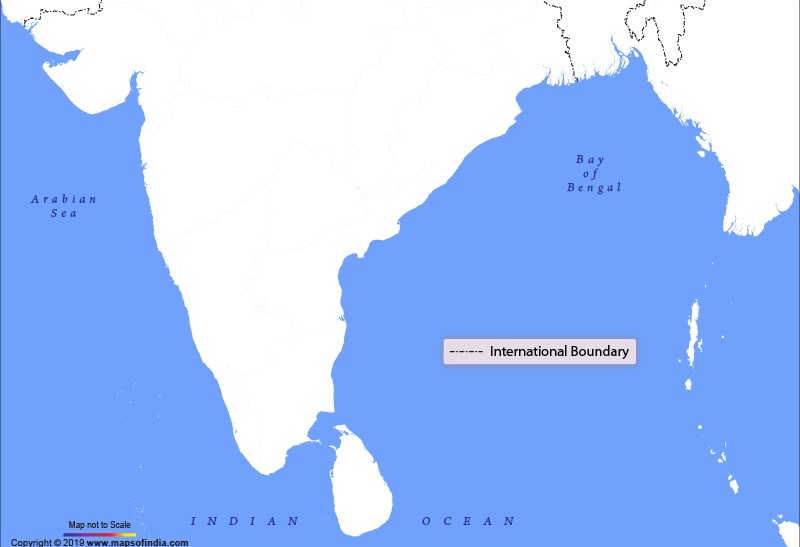
Distribution: The Whitespotted Bambooshark has a broad distribution in the Indo-West Pacific ranging from southern India to southern Japan including the Indo-Malay Archipelago and Papua New Guinea. Its presence in Myanmar is uncertain. References to the species in the southwest Indian Ocean refer to the Bluespotted Bambooshark (Chiloscyllium caeruleopunctatum).
Depth: 0-50 m
Known landing centres: Royapuram Fishing Harbour, Cuddalore Fishing Harbour, Nagapattinam Fishing Harbour, Junglighat, Burmanallah, Wandoor, Dignabad, Cochin Fisheries Harbour, New Ferry Wharf
Commercial value
The main product from the species that is traded is the fins (CITES 2013). Hammerhead fins are a significant component of the fin trade and one of the preferred species for shark fin soup. Three species of hammerhead shark, Great Hammerhead, Scalloped Hammerhead, and Smooth Hammerhead (S. zygaena), collectively accounted for 4% of the fin imported in Hong Kong in 2014. The meat, liver oil, skin, cartilage, and jaws may also be used.
Threats
The Great Hammerhead is caught globally as target and bycatch in commercial and small-scale pelagic longline, purse seine, and gillnet fisheries. It is also captured in coastal longlines, gillnets, trammel nets and sometimes trawls, particularly in areas with narrow continental shelves. The species is often retained for the fins, unless regulations prohibit retention. Under-reporting of catches in pelagic and domestic fisheries is likely. At-vessel mortality is estimated as 56% on U.S. shark bottom-longlines and 30.8% on Western Australia demersal longlines. The post-release mortality is higher for injured released sharks and has been reported as 100% for the closely-related Scalloped Hammerhead in purse seines. The species is taken in beach protection programs that target large sharks.
References
Compagno, L.J.V., D.A. Ebert and M.J. Smale (1989)
Guide to the sharks and rays of southern Africa. New Holland (Publ.) Ltd., London.
Smith, C.L. (1997)
National Audubon Society field guide to tropical marine fishes of the Caribbean, the Gulf of Mexico, Florida, the Bahamas, and Bermuda. Alfred A. Knopf, Inc., New York.
Compagno, L.J.V. (1984)
FAO Species Catalogue. Vol. 4. Sharks of the world. An annotated and illustrated catalogue of shark species known to date. Part 2 - Carcharhiniformes. FAO Fish. Synop. 125(4/2):251-655. Rome: FAO.
Mundy, B.C. (2005)
Checklist of the fishes of the Hawaiian Archipelago. Bishop Mus. Bull.
Zool. (6):1-704.
Myers, R.F. (1991)
Micronesian reef fishes. Second Ed. Coral Graphics, Barrigada, Guam. 298 p.
Camhi et .al. (2008)
A Global Overview of Commercial Fisheries for Open Ocean Sharks.