
Species Name
Snaggletooth Shark
Scientific Name
Hemipristis elongata (klunzinger, 1871)
Family Name
Hemigaleidae
IUCN Status
Vulnerable
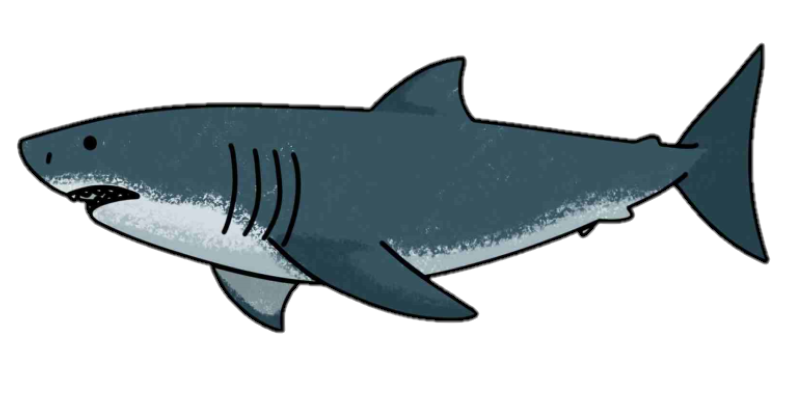
A slender weasel shark with a long, broadly rounded snout, large curved, saw-edged teeth in the upper jaw, and hooked lower teeth protruding from mouth; gill slits long; fins strongly curved. Light grey or bronzy with no prominent markings.
Biology
Length: This species attains 240 cm TL, with females and males maturing at approximately 120 and 110 cm TL, respectively. Size-at-birth ranages from 45 to 52 cm total length (TL).
Gestation Period: 7-8 months
Litter Size: 2-11 (mean: 6)
Life Expectancy: Growth appears to be quite rapid, with maturity reached in 2–3 years. Maximum observed age was 15 years. Generation length is estimated to be 9 years.
Diet: Feeds on sharks, rays and bony fishes; also cephalopods.
Habitat and distribution
Habitat: A coastal species, found inshore and offshore on the continental and insular shelves.
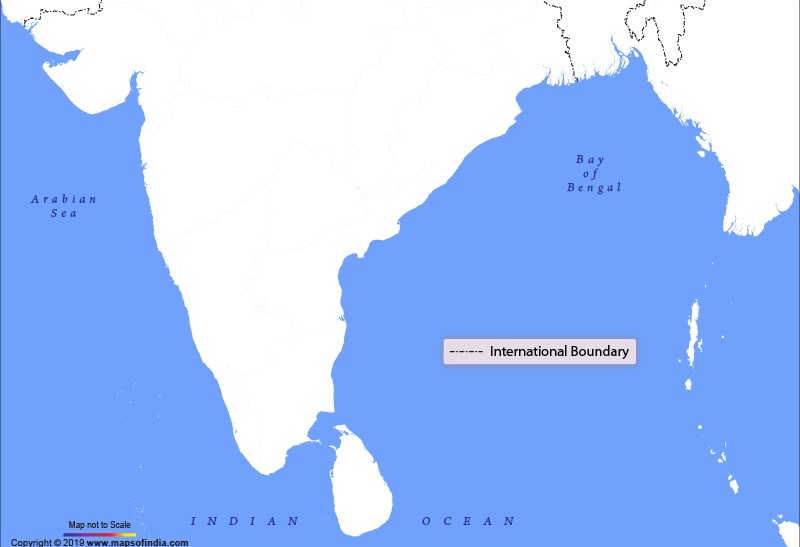
Distribution: The Fossil Shark (Snaggletooth Shark) has a wide range in the Indo-West Pacific including South Africa, Madagascar, Mozambique, Tanzania, Yemen (Aden), the Red Sea, the Arabian/Persian Gulf, Pakistan, India, Sri Lanka, Thailand, Malaysia, Viet Nam, China, Indonesia, the Philippines, southern Papua New Guinea, and northern and western Australia. In Australian waters, the species is known from Bunbury, Western Australia, to Moreton Bay, Queensland.
Depth: 0-130 m
Landing sites: New Ferry Wharf, Cochin Fisheries Harbour, Junglighat, Burmanallah, Wandoor, and Dignabad
Commercial Value
The Fossil Shark is taken for its flesh, fins, liver oil and skin. In India and Indonesia, among other countries, the flesh is considered of high quality.
Threats
The Fossil Shark is a minor component of the northern Australian gillnet and trawl (prawn and fish) fisheries. In the inshore gillnet fishery on the east coast of Queensland it makes up about 0.1% of the catch. It makes up similar proportions in other coastal fisheries across northern Australia. The catch (which is discarded) in the Australian Northern Prawn Fishery is small, and estimates of fishing mortality indicate that the level of take is sufficiently low to ensure sustainability.
References
Blaber, S.J.M., Dichmont, C.M., White, W., Buckworth, R., Sadiyah, L., Iskandar, B., Nurhakim, S., Pillans, R., Andamari, R., Dharmadi, and Fahmi (2009)
Elasmobranchs in southern Indonesian fisheries: the fisheries, the status of the stocks and management options. Reviews in Fish Biology and Fisheries 19(3): 367-391.
Compagno, L.J.V. (1984)
FAO species catalogue. Vol. 4. Sharks of the world. An annotated and illustrated catalogue of shark species known to date. FAO Fisheries Synopsis No. 125, Volume 4, Part 1.
Compagno, L.J.V. (1998)
Hemigaleidae. In: K.E. Carpenter and V.H. Niem (eds) FAO species identification guide for fishery purposes. The living marine resources of the Western Central Pacific. Volume 2. Cephalopods, crustaceans, holothurians and sharks. FAO, Rome.
Jaiteh, V.F. and Momigliano, P. (2015)
New distribution records of the Vulnerable fossil shark Hemipristis elongata from eastern Indonesia call for improved fisheries management. Marine Biodiversity Records 8(e79).
Last, P.R. and Stevens, J.D. (2009)
Sharks and Rays of Australia. Second Edition. CSIRO Publishing, Collingwood.
Taylor, S.M. and Bennett, M.B. (2013)
Size, sex and seasonal patterns in the assemblage of Carcharhiniformes in a sub-tropical bay. Journal of Fish Biology 82: 228-241.
White, W.T. (2007)
Aspects of the biology of carcharhiniform sharks in Indonesian waters. Journal of the Marine Biological Association of the United Kingdom 87: 1269-1276.
Smart, J.J., Harry, A.V., Tobin, A.J. and Simpfendorfer, C.A. (2013) Overcoming the constraints of low sample sizes to produce age and growth data for rare or threatened sharks. Aquatic Conservation: Marine and Freshwater Ecosystems 23: 124–134.
Stevens, J.D. and McLoughlin, K.J. (1991)
Distribution, size and sex composition, reproductive biology and diet of sharks from northern Australia. Australian Journal of Marine and Freshwater Research 42:151-199.
Stobutzki, I.C., Miller, M.J., Heales, D.S. and Brewer, D.T. (2002) Sustainability of elasmobranches caught as bycatch in a tropical prawn (shrimp) trawl fishery. Fishery Bulletin 100: 800-821.
Zhou, S. and Griffiths, S.P. (2008)
Sustainability Assessment for Fishing Effects (SAFE): a new quantitative ecological risk assessment method and its application to elasmobranch bycatch in an Australian trawl fishery. Fisheries Research 91: 56–68.