
Species Name
Slender Weasel Shark
Scientific Name
Paragaleus randalli (compagno, krupp & carpenter, 1996)
Family Name
Hemigaleidae
IUCN Status
Vulnerable
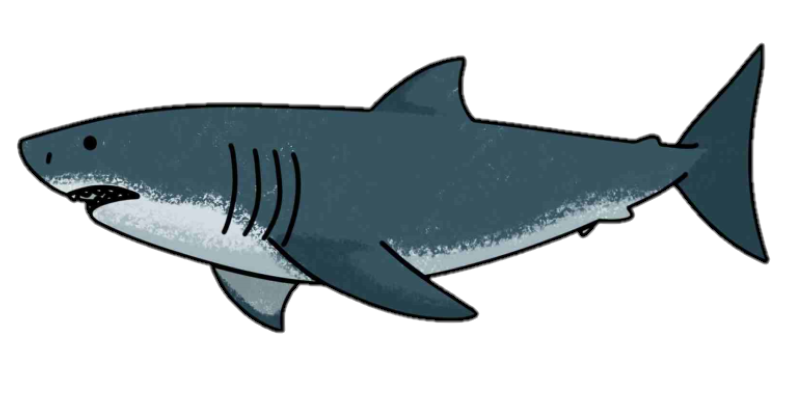
A species of Paragaleus with a narrowly rounded prenarial snout. Snout with a narrowly rounded tip in lateral view; preoral snout about 1.0-1.4 times mouth width. Mouth long, jaw symphyses extending well anterior to upper labial furrows. Lower jaw relatively deep, prominently visible in lateral view. Longest gill openings about 0.9-1.3 times eye length in adults. Palate and tongue covered by buccopharyngeal denticles. Upper and lower teeth not strongly differentiated, lower anterolateral teeth mostly oblique-cusped and with one or two distal cusplets on five or more rows. Adults with pectoral fins strongly falcate; dorsal and anal fins with deeply concave posterior margins. Total vertebrae 165-187, monospondylous precaudal (MP) centra 38-43, diplospondylous precaudal (DP) centra 51-65, diplospondylous caudal (DC) centra 64-79; caudal vertebrae fewer (38.8-44.3 % of total counts) than precaudals; no ‘stutter zone’ of alternating long and short centra in region of mono-diplospondylous transition. Underside of prenarial snout with a pair of narrow black lines but no dark patches. No horizontal yellow stripes on sides of body. Dark webs and inconspicuous light posterior margins on most fins but no abruptly white or black tips.
Biology
Length: Upto 84 cm total length (TL). Males mature at 60-70 cm (TL). Size at birth 29 cm (TL)
Gestation Period: Unknown
Litter Size: 2 pups
Life Expectancy: Inferred as 8 years (generation length)
Diet: Unknown
Habitat and Distribution
Habitat: The Slender Weasel Shark occurs inshore on the inner continental shelf.
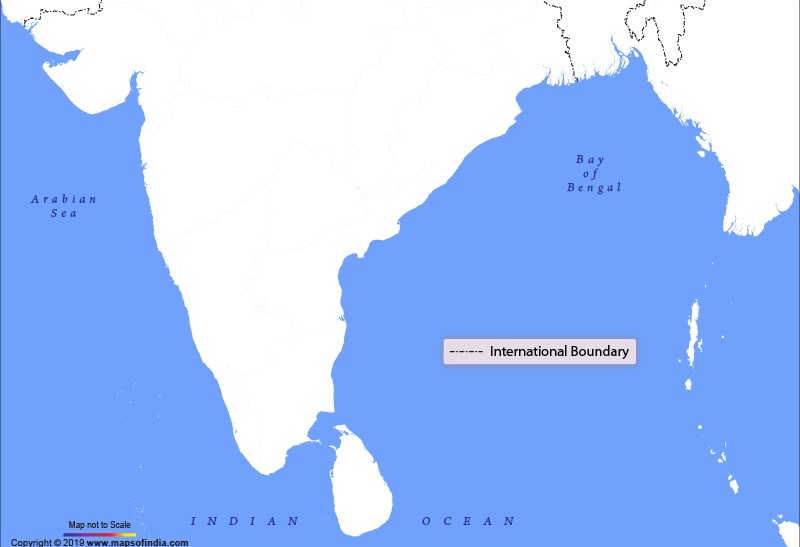
Distribution: The Slender Weasel Shark has a patchy distribution in the Indo-West Pacific Ocean where it occurs in the Arabian/Persian Gulf, India (including the Andaman and Nicobar Islands), Borneo, and the Philippines. This species may be more widespread as a single individual Slender Weasel Shark was identified from the Philippines using molecular methods. This species is often confused with congeneric Sraigh-tooth Weasel Shark (P. tengi) where their distributions overlap, e.g., in Kalimantan (Indonesian Borneo). The Slender Weasel Shark has not been recorded recently in Sabah or Sarawak in Malaysian Borneo, but molecular analysis suggests this is the dominant weasel shark there.
Depth: 1-18 m
Landing sites: Chennai, Junglighat, Burmanallah, Wandoor, and Dignabad
Commercial Value
The meat of this species is often sold fresh for human consumption at local markets. Fins are not considered valuable due to their small size but are still traded internationally.
Threats
This species is subject to high fishing pressure across the entirety of its range with no refuge at depth. It is regularly taken in industrial and artisanal fisheries with multiple fishing gears including by demersal inshore trawl, gillnet, and handlines, and is retained for its fins and meat for human consumption. Fisheries in the region have experienced increased demand for sharks since the 1970s due to the shark fin trade and as a result, effort is increasing in traditional shark fisheries in many areas. Simultaneously, fishing effort and power has been increasing in the Asian region and is generally unregulated and unmanaged. This has led to a reduction in the number of shark catches in the Arabian Seas region. In Iran, there is increasing fishing effort with the number of fishermen going from 70,729 in 1993 to 109,601 in 2002.
References
Anticamara, J.A., Watson, R., Gelchu, A. and Pauly, D. (2011)
Global fishing effort (1950–2010): Trends, gaps, and implications. Fisheries Research 107(2011): 131-136.
CMFRI (2010)
Marine Fisheries Census (2010), Part 1. India, Govt. of India, Ministry of Agriculture, Dept. of Animal Husbandry, Dairying & Fisheries and Central Marine Fisheries Research Institute, Indian Council of Agricultural Research. New Dehli.
Ebert, D.A., Fowler, S. and Compagno, L. (2013)
Sharks of the World. Wild Nature Press, Plymouth
Compagno, L.J.V. (1999)
Checklist of living elasmobranchs. p. 471-498. In W.C. Hamlett (ed.) Sharks, skates, and rays: the biology of elasmobranch fishes. Johns Hopkins University Press, Maryland.
Mohamed, K.S. and Veena, S. (2016)
How long does it take for tropical marine fish stocks to recover after declines? Case studies from the Southwest coast of India. Current Science 110: 584–594.
Moore, A.B.M. and Peirce, R. (2013)
Composition of elasmobranch landings in Bahrain. African Journal of Marine Science 35: 593-596.
Tyabji, Z., Wagh, T., Patankar, V., Jabado, R.W. and Sutaria, D. (2020) Catch composition and life history characteristics of sharks and rays (Elasmobranchii) landed in the Andaman and Nicobar Islands, India. PLOS ONE 15(10): e0231069.
Watson, R.A., Cheung, W.W.L., Anticamara, J.A., Sumaila, R.U., Zeller, D. and Pauly, D. (2013)
Global marine yield halved as fishing intensity redoubles. Fish and Fisheries 14(4): 493–503.
Weigmann, S. (2016)
Annotated checklist of the living sharks, batoids and chimaeras (Chondrichthyes) of the world, with a focus on biogeographical diversity. Journal of Fish Biology 88(3): 837-1037.