
Species Name
Clubnose Guitarfish
Scientific Name
Glaucostegus thouin (anonymous [lacepède], 1798)
Family Name
Glaucostegidae
IUCN Status
Critically Endangered
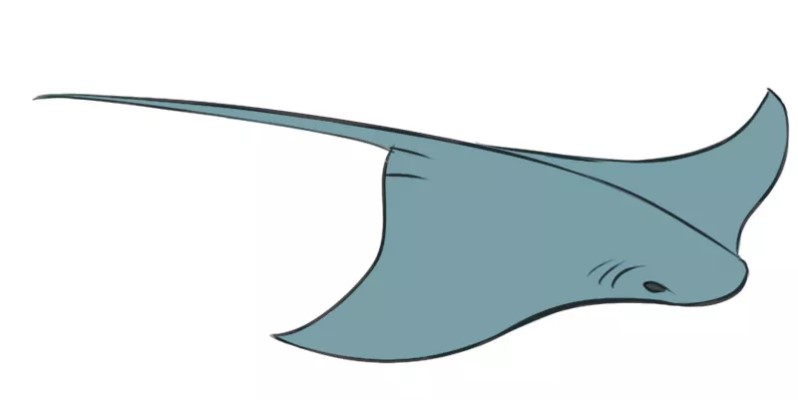
Giant guitarfish, recently recognised. Bulbous snout tip projecting forward, lacks dark blotch on snout.
Biology
Length: Maximum size is ~300 cm total length (TL).
Gestation Period: Unknown
Litter Size: Unknown (known to be small)
Life Expectancy: Generation length is estimated as 15 years.
Diet: A carnivorous fish that feeds on large shellfishes.
Habitat and distribution
Habitat: The Clubnose Guitarfish occurs from close inshore to depths of 60 m on the continental shelf.
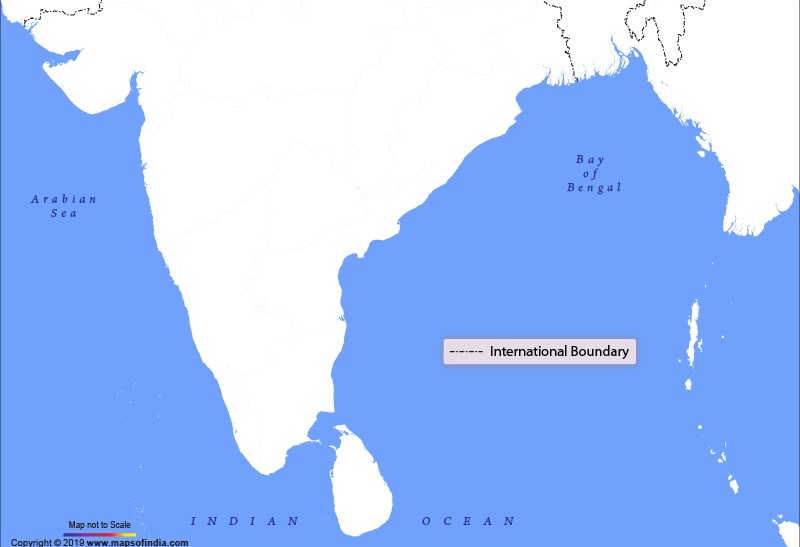
Distribution: The Clubnose Guitarfish has a moderately widespread distribution in the Indo-West Pacific from India to Borneo. Some references also list it as occurring in the Red Sea, but these records are unclear and require verification.
Depth: 0-60 m
Landing sites: Malvan
Commercial Value
Giant guitarfishes are heavily utilized across their range for the meat and fins. While little species-specific information is available, the following provides a generalized account of use and trade globally. The meat is of good quality and a food source for many coastal communities in tropical countries where it is generally consumed locally, although it also enters the international trade in dried and salted form. The ‘white’ fins of shark-like rays (including wedgefishes and giant guitarfishes) are considered the best quality fins for human consumption and are among the highest valued in the international shark fin trade. Fin prices in the literature include US$396/kg for wedgefish fins and an average price of US$276/kg and US$185/kg for Qun chi (fins from shark-like rays) in Guangzhou (mainland China) and Hong Kong, respectively. The skin may be dried and traded internationally as a luxury leather product. The eggs of shark-like rays are sometimes dried and consumed locally while the heads may also be dried and used as either fish meal or fertilizer, and the snout of giant guitarfishes are considered a delicacy in Singapore where they are steamed and the gelatinous filling consumed.
Threats
Globally, giant guitarfishes are subject to intense fishing pressure on their coastal and shelf habitats that is unregulated across the majority of their distributions. Giant guitarfishes are captured in industrial, artisanal, and subsistence fisheries with multiple fishing gears, including gillnet, trawl, hook and line, trap, and seine net and are generally retained for their meat and fins. There is a high level of fisheries resource use and increasing fishing pressure across the range of the Clubnose Guitarfish, and demersal coastal fisheries resources have been severely depleted in significant areas of the Indo-West Pacific, including India and Southeast Asia.
References
Bonfil, R. and Abdallah, M. (2004)
Field identification guide to the sharks and rays of the Red Sea and Gulf of Aden. FAO Species Identification Guide for Fishery Purposes. FAO, Rome.
Chen, H.K. (ed.) (1996)
Shark Fisheries and the Trade in Sharks and Shark Products in Southeast Asia. TRAFFIC Southeast Asia Report, Petaling Jaya, Selangor, Malaysia
Compagno, L.J.V. (2005)
Checklist of living Chondrichthyes. In: S.L. Fowler, M. Camhi, G.H. Burgess, G.M. Cailliet, S.V. Fordham, R.D. Cavanagh, C.A. Simpfendorfer, and J.A. Musick (eds) Sharks, rays and chimaeras: the status of the chondrichthyan fishes. IUCN SSC Shark Specialist Group. IUCN, Gland, Switzerland and Cambridge, UK.
Haque, A.B., Biswas, A.R. and Latifa, G.A. (2018) Observations of shark and ray products in the processing centres of Bangladesh, trade in CITES species and conservation needs. TRAFFIC Bulletin 30(1): 6–14.
Jabado, R.W., Kyne, P.M., Pollom, R.A., Ebert, D.A., Simpfendorfer, C.A., Ralph, G.M. and Dulvy, N.K. (eds.). (2017)
The conservation status of sharks, rays, and chimaeras in the Arabian Sea and adjacent waters. Environment Agency – Abu Dhabi, UAE and IUCN Species Survival Commission Shark Specialist Group, Vancouver, Canada.
Mohamed, K.S. and Veena, S. (2016)
How long does it take for tropical marine fish stocks to recover after declines? Case studies from the Southwest coast of India. Current Science 110: 584–594.
Mohanraj, G., Rajapackiam, S., Mohan, S., Batcha, H. and Gomathy, S. (2009)
Status of elasmobranchs fishery in Chennai, India. Asian Fisheries Science, 22(2): 607-615.
Stobutzki, I.C., Silvestre, G.T., Abu Talib, A., Krongprom, A., Supongpan, M., Khemakorn, P., Armada, N., and Garces, L.R. (2006)
Decline of demersal coastal fisheries resources in three developing Asian countries. Fisheries Research 78: 130-142.
Suzuki, T. (2002)
Development of shark fisheries and shark fin export in Indonesia: case study of Karangsong Village, Indramayu, West Java. In: Fowler, S.L., Reed, T.M. and Dipper, F.A. (eds), Elasmobranch Biodiversity, Conservation and Management: Proceedings of the International Seminar and Workshop, Sabah, Malaysia, July 1997, pp. 149–157. IUCN SSC Shark Specialist Group, Gland, Switzerland and Cambridge.