
Species Name
Halavi Guitarfish
Scientific Name
Glaucostegus halavi (forsskål, 1775)
Family Name
Glaucostegidae
IUCN Status
Critically Endangered
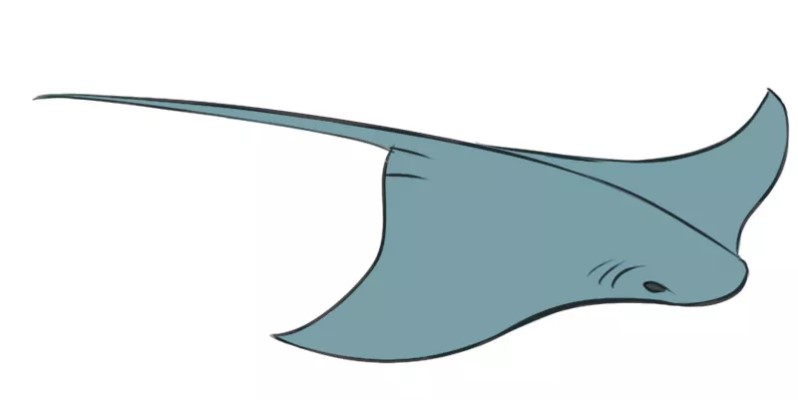
Single large thorn on each shoulder. Ventral surface entirely white.
Biology
Length: Maximum size is 187 cm total length (TL); males and females mature at ~83 cm TL. Size at birth is ~29 cm TL.
Gestation Period: Unknown
Litter Size: upto 10 pups
Life Expectancy: Generation length is estimated as 10 years.
Diet: Feed on small mollusks and bony fishes.
Habitat and distribution
Habitat: A benthic species often found in very shallow water near the coast and offshore on the continental shelf.
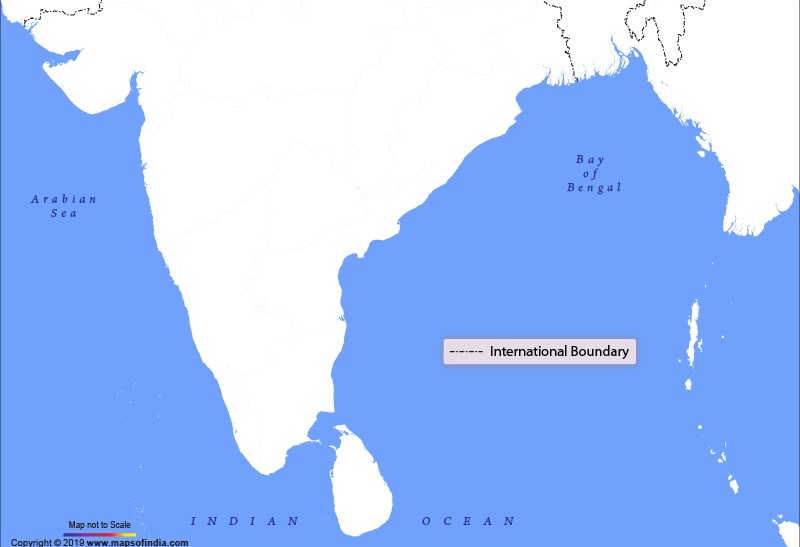
Distribution: The Halavi Guitarfish is endemic to the Arabian Sea and its adjacent waters in the Western Indian Ocean, where it occurs in coastal waters of the Red Sea and the Gulf of Aden, the Arabian Sea from Kenya and Yemen to northern India (Gujarat), including the southern Arabian/Persian Gulf.
Depth: 0-100 m
Landing sites:
Commercial Value
Giant guitarfishes are heavily utilized across their range for the meat and fins. While little species-specific information is available, the following provides a generalized account of use and trade globally. The meat is of good quality and a food source for many coastal communities in tropical countries where it is generally consumed locally, although it also enters the international trade in dried and salted form. The ‘white’ fins of shark-like rays (including wedgefishes and giant guitarfishes) are considered the best quality fins for human consumption and are among the highest valued in the international shark fin trade. Fin prices in the literature include US$396/kg for wedgefish fins and an average price of US$276/kg and US$185/kg for Qun chi (fins from shark-like rays) in Guangzhou (mainland China) and Hong Kong, respectively. The skin may be dried and traded internationally as a luxury leather product. The eggs of shark-like rays are sometimes dried and consumed locally while the heads may also be dried and used as either fish meal or fertilizer, and the snout of giant guitarfishes are considered a delicacy in Singapore where they are steamed and the gelatinous filling consumed.
Threats
Globally, giant guitarfishes are subject to intense fishing pressure on their coastal and shelf habitats that is unregulated across the majority of their distributions. Giant guitarfishes are captured in industrial, artisanal, and subsistence fisheries with multiple fishing gears, including gillnet, trawl, hook and line, trap, and seine net and are generally retained for their meat and fins. There is a high level of fisheries resource use and increasing fishing pressure across the range of the Halavi Guitarfish, and demersal coastal fisheries resources have been severely depleted in significant areas of the Indo-West Pacific, including India.
References
Bonfil, R. and Abdallah, M. (2004)
Field identification guide to the sharks and rays of the Red Sea and Gulf of Aden. FAO Species Identification Guide for Fishery Purposes. FAO, Rome.
Chen, H.K. (ed.) (1996)
Shark Fisheries and the Trade in Sharks and Shark Products in Southeast Asia. TRAFFIC Southeast Asia Report, Petaling Jaya, Selangor, Malaysia
Compagno, L.J.V. (2005)
Checklist of living Chondrichthyes. In: S.L. Fowler, M. Camhi, G.H. Burgess, G.M. Cailliet, S.V. Fordham, R.D. Cavanagh, C.A. Simpfendorfer, and J.A. Musick (eds) Sharks, rays and chimaeras: the status of the chondrichthyan fishes. IUCN SSC Shark Specialist Group. IUCN, Gland, Switzerland and Cambridge, UK.
Haque, A.B., Biswas, A.R. and Latifa, G.A. (2018) Observations of shark and ray products in the processing centres of Bangladesh, trade in CITES species and conservation needs. TRAFFIC Bulletin 30(1): 6–14.
Jabado, R.W. (2018)
The fate of the most threatened order of elasmobranchs: Shark-like batoids (Rhinopristiformes) in the Arabian Sea and adjacent waters. Fisheries Research 204: 448–457.
Jabado, R.W. (2019)
Wedgefishes and Giant Wedgefishes: A Species Identification. Wildlife Conservation Society, New York, United States. 30 pp
Mohamed, K.S. and Veena, S. (2016)
How long does it take for tropical marine fish stocks to recover after declines? Case studies from the Southwest coast of India. Current Science 110: 584–594.
Moore, A.B.M. (2017)
Are guitarfishes the next sawfishes? Extinction risk and an urgent call for conservation action. Endangered Species Research 34: 75–88.
Ritragsa, S. (1976)
Results of the studies on the status of demersal fish resources in the Gulf of Thailand from trawling surveys, 1963–1972. In: Tiews, K. (ed.), Fisheries Resources and Their Management in Southeast Asia, pp. 198–223. Federal Research Board for Fisheries, and Food and Agriculture Organization of the United Nations (FAO), Berlin (West).