
Species Name
Giant Guitarfish
Scientific Name
Glaucostegus typus (anonymous [bennett], 1830)
Family Name
Glaucostegidae
IUCN Status
Critically Endangered
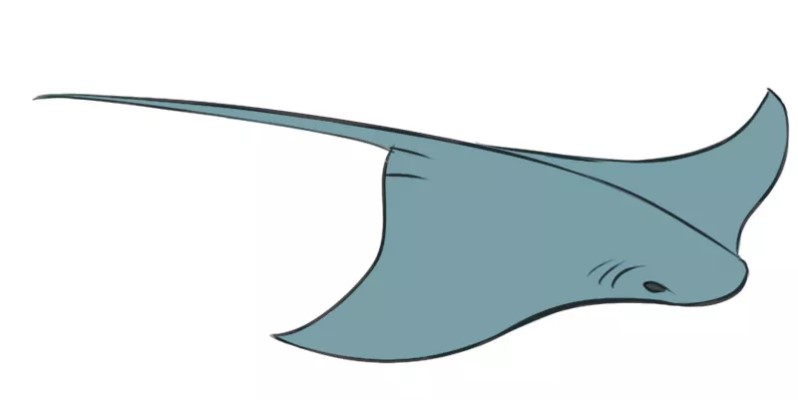
It had a broadly triangular, opaque snout, guitar-shaped body with a dorsoventrally flattened head and there is no gap between the pectoral and pelvic fins.
Biology
Length: Maximum size is at least 270 cm total length (TL); males and females mature at 150–180 cm TL. Size at birth is 38–40 cm TL.
Gestation Period: Unknown
Litter Size: Unknown
Life Expectancy: Age at maturity is estimated at 6–8 years for males and females; maximum age is 19 years (250 cm TL female), but is likely higher since the species reaches at least 270 cm TL. Generation length is estimated as 15 years.
Diet: Feeds on shellfish, mainly on prawns and crabs.
Habitat and distribution
Habitat: Although juveniles and adults are known to co-occur within inshore coastal habitats, embayments and coral reef atolls, neonates and juveniles are more common within shallow areas, including the inter-tidal zone. Upon reaching sexual maturity, the species undergoes an apparent change in habitat use as they become less frequent within inshore waters and only return to these areas on a seasonal basis, exhibiting philopatry presumably for reproductive behaviours.
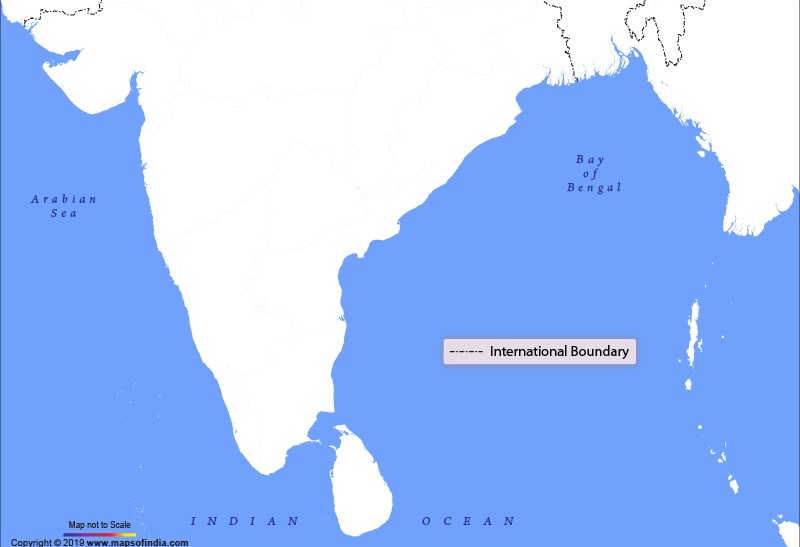
Distribution: The Giant Guitarfish is widespread in the Eastern Indian and Western Pacific Oceans, where it occurs from India to Australia (where it is widespread across the north of the continent), Papua New Guinea, and the Solomon Islands, and north to Taiwan.
Depth: 0-100 m
Landing sites: Junglighat
Commercial Value
Giant guitarfishes are heavily utilized across their range for the meat and fins. The exception for this species is Australia where the Giant Guitarfish is generally not utilized or traded. While little species-specific information is available, the following provides a generalized account of use and trade globally. The meat is of good quality and a food source for many coastal communities in tropical countries where it is generally consumed locally, although it also enters the international trade in dried and salted form. The ‘white’ fins of shark-like rays (including wedgefishes and giant guitarfishes) are considered the best quality fins for human consumption and are among the highest valued in the international shark fin trade. Fin prices in the literature include US$396/kg for wedgefish fins and an average price of US$276/kg and US$185/kg for Qun chi (fins from shark-like rays) in Guangzhou (mainland China) and Hong Kong, respectively. The skin may be dried and traded internationally as a luxury leather product. The eggs of shark-like rays are sometimes dried and consumed locally while the heads may also be dried and used as either fish meal or fertilizer, and the snout of giant guitarfishes are considered a delicacy in Singapore where they are steamed and the gelatinous filling consumed.
Threats
Globally, giant guitarfishes are subject to intense fishing pressure on their coastal and shelf habitats that is unregulated across the majority of their distributions. Giant guitarfishes are captured in industrial, artisanal, and subsistence fisheries with multiple fishing gears, including gillnet, trawl, hook and line, trap, and seine net and are generally retained for their meat and fins (Bonfil and Abdallah 2004, White and Sommerville 2010, Moore 2017, Jabado 2018). There is a high level of fisheries resource use and increasing fishing pressure across the range of the Giant Guitarfish, and demersal coastal fisheries resources have been severely depleted in significant areas of the Indo-West Pacific, including India and Southeast Asia (Stobutzki et al. 2006, Mohamed and Veena 2016). Fishing pressure is however considerably lower across northern Australia.
References
Nora A. Shaker and Hamdy M. Rezk (2017)
Anatomical Study on the Gills with its Respiratory Circulation in Shovelnose Ray Fish (Glaucostegus Typus).
Compagno, L.J.V. (2005)
Checklist of living Chondrichthyes. In: S.L. Fowler, M. Camhi, G.H. Burgess, G.M. Cailliet, S.V. Fordham, R.D. Cavanagh, C.A. Simpfendorfer, and J.A. Musick (eds) Sharks, rays and chimaeras: the status of the chondrichthyan fishes. IUCN SSC Shark Specialist Group. IUCN, Gland, Switzerland and Cambridge, UK.
Haque, A.B., Biswas, A.R. and Latifa, G.A. (2018)
Observations of shark and ray products in the processing centres of Bangladesh, trade in CITES species and conservation needs. TRAFFIC Bulletin 30(1): 6–14.
Last, P.R., Séret, B. and Naylor, G.J.P. (2016a)
A new species of guitarfish, Rhinobatos borneensis sp. nov. with a redefinition of the family-level classification in the order Rhinopristiformes (Chondrichthyes: Batoidea). Zootaxa 4117(4): 451-475.
Tous, P., Ducrocq, M., Bucal, D. and Feron, E. (1998) Shark populations are possibly under serious threat in the Bijagos archipelago (Biosphere Reserve), Guinea Bissau, West Africa. Shark News. Newsletter of the IUCN Shark Specialist Group 10: 4.