
Species Name
Widenose Guitarfish
Scientific Name
Glaucostegus obtusus (müller & henle, 1841)
Family Name
Glaucostegidae
IUCN Status
Critically Endangered
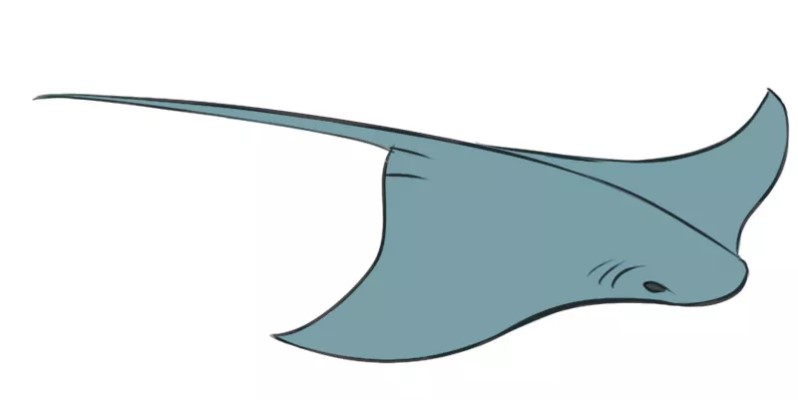
This species is distinguished by the following: colour uniform greyish to brownish body and shovel-shaped disc; short snout broadly triangular, broad oblique nostrils with an oval anterior opening; disc flattened centrally, its length ca 1.2 times its width, anterior margin largely convex, outer corner broadly rounded to abruptly angular; snout relatively obtuse, ca. 80° angle, tip broadly rounded and not extended forward as a lobe, very small orbit its length ca 6.5 time preorbital length, 2.5-2.7 in interorbital space; rostral ridges are well separated, margin of cranium sharply demarcated before eyes; one small spiracular fold; nostrils much shorter than mouth, subequal to internasal width, ca. 50-52 nasal lamellae; anterior nasal flaps barely penetrating into internasal space, the interspace equal to 2.4-2.5 times length of posterior nasal aperture; rough skin covered with small denticles, enlarged slightly and more granular on dorsal surface than ventrally; along midline of the body in young are thorns in irregular row, irregular in shape, often obscure in adults; no obvious patch on each shoulder or greatly enlarged thorns in snout tip and around orbits; long tail, 1.4-1.6 times disc length; short dorsal fins, apices rounded, close together, interspace exceeding twice base length of first dorsal fin, well separated from pelvic fins.
Biology
Length: Maximum size is 93 cm total length (TL); males mature at ~48 cm TL.
Gestation Period: Unknown
Litter Size: 4-10
Life Expectancy: Generation length is estimated as 10 years.
Diet: Unknown
Habitat and distribution
Habitat: Found inshore and offshore.
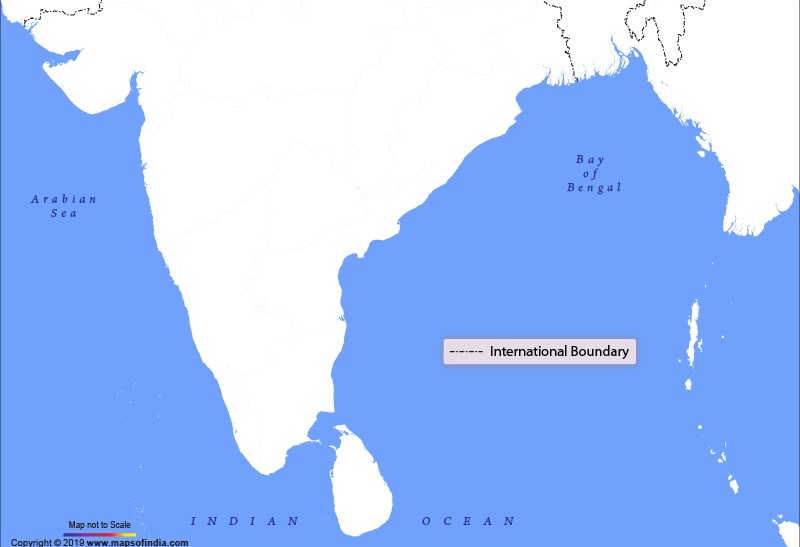
Distribution: The Widenose Guitarfish is moderately widespread in the northern Indian Ocean from Pakistan to the Gulf of Thailand.
Depth: 0-60 m
Landing sites: Cochin Fisheries Harbour, Malvan, Thoothukudi
Commercial value
Giant guitarfishes are heavily utilized across their range for the meat and fins. While little species-specific information is available, the following provides a generalized account of use and trade globally. The meat is of good quality and a food source for many coastal communities in tropical countries where it is generally consumed locally, although it also enters the international trade in dried and salted form. The ‘white’ fins of shark-like rays (including wedgefishes and giant guitarfishes) are considered the best quality fins for human consumption and are among the highest valued in the international shark fin trade. Fin prices in the literature include US$396/kg for wedgefish fins and an average price of US$276/kg and US$185/kg for Qun chi (fins from shark-like rays) in Guangzhou (mainland China) and Hong Kong, respectively. The skin may be dried and traded internationally as a luxury leather product. The eggs of shark-like rays are sometimes dried and consumed locally while the heads may also be dried and used as either fish meal or fertilizer, and the snout of giant guitarfishes are considered a delicacy in Singapore where they are steamed and the gelatinous filling consumed.
Threats
Globally, giant guitarfishes are subject to intense fishing pressure on their coastal and shelf habitats that is unregulated across the majority of their distributions. Giant guitarfishes are captured in industrial, artisanal, and subsistence fisheries with multiple fishing gears, including gillnet, trawl, hook and line, trap, and seine net and are generally retained for their meat and fins. There is a high level of fisheries resource use and increasing fishing pressure across the range of the Widenose Guitarfish, and demersal coastal fisheries resources have been severely depleted in significant areas of the Indo-West Pacific, including India and Southeast Asia.
References
Bonfil, R. and Abdallah, M. (2004)
Field identification guide to the sharks and rays of the Red Sea and Gulf of Aden. FAO Species Identification Guide for Fishery Purposes. FAO, Rome.
Chen, H.K. (ed.) (1996)
Shark Fisheries and the Trade in Sharks and Shark Products in Southeast Asia. TRAFFIC Southeast Asia Report, Petaling Jaya, Selangor, Malaysia
Last, P.R., W.T. White, M.R. de Carvalho, B. Séret, M.F.W. Stehmann and G.J.P. Naylor, (2016)
Rays of the world. CSIRO Publishing, Comstock Publishing Associates. i-ix + 1-790.
Haque, A.B., Biswas, A.R. and Latifa, G.A. (2018)
Observations of shark and ray products in the processing centres of Bangladesh, trade in CITES species and conservation needs. TRAFFIC Bulletin 30(1): 6–14.
Hau, C.Y., Abercrombie, D.L., Ho, K.Y.K. and Shea, K.H.S. (2018)
"King of Shark Fins" not quite sharks...so what is in my soup. A rapid survey on the availability of shark-like batoid fins in Hong Kong SAR and Guangzhou, China retail markets. BLOOM Hong Kong Shark Foundation.
Jabado, R.W. (2018)
The fate of the most threatened order of elasmobranchs: Shark-like batoids (Rhinopristiformes) in the Arabian Sea and adjacent waters. Fisheries Research 204: 448–457.
Mohamed, K.S. and Veena, S. (2016)
How long does it take for tropical marine fish stocks to recover after declines? Case studies from the Southwest coast of India. Current Science 110: 584–594.
Stobutzki, I.C., Silvestre, G.T., Abu Talib, A., Krongprom, A., Supongpan, M., Khemakorn, P., Armada, N., and Garces, L.R. (2006)
Decline of demersal coastal fisheries resources in three developing Asian countries. Fisheries Research 78: 130-142.
Suzuki, T. (2002)
Development of shark fisheries and shark fin export in Indonesia: case study of Karangsong Village, Indramayu, West Java. In: Fowler, S.L., Reed, T.M. and Dipper, F.A. (eds), Elasmobranch Biodiversity, Conservation and Management: Proceedings of the International Seminar and Workshop, Sabah, Malaysia, July 1997, pp. 149–157. IUCN SSC Shark Specialist Group, Gland, Switzerland and Cambridge.