
Species Name
Bentfin Devil Ray
Scientific Name
Mobula thurstoni (lloyd, 1908)
Family Name
Mobulidae
IUCN Status
Endangered
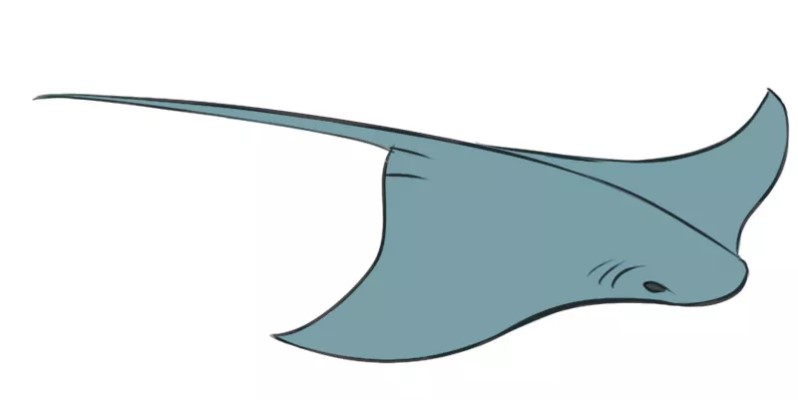
A moderate-sized devilray with a short head bearing short head fins; dorsal fin white-tipped, and pectoral fins with swept-back tips and a prominent double bend to the front margins; upper disc sparsely covered with small, blunt denticles and tail shorter than disc, with no spine. Dark blue to black above; white below, with silvery pectoral fin tips. No caudal fin.
Biology
Length: The Bentfin Devil Ray attains a confirmed maximum size of 197 cm disc width (DW) and possibly reaches 220 cm DW. Size at maturity is 150–163 cm DW for females and 150–158 cm DW for males. Born at 70–90 cm DW.
Gestation Period: 12 months (like other Mobula species, the Bentfin Devil Ray has a resting period of 1–3 years between pregnancies)
Litter Size: 1-2
Life Expectancy: Age-at-maturity and maximum age are unknown; they are inferred from the congener Spinetail Devil Ray (M. mobular) which has an age-at-maturity of 5–6 years and maximum age of 20 years, resulting in a generation length of 12.8 years. However, note that the Spinetail Devil Ray reaches a considerably larger size than the Bentfin Devil Ray (520 vs 197 cm DW) and therefore this generation length is likely overestimated.
Diet: Feeds mainly on planktonic crustaceans; mostly small shrimp-like animals.
Habitat and distribution
Habitat: The Bentfin Devil Ray occurs in neritic and oceanic waters from the surface. The Bentfin Devil Ray is a seasonal visitor along productive coastlines with regular upwelling, off oceanic island groups, and near offshore pinnacles and seamounts. The Bentfin Devilray is sighted in both upwelling pelagic environments and in shallow, productive, neritic waters.
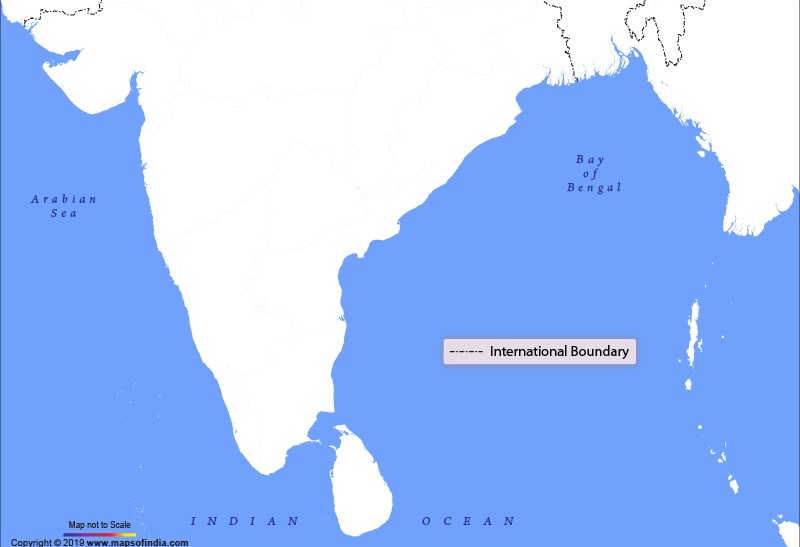
Distribution: The Bentfin Devil Ray has a circumglobal distribution and is found in tropical, subtropical, and temperate waters of the Pacific, Atlantic, and Indian Oceans.
Depth: 0-100 m
Landing sites: Junglighat, Burmanallah, Wandoor, and Dignabad
Commercial Value
The Bentfin Devil Ray is used for its meat, skin, cartilage, liver oil, and gill plates. The meat from mobulid rays, including the Bentfin Devil Ray, is often used locally or traded regionally for human consumption, animal feed, and shark. In some fisheries, this species is often ‘winged’ (i.e. removal of pectoral fins from body) with this product frozen and exported to Asia, particularly Thailand and Malaysia. The cartilage, the skin, which is commonly used for leather products (shoes, wallets, and knife handles), and the gill plates are exported to Asia. The gill plates in particular fetch high prices in Asia and are used for Chinese health tonics.
Threats
Mobulid rays, including the Bentfin Devil Ray, are both targeted and caught incidentally in industrial and artisanal fisheries. These rays are captured in a wide range of gear types including harpoons, drift nets, purse seine nets, gillnets, traps, trawls, and longlines. Their tendency to aggregate makes mobulid rays particularly susceptible to bycatch in purse seine fisheries and longline fisheries, targeted capture in artisanal fisheries, and incidental entanglement. Devil rays are often easy to target because of their large size, slow swimming speed, tendency to aggregate or predictably use specific habitats, and their general lack of human avoidance. The Bentfin Devil Ray’s epipelagic tropical distribution in regions of high productivity, which overlaps with that of tuna and other highly valued target teleost (bony fish) species, means it is exposed to multiple targeted and bycatch fisheries. Furthermore, this species’ preference for coastal waters places it within the range of inshore fisheries, which are known to be intensive in many parts of its range, including Pakistan, India, and Sri Lanka.
References
Couturier, L.I.E., Marshall, A.D., Jaine, F.R.A., Kashiwagi, T., Pierce, S.J., Townsend, K.A., Weeks, S.J., Bennet, M.B. and Richardson, A.J. (2012)
Biology, ecology and conservation of the Mobulidae. Journal of Fish Biology 80: 1075-1119.
Cuevas-Zimbrón, E., Sosa-Nishizaki, O., Pérez-Jiménez, J. C. and O’Sullivan, J. B. (2013)
An analysis of the feasibility of using caudal vertebrae for ageing the spinetail devilray, Mobula japanica (Müller and Henle, 1841). Environmental Biology of Fishes 96(8): 907-914.
Croll, D.A., Newton, K.M., Weng, K., Galvan-Magana, F., O’Sullivan, J., and Dewar, H. (2012)
Movement and habitat use by the spine-tail devil ray in the Eastern Pacific Ocean. Marine Ecology Progress Series 465: 193-200. doi:10.3354/meps09900.
Gadig, O.B.F., Namora, R.C. and Motta, F.D.S. (2003) Occurrence of the bentfin devil ray, Mobula thurstoni (Chondrichthyes: Mobulidae), in the western Atlantic. Journal of the Marine Biological Association of the United Kingdom 83:869–870.
Notarbatolo-di-Sciara, G. (1988)
Natural history of the rays of the genus Mobula in the Gulf of California. Fishery Bulletin 86(1):45–66.
Raje, S.G. and Zacharia, P.U. (2009)
Investigations on fishery and biology of nine species of rays in Mumbai waters. Indian Journal of Fisheries 56(2): 95-101.
White, W.T., Giles, J., Dharmadi and Potter, I.C. (2006b)
Data on the bycatch fishery and reproductive biology of mobulid rays (Myliobatiformes) in Indonesia. Fisheries Research 82: 65-73.