
Species Name
Longhorned Pygmy Devil Ray
Scientific Name
Mobula eregoodoo (cantor, 1849)
Family Name
Mobulidae
IUCN Status
Endangered
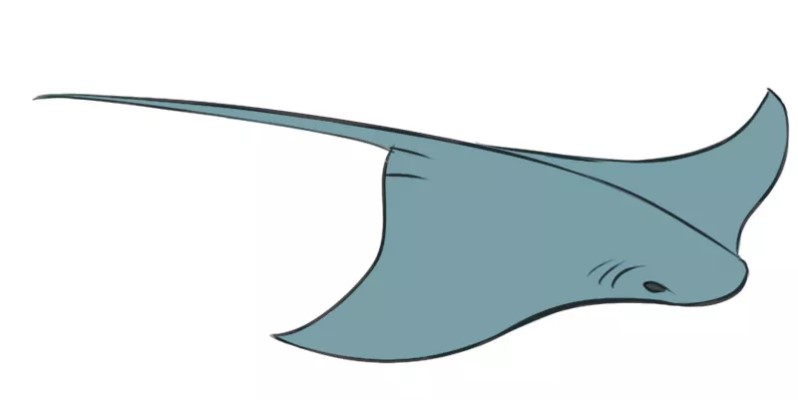
Brownish-grey above, whitish below. Underside of pectorals with semicircular black blotch along middle of anterior edge
Biology
Length: It reaches a maximum size of 130 cm disc width (DW); males and females are mature by 99 cm DW and 92.5 cm DW, respectively. Size-at-birth of ~43 cm DW.
Gestation Period: atleast 10 months, possibly >12 months.
Litter Size: usually produce 1 large pup
Life Expectancy: 12.8 years (generation length, likely overestimated)
Diet: Feeds on plankton.
Habitat and distribution
Habitat: The Longhorned Pygmy Devil Ray is an inshore and offshore species found in continental shelf areas, including coral reef habitats.
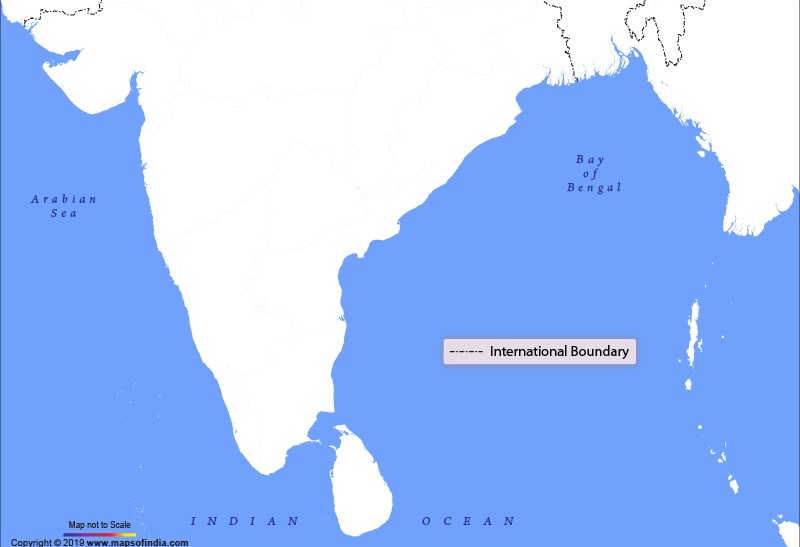
Distribution: The Longhorned Pygmy Devil Ray has an Indo-West Pacific distribution from South Africa to Australia. As presently known, the distribution is patchy, but it is most likely more wide-ranging than current confirmed records suggest.
Depth: 0-50 m
Landing sites: Royapuram Fishing Harbour, Cuddalore Fishing Harbour, Nagapattinam Fishing Harbour
Commercial Value
The Longhorned Pygmy Devil Ray is used for its meat, and likely as for other Mobula species, the skin, cartilage, liver oil, and gill plates. The meat from mobulid rays, including the Longhorned Pygmy Devil Ray, is often used locally or traded regionally, both fresh and dried, for human consumption. Similar to other Mobula species, it is likely that the cartilage, the skin, which is commonly used for leather products (shoes, wallets, and knife handles), and the gill plates are exported to Asia. The gill plates are used for Chinese health tonics. However, to date there are no confirmed records from retail surveys of gill plates in trade of the Longhorned Pygmy Devil Ray, or of the similar-sized Shorthorned Pygmy Devil Ray (M. kuhlii). The Longhorned Pygmy Devil Ray gill plates are unique and easy to identify and it is possible that their small size precludes demand, as smaller gill plates fetch lower prices, or that they have been included as Mobula spp. in the retail surveys.
Threats
Mobulid rays, including the Longhorned Pygmy Devil Ray, are targeted and caught incidentally in industrial and artisanal fisheries. These rays are captured in a wide range of gear types including harpoons, drift nets, purse seine nets, gillnets, traps, trawls, and longlines. Their tendency to aggregate makes mobulid rays particularly susceptible to bycatch in purse seine fisheries and longline fisheries, targeted capture in artisanal fisheries, and incidental entanglement. Devil rays are often easy to target because of their large size, slow swimming speed, tendency to aggregate or predictably use specific habitats, and their general lack of human avoidance. The species’ preference for coastal waters places it within the range of inshore fisheries, which are known to be intensive in many parts of its range, including Pakistan, India, Bangladesh, and elsewhere.
References
Couturier, L.I.E., Marshall, A.D., Jaine, F.R.A., Kashiwagi, T., Pierce, S.J., Townsend, K.A., Weeks, S.J., Bennet, M.B. and Richardson, A.J. (2012)
Biology, ecology and conservation of the Mobulidae. Journal of Fish Biology 80: 1075-1119.
Croll, D.A., Dewar, H., Dulvy, N.K., Fernando, D., Francis, M.P., Galván-Magaña, F., Hall, M., Heinrichs, S., Marshall, A., McCauley, D., Newton, K.M., Notarbartolo-Di-Sciara, G., O'Malley, M., O'Sullivan, J., Poortlivet, M., Roman, M., Stevens, G., Tershy, B.R. and White, W.T. (2016)
Vulnerabilities and fisheries impacts: the uncertain future of manta and devil rays. Aquatic Conservation: Marine and Freshwater Ecosystems 26(3): 562-575.
de Young, C. (2006)
Review of the state of world marine capture fisheries management: Indian Ocean. FAO, Rome.
Duffy, L. and Griffiths, S. (2017)
Resolving potential redundancy of productivity attributes to improve ecological risk assessments. SAC-08-07c. Inter-American Tropical Tuna Commission. Scientific Advisory Committee Eight Meeting, La Jolla, California (USA), 8-12 May 2017.
Hall M. and Roman M. (2013)
Bycatch and Non-Tuna Catch in the Tropical Tuna Purse Seine Fisheries of the World. FAO Fisheries and Aquaculture Technical Paper.
Heinrichs, S., O'Malley, M., Medd, H. and Hilton, P. (2011)
Manta Ray of Hope 2011 Report: The Global Threat to Manta and Mobula Rays. WildAid, San Francisco, CA.
Khan, M. M. (2018)
Unprecedented decline in the catches of mobulids: An important component of tuna gillnet fisheries of the Northern Arabian Sea. Indian Ocean Tuna Commission; 14th Working Party on Ecosystems and Bycatch: IOTC-2018-WPEB14-30.
Last, P., White, W., de Carvalho, M., Séret, B., Stehmann, M. and Naylor, G. (2016)
Rays of the World. CSIRO Publishing, Clayton.
Sommer, C., W. Schneider and J.-M. Poutiers, (1996)
FAO species identification field guide for fishery purposes. The living marine resources of Somalia. FAO, Rome. 376 p.
Broadhurst, M.K., Laglbauer, B.J.L. and Bennett, M.B. (2019)
Gestation and size at parturition for Mobula kuhlii cf. eregoodootenkee. Environmental Biology of Fishes 102(7): 1009-1014.
Notarbartolo di Sciara, G., Adnet, S., Bennett, M., Broahurst, M.K., Fernando, D., Jabado, R.W., Laglbauer, B.J.L. and Stevens, G. (2019) Taxonomic status, biological notes, and conservation of the longhorned pygmy devil ray Mobula eregoodoo (Cantor, 1849). Aquatic Conservation: Marine and Freshwater Ecosystems 2019: 1-19 DOI: 10.1002/aqc.3230.
Notarbartolo di Sciara, G., Fernando, D., Adnet, S., Cappetta, H. and Jabado, R.W. (2017)
Devil rays (Chondrichthyes: Mobula) of the Arabian Seas, with a redescription of Mobula kuhlii (Valenciennes in Müller and Henle, 1841). Aquatic Conservation: Marine and Freshwater Ecosystems 27: 197–218.