
Species Name
Shorthorned Pygmy Devil Ray
Scientific Name
Mobula kuhlii
Family Name
Mobulidae
IUCN Status
Endangered
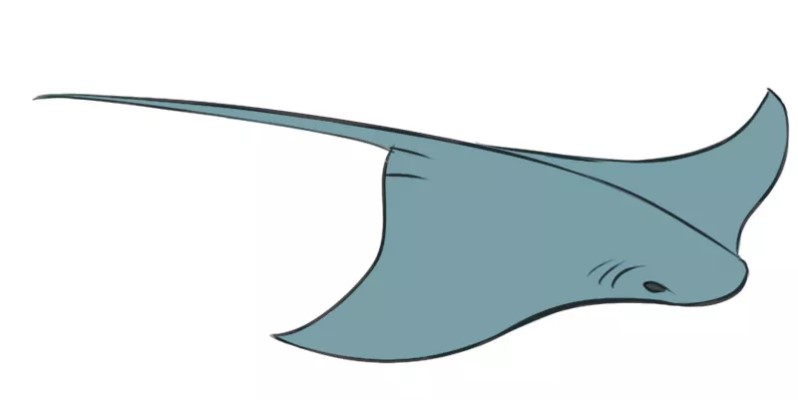
A small devilray with a short head bearing short head fins; dorsal fin white-tipped, and pectoral fins with slightly curved tips; upper surface with no denticles and tail shorter than disc, with no spine (Ref. 5578). Dark brown above, white below.
Biology
Length: It reaches a maximum size of 135 cm disc width (DW), males mature at ~115 cm DW and females are mature by 116 cm DW. A single large pup of 31–34 cm DW.
Gestation Period: Unknown
Litter Size: 1
Life Expectancy: Inferred generation length of 12.8 years.
Diet: Feeds on plankton.
Habitat and distribution
Habitat: The Shorthorned Pygmy Devil Ray is an inshore, mainly shelf species found in continental coastal areas.
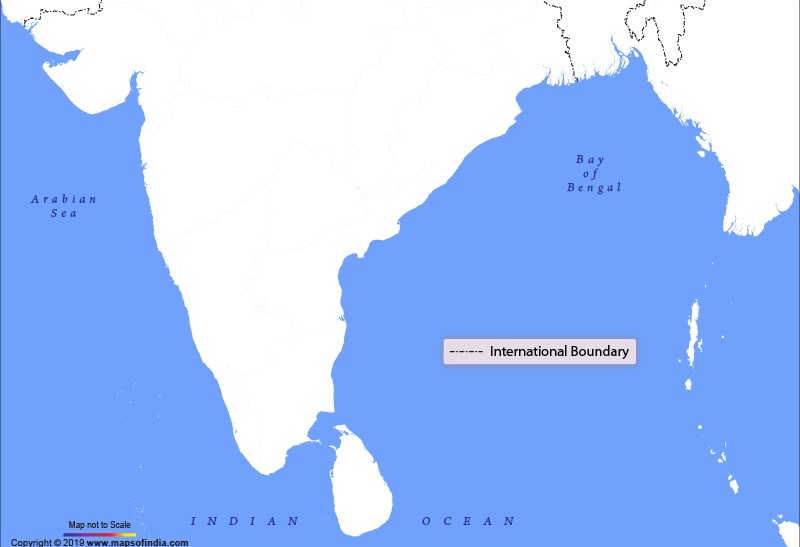
Distribution: The Shorthorned Pygmy Devil Ray has an Indo-West Pacific distribution from South Africa to the Solomon Islands. As presently known, the distribution is patchy, but it is most likely more wide-ranging than current confirmed records suggest.
Depth: 0-50 m
Landing sites: Cochin Fisheries Harbour, Digha Mohana, Junglighat
Commercial Value
The Shorthorned Pygmy Devil Ray is used for its meat, skin, cartilage, liver oil, and gill plates. The meat from mobulid rays, including the Shorthorned Pygmy Devil Ray, is often used locally or traded regionally for human consumption, animal feed, and shark bait. The cartilage, the skin, which is commonly used for leather products (shoes, wallets, and knife handles), and the gill plates are exported to Asia. The gill plates in particular fetch high prices in Asia and are used for Chinese health tonics.
Threats
Mobulid rays, including the Shorthorned Pygmy Devil Ray, are targeted and caught incidentally in industrial and artisanal fisheries. These rays are captured in a wide range of gear types including harpoons, drift nets, purse seine nets, gillnets, traps, trawls, and longlines. Their tendency to aggregate makes mobulid rays particularly susceptible to bycatch in purse seine fisheries and longline fisheries, targeted capture in artisanal fisheries, and incidental entanglement. Devil rays are often easy to target because of their large size, slow swimming speed, tendency to aggregate or predictably use specific habitats, and their general lack of human avoidance. The species’ preference for coastal waters places it within the range of inshore fisheries, which are known to be intensive in many parts of its range, including Pakistan, India, Sri Lanka, and elsewhere.
References
Coelho, R., Lino, P.G. and Santos, M.N. (2011)
At-haulback mortality of elasmobranchs caught on the Portuguese longline swordfish fishery in the Indian Ocean. Indian Ocean Tuna Commission, Technical Report.
Couturier, L.I.E., Marshall, A.D., Jaine, F.R.A., Kashiwagi, T., Pierce, S.J., Townsend, K.A., Weeks, S.J., Bennet, M.B. and Richardson, A.J. (2012)
Biology, ecology and conservation of the Mobulidae. Journal of Fish Biology 80: 1075-1119.
Croll, D.A., Dewar, H., Dulvy, N.K., Fernando, D., Francis, M.P., Galván-Magaña, F., Hall, M., Heinrichs, S., Marshall, A., McCauley, D., Newton, K.M., Notarbartolo-Di-Sciara, G., O'Malley, M., O'Sullivan, J., Poortlivet, M., Roman, M., Stevens, G., Tershy, B.R. and White, W.T. (2016)
Vulnerabilities and fisheries impacts: the uncertain future of manta and devil rays. Aquatic Conservation: Marine and Freshwater Ecosystems 26(3): 562-575.
Cuevas-Zimbrón, E., Sosa-Nishizaki, O., Pérez-Jiménez, J. C. and O’Sullivan, J. B. (2013)
An analysis of the feasibility of using caudal vertebrae for ageing the spinetail devilray, Mobula japanica (Müller and Henle, 1841). Environmental Biology of Fishes 96(8): 907-914.
Duffy, L. and Griffiths, S. (2017)
Resolving potential redundancy of productivity attributes to improve ecological risk assessments. SAC-08-07c. Inter-American Tropical Tuna Commission. Scientific Advisory Committee Eight Meeting, La Jolla, California (USA), 8-12 May 2017.
O'Malley, M.P., Townsend, K.A., Hilton, P., Heinrichs, S. and Stewart, J.D. (2017) Characterization of the trade in manta and devil ray gill plates in China and South-east Asia through trader surveys. Aquatic Conservation: Marine and Freshwater Ecosystems 27(2): 394-413.
Weigmann, S. (2016)
Annotated checklist of the living sharks, batoids and chimaeras (Chondrichthyes) of the world, with a focus on biogeographical diversity. Journal of Fish Biology 88(3): 837-1037.