
Species Name
Sicklefin Devil Ray
Scientific Name
Mobula tarapacana (philippi, 1892)
Family Name
Mobulidae
IUCN Status
Endangered
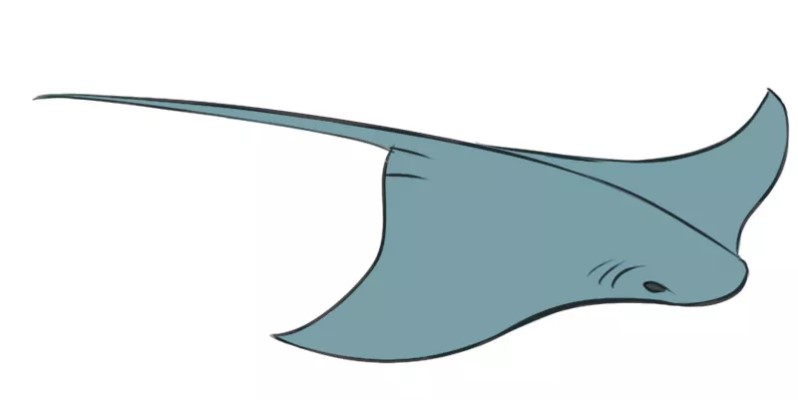
A large devil ray with a long head bearing short head fins; dorsal fin plain, and pectoral fins with strongly curved, swept-back tips; upper disc densely covered with small, pointed denticles and tail shorter than disc with no spine. Dark blue, olive-green to brownish above; ventral side white anteriorly, grey posteriorly, with an irregular but distinct line of demarcation. No caudal fin.
Biology
Length: The Sicklefin Devil Ray is one of the largest mobulid species, attaining a maximum size of 370 cm disc width (DW). Size at maturity is 270–280 cm DW for females and 198–250 cm DW for males. Pup born at 120–130 cm DW.
Gestation Period: Unknown
Litter Size: 1 large pup
Life Expectancy: A generation length of 12.8 years (inferred)
Diet: Feeds on small fishes and planktonic crustaceans.
Habitat and distribution
Habitat: The Sicklefin Devil Ray is primarily oceanic, but is also found in coastal waters, and appears to be a seasonal visitor along productive coastlines with regular upwelling in oceanic island groups, and near offshore pinnacles and seamounts. It has been observed travelling both in schools and in solitude. The species is highly mobile and capable of significant migrations. Tagged individuals have travelled over 3,800 km over seven months.
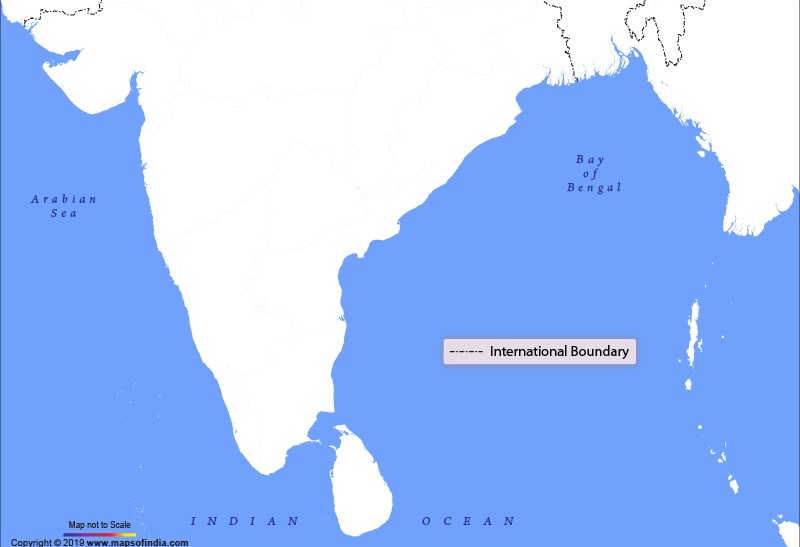
Distribution: The Sicklefin Devil Ray has a patchy circumglobal distribution and is found in tropical, subtropical, and temperate waters of the Pacific, Atlantic, and Indian Oceans.
Depth: 0-1896 m
Landing sites: Junglighat, Cochin Fisheries Harbour, Royapuram, Thoothukudi, Mumbai, Veraval, Mangrol, Porbander, Okha
Commercial Value
The Sicklefin Devil Ray is used for its meat, skin, cartilage, liver oil, and gill plates. The meat from mobulids, including the Sicklefin Devil Ray, is often used locally or traded regionally for human consumption, animal feed, and shark bait. In some fisheries, this species is often ‘winged’ (i.e. removal of pectoral fins from body) with this product frozen and exported to Asia, particularly Thailand and Malaysia. The cartilage, the skin, which is commonly used for leather products (shoes, wallets, and knife handles), and the gill plates are exported to Asia. The gill plates in particular fetch high prices in Asia and are used for Chinese health tonics.
Threats
Mobulid rays, including the Sicklefin Devil Ray, are both targeted and caught incidentally in industrial and artisanal fisheries.
References
Compagno, L.J.V., D.A. Ebert and M.J. Smale (1989)
Guide to the sharks and rays of southern Africa. New Holland (Publ.) Ltd., London. 158 p.
Compagno, L.J.V. (1997)
Mobulidae. Devil rays. In K.E. Carpenter and V. Niem (eds.) FAO Identification Guide for Fishery Purposes. The Western Central Pacific.
Couturier, L.I.E., Marshall, A.D., Jaine, F.R.A., Kashiwagi, T., Pierce, S.J., Townsend, K.A., Weeks, S.J., Bennet, M.B. and Richardson, A.J. (2012)
Biology, ecology and conservation of the Mobulidae. Journal of Fish Biology 80: 1075-1119.
Croll, D.A., Dewar, H., Dulvy, N.K., Fernando, D., Francis, M.P., Galván-Magaña, F., Hall, M., Heinrichs, S., Marshall, A., McCauley, D., Newton, K.M., Notarbartolo-Di-Sciara, G., O'Malley, M., O'Sullivan, J., Poortlivet, M., Roman, M., Stevens, G., Tershy, B.R. and White, W.T. (2016)
Vulnerabilities and fisheries impacts: the uncertain future of manta and devil rays. Aquatic Conservation: Marine and Freshwater Ecosystems 26(3): 562-575.
Heemstra, P.C. (1995)
Additions and corrections for the 1995 impression. p. v-xv. In M.M. Smith and P.C. Heemstra (eds.) Revised Edition of Smiths' Sea Fishes. Springer-Verlag, Berlin.
Lawson, J.M., Fordham, S. V, O'Malley, M.P., Davidson, L. N. K., Walls, R. H. L., Heupel, M. R., Stevens, G., Fernando, D., Budziak, A., Simpfendorfer, C. A., Ender, I., Francis, M. P., Notarbartolo di Sciara, G., and Dulvy, N. K. (2017)
Sympathy for the devil: a conservation strategy for devil and manta rays. PeerJ 5:e3027 : doi: 10.7717/peerj.3027.
Mendonça, S.A. (2011)
Abundância Relativa, Sazonalidade e Comportamento de Mobula tarapacana (Philippi 1892) (Condrichthyes: Mobulidae) No Arquipélago de São Pedro e São Paulo-Brasil. Dissertação apresentada ao Programa de Pós-Graduação em Oceanografía, Universidade Federal de Pernambuco.
Notarbartolo di Sciara, G., Fernando, D., Adnet, S., Cappetta, H. and Jabado, R.W. (2017) Devil rays (Chondrichthyes: Mobula) of the Arabian Seas, with a redescription of Mobula kuhlii (Valenciennes in Müller and Henle, 1841). Aquatic Conservation: Marine and Freshwater Ecosystems 27: 197–218.
Notarbatolo-di-Sciara, G. (1988)
Natural history of the rays of the genus Mobula in the Gulf of California. Fishery Bulletin 86(1):45–66.
Notarbartolo di Sciara, G. and Hillyer, E.V. (1989)
Mobulid rays off eastern Venezuela (Chondrichthyes, Mobulidae). Copeia 3: 607-614.
Sobral, A.F. and Afonso, P. (2014)
Occurrence of mobulids in the Azores, central North Atlantic. Journal of the Marine Biological Association of the United Kingdom 94: 1671-1675.
Thorrold, S.R., Afonso, P., Fontes, J, Braun, C.D., Santos, R.S, Skomal, G.B. and Berumen, M.L. (2014)
Extreme diving behavior in devil rays links surface water and the deep ocean. Nature Communications 5: 4274.
Last, P., White, W., de Carvalho, M., Séret, B., Stehmann, M. and Naylor, G. (2016)
Rays of the World. CSIRO Publishing, Clayton.
White, W.T., Giles, J., Dharmadi and Potter, I.C. (2006b)
Data on the bycatch fishery and reproductive biology of mobulid rays (Myliobatiformes) in Indonesia. Fisheries Research 82: 65-73.