

Species Name
Speartooth Shark
Scientific Name
Glyphis glyphis (müller & henle, 1839)
Family Name
Carcharhinidae
IUCN Status
Vulnerable
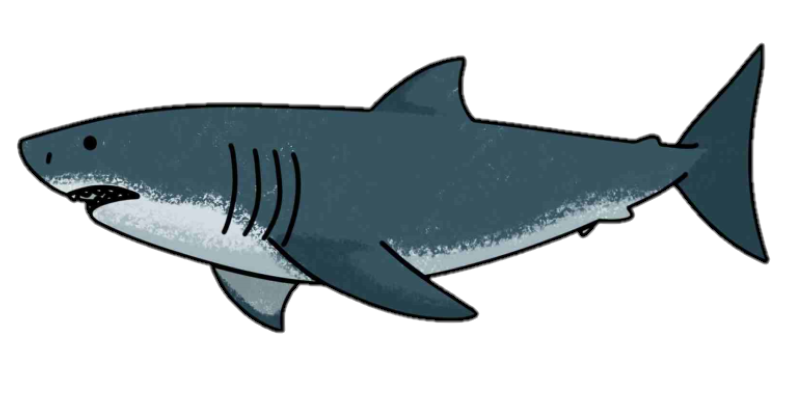
The boundary between light and dark areas (waterline) on the head passing just below the eye; the darker
dorsal region and lighter ventral region; and second dorsal fin about three-quarters of the height of the first dorsal fin.
Biology
Length: Maximum size is unknown but is at least 260 cm total length (TL); size-at-maturity is also unknown with a 157 cm TL male being subadult, suggesting a large size-at-maturity and a size-at-birth of 50–65 cm TL.
Gestation Period: Unknown
Litter Size: 6-7
Life Expectancy: Estimated generation length of 18 years.
Diet: Unknown
Habitat and distribution
Habitat: The Speartooth Shark is a euryhaline species found in freshwater, estuarine, and coastal marine habitats. Juveniles and subadults occupy tropical macrotidal rivers with high turbidity. Within the riverine environment, the species is however restricted to tidal reaches and does not.
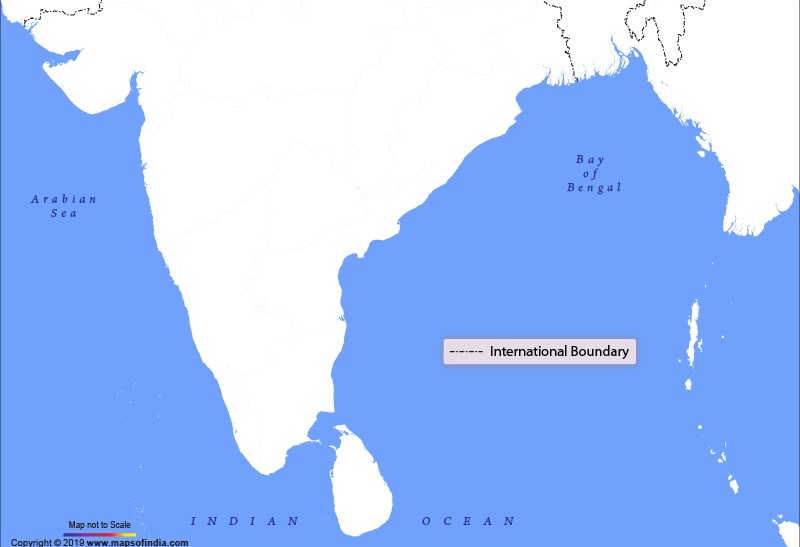
Distribution: The Speartooth Shark has a patchy distribution across northern Australia and southern Papua New Guinea in macrotidal rivers, estuaries, and coastal marine waters. In Australia, previously it had been documented from the Bizant River, eastern Cape York, Queensland (but has not been reported there since 1982 although further dedicated surveys are needed), the Wenlock River-Ducie River-Port Musgrave system on western Cape York, and various rivers flowing into Van Diemen Gulf in the Northern Territory (NT). Recent surveys have however revealed a wider range including rivers of the western Top End (NT) and the Kimberley region of Western Australia. Species distribution models suggest that the species occurs more-widely than presently known based on habitat suitability. In Papua New Guinea, it was first known from jaws collected close to Port Romilly in 1966 and from jaws collected from the Fly River and has been more recently recorded from the Kikori and Fly Rivers, and Daru region of the South Fly District.
Depth: 0.4-23 m
Landing site:
Commercial Value
Retention of this species is prohibited in Australia, although there is some illegal recreational take with Glyphis spp. being used as bait as well as some legal Indigenous harvest. In Papua New Guinea, the meat is used for local consumption and the fins are sold to local buyers through both legal and illegal markets for export. Glyphis spp. fins have been reported in the international trade, occurring in Hong Kong and China.
Threats
The species is caught as bycatch in subsistence, small-scale, commercial, and recreational fisheries and although retention is prohibited in Australia, it is retained in Papua New Guinea for its meat and fins by small-scale fishers. The Speartooth Shark occupies large tidal rivers, estuaries, and coastal waters. This habitat specificity increases the susceptibility to the impacts of human activities, particularly fishing and habitat modification. In Australia, the species is incidentally caught in commercial inshore gillnet, line, and pot fisheries, and is subject to minor levels of Indigenous harvest, and illegal recreational take. The Speartooth Shark was assessed as at high-risk in a cumulative risk assessment of all fisheries across northern Australia, mainly due to its susceptibility to capture in gill nets and suspected low productivity. The level of illegal recreational take is unknown; however, it is of concern due to the low population size and restricted distribution of the species including reliance on riverine habitat by juveniles. The species is known to have a high mortality rate when captured in gillnets and juveniles are susceptible to capture in pots targeting Mud Crab (Scylla serrata). Post-release mortality rate when discarded from other commercial fisheries is unknown; however, adoption of best handling guidelines may improve survival. Habitat modification such as water extraction and barriers in rivers, such as dams, barrages, weirs, and poorly constructed road crossings, may affect habitat quality and impede movement patterns of the Speartooth Shark.
In Papua New Guinea, this species is caught in small-scale riverine and inshore fisheries and may be subject to habitat degradation in the Gulf of Papua and South Fly District associated with mining and logging activities. It is incidentally captured in a relatively recently developed high-value fishery for swim bladder (also known as fish maw) that targets mainly Barramundi (Lates calcarifer) and Scaly Croaker (Nibea squamosa) in estuarine and coastal habitats.
References
Veryl Hasan, Peter Gausmann & Felipe P. Ottoni
First scientific observation of the threatened speartooth shark
Glyphis glyphis (Müller & Henle, 1839) (Carcharhiniformes:
Carcharhinidae) in Indonesia.
Dwyer, R.G., Campbell, H.A., Cramp, R.L., Burke, C.L., Micheli-Campbell, M.A., Pillans, R.D., Lyon, B.J. and Franklin, C.E. (2020)
Niche partitioning between river shark species is driven by seasonal fluctuations in environmental salinity. Functional Ecology 34(10): 2170–2185.
Dwyer, R.G., Campbell, H.A., Pillans, R.D., Watts, M.E., Lyon, B.J., Guru, S.M., Dinh, M., Possingham, H.P. and Franklin, C.E. (2019) Using individual-based movement information to identify spatial conservation priorities for mobile species. Conservation Biology 33: 1426–1437.
Feutry, P., Berry, O., Kyne, P.M., Pillans, R.D., Hillary, R.M., Grewe, P.M., Marthick, J.R., Johnson, G., Gunasekera, R.M., Bax, N.J. and Bravington, M. (2017)
Inferring contemporary and historical genetic connectivity from juveniles. Molecular Ecology 26: 444–456.
Feutry, P., Kyne, P.M., Pillans, R.D., Chen, X., Naylor, G.J.P. and Grewe, P.M. (2014)
Mitogenomics of the Speartooth Shark challenges ten years of control region sequencing. BMC Evolutionary Biology 14(1): 232.
Field, I. C., Tillett, B. J., Charters, R., Johnson, G. J., Buckworth, R. C., Meekan, M. G. and Bradshaw, C. J. (2013)
Distribution, relative abundance and risks from fisheries to threatened Glyphis sharks and sawfishes in northern Australia. Endangered Species Research 21: 171–180.
Grant, M.I., Kyne, P.M., Simpfendorfer, C.A., White, W.T. and Chin, A. (2019)
Categorising use patterns of non-marine environments by elasmobranchs and a review of their extinction risk. Reviews in Fish Biology and Fisheries 29: 689–710.
Kyne, P.M. and Feutry, P. (2017)
Recreational fishing impacts on threatened river sharks: a potential conservation issue. Ecological Management & Restoration 18(3): 209–213.
Last, P.R. and Stevens, J.D. (2009)
Sharks and Rays of Australia, 2nd edition. CSIRO, Melbourne, Australia.
Pillans, R.D., Stevens, J.D., Kyne, P.M. and Salini, J. (2009)
Observations on the distribution, biology, short-term movements and habitat requirements of river sharks Glyphis spp. in northern Australia. Endangered Species Research 10: 321–332.
Salini, J., McAuley, R., Blaber, S., Buckworth, R., Chidlow, J., Gribble, N., Ovenden, J., Peverell, S., Pillans, R., Stevens, J., Stobutzki, I., Tarca, C. and Walker, T. (2007)
Northern Australian sharks and rays: the sustainability of target and bycatch species, phase 2. Fisheries Research and Development Corporation Report 2002/064, CSIRO, Australia.
Tillett, B.J., Meekan, M.G., Field, I.C., Hua, Q. and Bradshaw, C.J.A. (2011)
Similar life history traits in bull (Carcharhinus leucas) and pig-eye (C. amboinensis) sharks. Marine and Freshwater Research 62(7): 850-860.
Udyawer, V., Thums, M., Ferreira, L.C., Tulloch, V. and Kyne, P.M. (2021)
Distribution and habitat suitability of threatened and migratory marine species in northern Australia. Report to the National Environmental Science Program, Marine Biodiversity Hub.
White, W.T., Appleyard, S.A., Kyne, P.M. and Mana, R.R. (2017b) Sawfishes in Papua New Guinea: a preliminary investigation into their status and level of exploitation. Endangered Species Research 32: 277–291.
Related Species
- Tiger Shark
- Silky Shark
- Blacktip Reef Shark
- Common Blacktip Shark
- Spot-tail Shark
- Milk Shark
- Spadenose Shark
- Bignose Shark
- Blackspot Shark
- Blue Shark
- Broadfin Shark
- Bull Shark
- Dusky Shark
- Ganges Shark
- Graceful Shark
- Grey Reef Shark
- Grey Sharpnose Shark
- Hardnose Shark
- Sliteye Shark
- Silvertip Shark
- Sharptooth Lemon Shark
- Sandbar Shark
- Pondicherry Shark
- Pigeye Shark
- Oceanic Whitetip Shark
- Irrawaddy River Shark
- Spinner Shark
- Whitecheek Shark
- Whitetip Reef Shark