

Species Name
Graceful Shark
Scientific Name
Carcharhinus amblyrhynchoides (whitley, 1934)
Family Name
Carcharhinidae
IUCN Status
Vulnerable
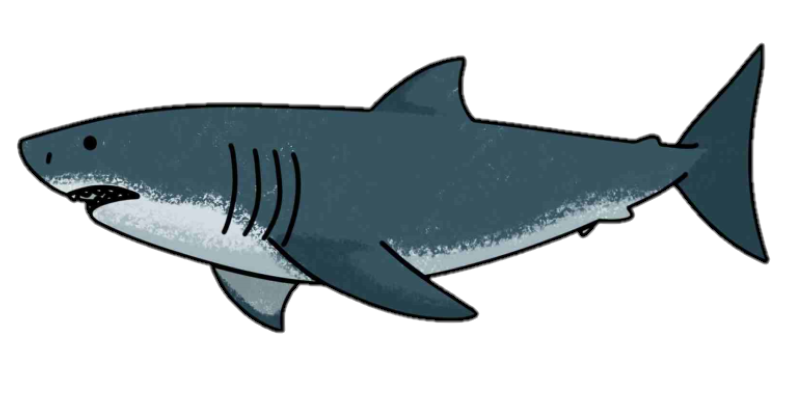
Grey or grey-brown on dorsal surface, white or cream below, with a conspicuous band of white on sides from pelvic fins to first dorsal fin; pectoral, dorsal and pelvic fins, and ventral lobe of caudal fin black or dusky-tipped, sometimes inconspicuously.
Biology
Length: It reaches a maximum size of 178 cm total length (TL), males mature at 140 cm TL and females mature at 167 cm TL. Size-at-birth of 50–60 cm TL.
Gestation Period: 9-10 months
Litter Size: 1-9
Life Expectancy: Estimated as 11 years (generation length)
Diet: Feeds mainly on fishes, also takes crustaceans and cephalopods.
Habitat and distribution
Habitat: The Graceful Shark is demersal and pelagic and occurs inshore on continental and insular shelves.
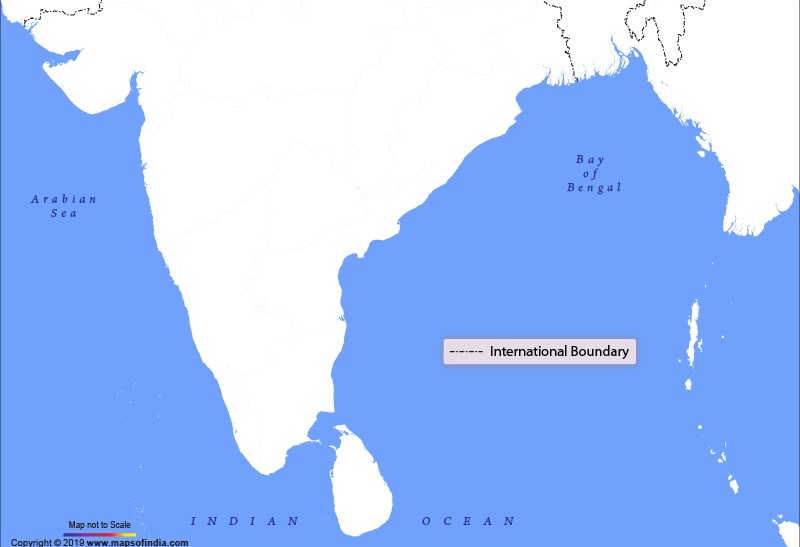
Distribution: The Graceful Shark occurs in the tropical Indo-West Pacific, from Australia to Somalia. Distribution records are not continuous; however, given its relatively low abundance, and morphological similarity to other more abundant species of the genus Carcharhinus, its range is likely to be continuous through southern Asia, as far as Somalia, but not within the Red Sea.
Depth: 0-50 m
Landing sites: Sassoon Docks, Royapuram Fishing Harbour, Cuddalore Fishing Harbour, Nagapattinam Fishing Harbour, New Ferry Wharf, Junglighat, Burmanallah, Wandoor, and Dignabad, Cochin Fisheries Harbour
Commercial Value
The Graceful Shark is retained for its meat and fins. Fields et al. (2018) reported that this species, in combination with other blacktip shark species, accounts for 4.1% of the fins traded in Hong Kong. However, the proportional contribution of the Graceful Shark within this group was unknown.
Threats
The Graceful Shark is rarely targeted and taken mainly as bycatch in gillnet, longline, and trawl fisheries throughout its range, and is retained for its meat and fins. Records of Graceful Shark catches in most countries are scant.
References
Compagno, L.J.V. (1984)
FAO species catalogue. Vol. 4. Sharks of the world. An annotated and illustrated catalogue of shark species known to date. FAO Fisheries Synopsis No. 125, Volume 4, Part 1.
Ebert, D.A., Fowler, S. and Compagno, L. (2013)
Sharks of the World. A Fully Illustrated Guide. Wild Nature Press, Plymouth, United Kingdom.
Last, P.R. and J.D. Stevens (1994)
Sharks and rays of Australia. CSIRO, Australia. 513 p.
Fields, A.T., Fischer, G.A., Shea, S.K., Zhang, H., Abercrombie, D.L., Feldheim, K.A., Babcock, E.A. and Chapman, D.D. (2018)
Species composition of the international shark fin trade assessed through a retail‐market survey in Hong Kong. Conservation Biology 32(2): 376–389.
Jabado, R.W., Al Ghais, S.M., Hamza, W., Henderson, A.C., Spaet, J.L.Y., Shivji, M.S. and Hanner, R.H. (2015)
The trade in sharks and their products in the United Arab Emirates. Biological Conservation 181: 190-198.
Parry-Jones, R. (1996)
TRAFFIC report on shark fisheries and trade in the People's Republic of China. In: M.J. Phipps (compiler). TRAFFIC report on shark fisheries and trade in the East Asian Region. The world trade in sharks: a compendium of TRAFFIC's regional studies. Vol. 1. TRAFFIC International, Cambridge
Stevens, J.D. and McLoughlin, K.J. (1991)
Distribution, size and sex composition, reproductive biology and diet of sharks from northern Australia. Australian Journal of Marine and Freshwater Research 42:151-199.
Related Species
- Tiger Shark
- Silky Shark
- Blacktip Reef Shark
- Common Blacktip Shark
- Spot-tail Shark
- Milk Shark
- Spadenose Shark
- Bignose Shark
- Blackspot Shark
- Blue Shark
- Broadfin Shark
- Bull Shark
- Dusky Shark
- Ganges Shark
- Grey Reef Shark
- Grey Sharpnose Shark
- Hardnose Shark
- Sliteye Shark
- Silvertip Shark
- Sharptooth Lemon Shark
- Sandbar Shark
- Pondicherry Shark
- Pigeye Shark
- Oceanic Whitetip Shark
- Irrawaddy River Shark
- Speartooth Shark
- Spinner Shark
- Whitecheek Shark
- Whitetip Reef Shark