
Species Name
Grey Sharpnose Shark
Scientific Name
Rhizoprionodon oligolinx (springer, 1964)
Family Name
Carcharhinidae
IUCN Status
Near Threatened
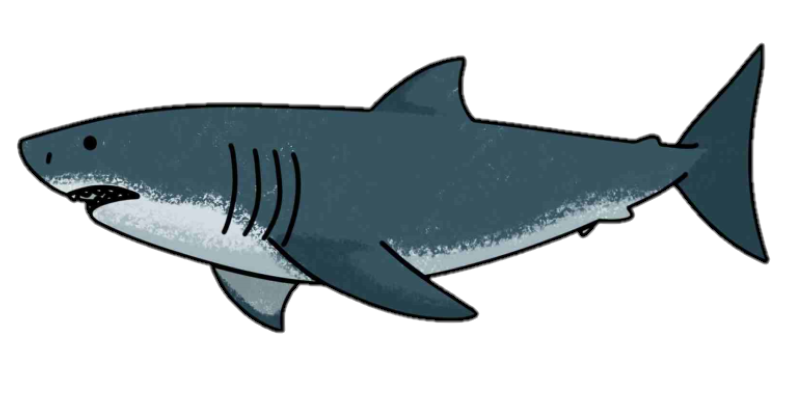
Position of anal fin origin well in front of second dorsal fin origin, long labial furrows, and short pectoral fins.
Biology
Length: It reaches a maximum size of 93 cm total length (TL), males mature at 29–53 cm TL and females mature at 32–41 cm TL.
Gestation Period: around 10-12 months (according to estimates from closely related species the Australian Sharpnose Shark)
Litter Size: 3-8 pups
Life Expectancy: Maximum age is estimated as 8 years.
Diet: R. oligolinx feeds primarily on teleosts, cephalopods and crustaceans
Habitat and distributions
Habitat: The Grey Sharpnose Shark occurs in tropical littoral, continental, and insular shelves.
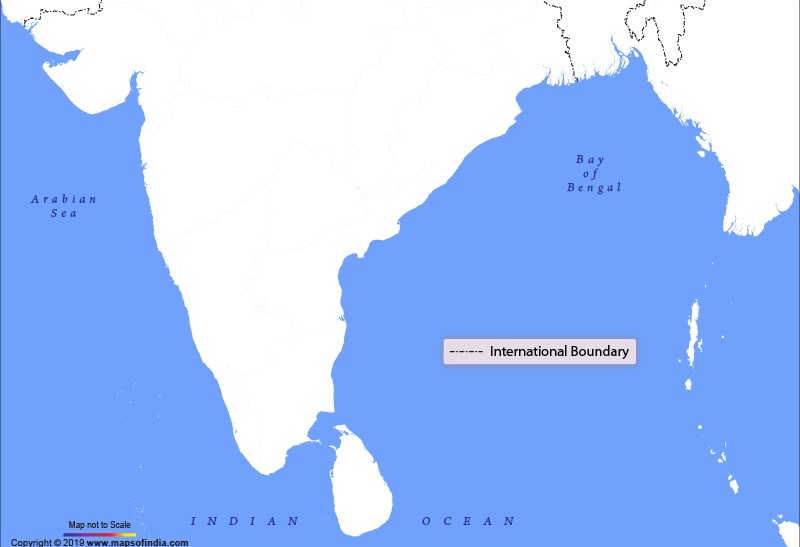
Distribution: The Grey Sharpnose Shark occurs across the Indo-Pacific Oceans from the Arabian Seas region to China.
Depth: 0-36 m
Landing site: Sassoon Docks, Royapuram Fishing Harbour, Cuddalore Fishing Harbour, Nagapattinam Fishing Harbour, Thoothukudi, Threshpuram, Tharuvaikulam, Vembar, Vellapatti, Cochin Fisheries Harbour, Porbandar, Royapuram Fishing Harbour, Cuddalore Fishing Harbour, Nagapattinam Fishing Harbour, Mumbai (Versova, Sassoon Docks, Satpati, Naigaon, New Ferry Wharf), Junglighat, Burma Nallah, Satpati, Sassoon Dock, New Ferry Wharf, Veraval, Mangrol, Porbander, Okha, Mumbai, Satpati
Commercial Value
The Grey Sharpnose Shark is used for its meat which is consumed fresh or dried, and in some countries, such as Oman, Saudi Arabia, and India, the meat is dried and salted for domestic sales or trade with neighbouring countries. In India, it is known as the 'golden shark' and its meat is preferred and in north Sri Lanka, there is high demand for this species' meat. It is also used for its fins that are of limited value due to their small size.
Threats
The Grey Sharpnose Shark is targeted and caught incidentally in industrial and small-scale fisheries by multiple fishing gears including trawl, gillnet, hook and line, and longline. The species is generally retained for the meat and to a lesser extent, for the low value fins. In the Arabian Seas region, there is high and increasing fishing pressure on the Grey Sharpnose Shark's inshore habitats.
References
Purushottama, G B , Thakurdas Ramasubramanian, V Dash, Gyanaranjan, Akhilesh K V, Ramkumar, S Kizhakudan, Shoba Joe Singh, V V Zacharia, P U (2017)
Reproductive biology and diet of the grey sharpnose shark Rhizoprionodon oligolinx Springer, 1964 (Chondrichthyes: Carcharhinidae) from the north-eastern Arabian Sea. Indian Journal of Fisheries, 64 (4). pp. 9-20.
Ebert, D.A., Fowler, S. and Compagno, L. (2013)
Sharks of the World. A Fully Illustrated Guide. Wild Nature Press, Plymouth, United Kingdom.
Kumar, R.R., Venu, S., Akhilesh, K.V., Bineesh, K.K. and Rajan, P.T. (2018)
First report of four deep-sea chondrichthyans (Elasmobranchii and Holocephali) from Andaman waters, India with an updated checklist from the region. Acta Ichthyologica et Piscatoria 48(3): 289–301.
Kizhakudan, S.J., Zacharia, P.U., Thomas, S, Vivekanandan, E, and Muktha, M. (2015)
Guidance on National Plan of Action for Sharks in India. . CMFRI Marine Fisheries Policy Series .
Related Species
- Tiger Shark
- Silky Shark
- Blacktip Reef Shark
- Common Blacktip Shark
- Spot-tail Shark
- Milk Shark
- Spadenose Shark
- Bignose Shark
- Blackspot Shark
- Blue Shark
- Broadfin Shark
- Bull Shark
- Dusky Shark
- Ganges Shark
- Graceful Shark
- Grey Reef Shark
- Hardnose Shark
- Sliteye Shark
- Silvertip Shark
- Sharptooth Lemon Shark
- Sandbar Shark
- Pondicherry Shark
- Pigeye Shark
- Oceanic Whitetip Shark
- Irrawaddy River Shark
- Speartooth Shark
- Spinner Shark
- Whitecheek Shark
- Whitetip Reef Shark