

Species Name
Sandbar Shark
Scientific Name
Carcharhinus plumbeus (nardo, 1827)
Family Name
Carcharhinidae
IUCN Status
Endangered
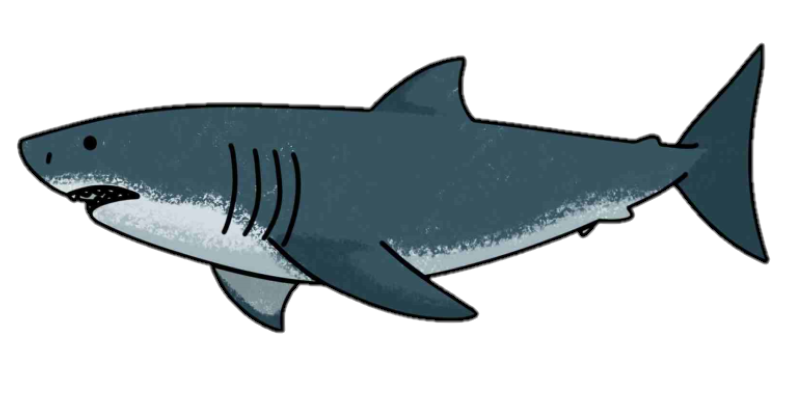
A stout shark with a moderately long, rounded snout, high, triangular, saw-edged upper teeth, and an interdorsal ridge; 1st dorsal fin very large and erect. Grey-brown or bronzy with no prominent markings, white below. Fins plain or with slightly dusky tips
Biology
Length: The species reaches a maximum size of ~240 cm total length (TL), possibly to 300 cm TL, males mature at 123–180 cm TL and females mature at 129–190 cm TL. Size-at-birth of 40–76 cm TL.
Gestation Period: 12 months.
Litter Size: Variable litter sizes of 1–14 pups (5–12 common).
Life Expectancy: Female age-at-maturity ranges from 8 to 16 years and maximum observed age ranges from 21 to 27 years.
(1) The Northwest Atlantic and Gulf of Mexico where female age-at-maturity is 13.1 years and maximum age is 27 years resulting in a generation length of 20 years: and
(2) Western Australia where female age-at-maturity is 16.2 years and maximum age is suggested as 36 years for females resulting in a generation length of 26 years.
The observed maximum age from Western Australia is 25 years, however based on maximum size, maximum age is estimated as 36 years which is likely more realistic based on inference from bomb radiocarbon and oxtetracycline validation.
Diet: Feeds mainly on bony fishes, also small sharks, cephalopods, and shrimps, rays and gastropods. Youngs feed heavily on crustaceans such as blue crab and mantis shrimp.
Habitat and distribution
Habitat: Found inshore and offshore, on continental and insular shelves and adjacent deep water. Common at bays, river mouths and in harbors; avoids sandy beaches and the surf zone, coral reefs and rough bottom, and surface waters. Coastal-pelagic, but usually bottom associated. Sometimes in oceanic waters. Known to make extended seasonal migrations in some parts of its range.
Distribution: The Sandbar Shark has a circumglobal distribution.
Depth: 0-280 m
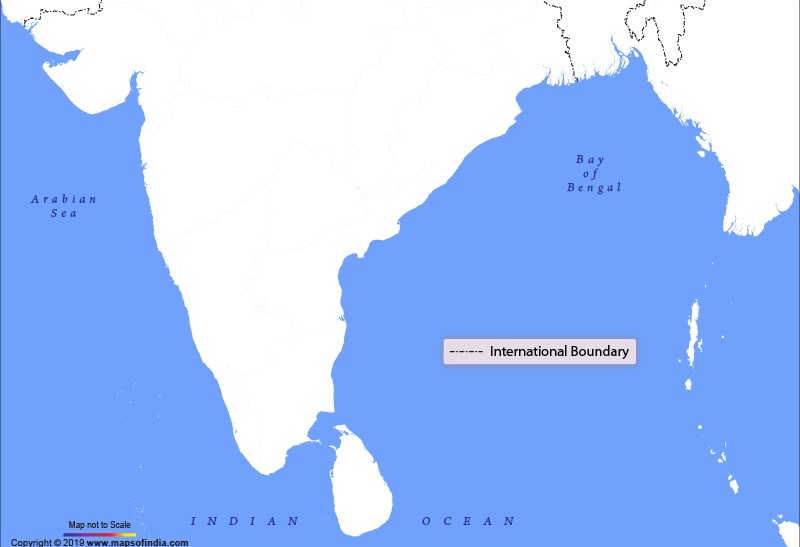
Landing sites: Thoothukudi, Threshpuram, Tharuvaikulam, Vembar, Vellapatti, Junglighat, Burmanallah, Wandoor, and Dignabad
Commercial Value
The species is used for its valuable meat and fins and to a lesser extent for its skin and liver oil. The proportion of Sandbar Shark fins in the Hong Kong shark fin trade appears to have declined from 2.4% to 0.2% from 2002 to 2015. The species is displayed in public aquaria.
Threats
The Sandbar Shark is subject to fishing pressure across its range. The species is an important component of target industrial shark fisheries, and is also captured as bycatch in artisanal, industrial, and recreational fisheries. It is captured with multiple fishing gears including gillnet, longline, and trawl and retained for its meat and fins, unless regulations prohibit retention. The species is also captured in beach protection programs that target large sharks. At-vessel mortality of Sandbar Sharks varies from 3–63% for trawl, and demersal and pelagic longline, with research indicating that on longlines, larger individuals have higher mortality. Short term post-release mortality of 25% was found for Sandbar Sharks caught on research longlines and released alive and in good condition.
References
Barnes, C.J., Butcher, P.A., Macbeth, W.G., Mandelman, J.W., Smith, S.D.A., and Peddemors, V.M. (2016)
Movements and mortality of two commercially exploited carcharhinid sharks following longline capture and release off eastern Australia. Endangered Species Research 30: 193–208.
A.N. Piercy, D.J. Murie, J.J. Gelseichter (2016)
Histological and morphological aspects of reproduction in the sandbar shark Carcharhinus plumbeus in the U.S. south-eastern Atlantic Ocean and Gulf of Mexico.
Sutaria, D., Parikh, A., Barnes, A., Jabado, R.W. (2015)
First record of the sandbar shark, Carcharhinus plumbeus, (Chondrichthyes: Carcharhiniformes: Carcharhinidae) from Indian waters. Marine Biodiversity Records 8: e126.
Southeast Data, Assessment, and Review (SEDAR). (2017)
SEDAR 54 HMS Sandbar Shark Stock Assessment Report. North Charleston
McAuley, R, Peddemors, V., Roelofs, A. and Johnson, G. (2014)
Sandbar shark, Carcharhinus plumbeus. In: Flood, M., Stobutzki, I., Andrews, J., Ashby, C., Begg, G., Fletcher, R., Gardner, C., Georgeson, L., Hansen, S., Hartmann, K., Hone, P., Horvat, P., Maloney, L., McDonald, B., Moore, A., Roelofs, A., Sainsbury, K., Saunders, T., Smith, T., Stewardson, C., Stewart, J. and Wise, B. (eds), Status of key Australian fish stocks reports 2014. Fisheries Research and Development Corporation, Canberra.
Molony, B. McAuley, R. and Rowland, F. (2013)
Northern Shark Fisheries Status Report: Statistics Only. In: Fletcher, W. J. and Santoro, K. (eds), Status Reports of the Fisheries and Aquatic Resources of Western Australia 2012/2013. Department of Fisheries Western Australia.
De Silva, R.I. (2006)
Taxonomy and Status of the Sharks and Rays of Sri Lanka. In: Bambaradeniya, C.N.B. (ed.), The Fauna of Sri Lanka: Status of Taxonomy, Research and Conservation, pp. 294–301. World Conservation Union, Colombo, Sri Lanka.
Related Species
- Tiger Shark
- Silky Shark
- Blacktip Reef Shark
- Common Blacktip Shark
- Spot-tail Shark
- Milk Shark
- Spadenose Shark
- Bignose Shark
- Blackspot Shark
- Blue Shark
- Broadfin Shark
- Bull Shark
- Dusky Shark
- Ganges Shark
- Graceful Shark
- Grey Reef Shark
- Grey Sharpnose Shark
- Hardnose Shark
- Sliteye Shark
- Silvertip Shark
- Sharptooth Lemon Shark
- Pondicherry Shark
- Pigeye Shark
- Oceanic Whitetip Shark
- Irrawaddy River Shark
- Speartooth Shark
- Spinner Shark
- Whitecheek Shark
- Whitetip Reef Shark