

Species Name
Dusky Shark
Scientific Name
Carcharhinus obscurus (lesueur, 1818)
Family Name
Carcharhinidae
IUCN Status
Endangered
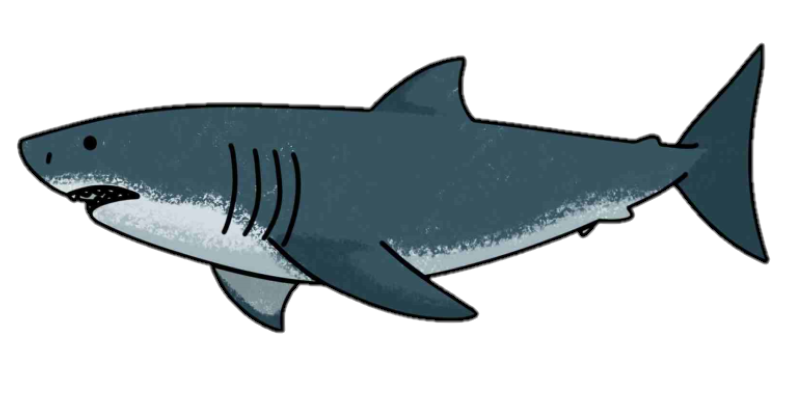
A large shark with a broadly rounded snout, triangular saw-edged upper teeth, curved moderate-sized pectoral fins, and an interdorsal ridge. Blue-grey, lead-grey above, white below; tips of pectoral and pelvic fins, as well as lower lobe of caudal fin and dorsal fins often dusky in young, plain in adults.
Biology
Length: It reaches a maximum size of 420 cm total length (TL); males mature at 265–280 cm TL, females mature at 257–310 cm TL. Size-at-birth of 70–100 cm TL.
Gestation Period: ~16 months
Litter Size: 3-14 pups
Life Expectancy: Older ages were validated in Western Australia, Eastern Indian Ocean for female age-at-maturity of 27–32 years and maximum age of 40–53 years, indicative of a more conservative life history for the Indo-Pacific subpopulation; using the means of these age parameters, generation length is therefore 38 years.
Diet: Feeds on bottom and pelagic bony fish, sharks, skates, rays, cephalopods, gastropods, crustaceans, sometimes mammalian carrion and inorganic objects.
Habitat and distributions
Habitat: The Dusky Shark is coastal and pelagic throughout its range, where it occurs from the surf zone to well offshore. A seasonal migratory species over parts of its range.
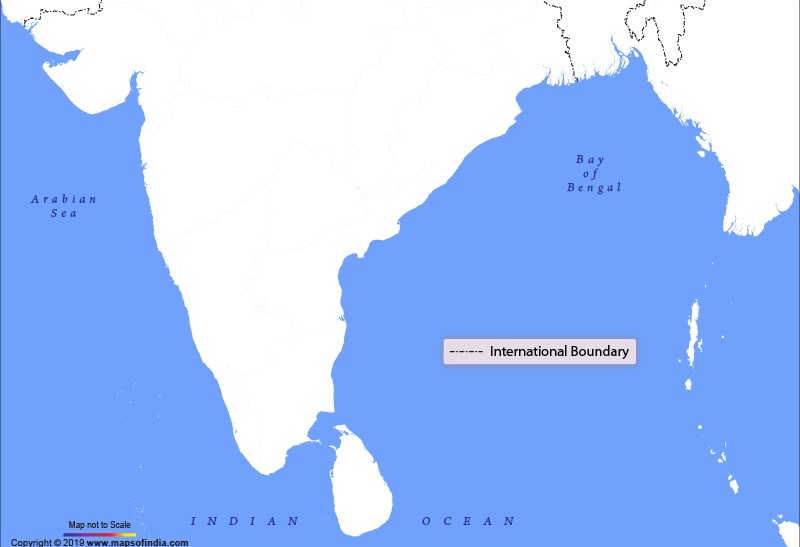
Distribution: The Dusky Shark has a cosmopolitan but patchy distribution in tropical and warm temperate seas.
Depth: 0-500 m
Landing sites:
Commercial Value
The meat and fins of the Dusky Shark are highly valued with the meat used fresh, dried salted, frozen, or smoked. The Dusky Shark accounted for 1.4% in 1991–2001 and 0.7% in 2014, of the shark fin imported in Hong Kong. The liver oil and skins are also used.
Threats
The Dusky Shark is caught globally as target and bycatch in commercial and small-scale pelagic longline, purse seine, and gillnet fisheries. Most of the catch is taken as bycatch of commercial pelagic fleets in offshore and high-seas waters. It is also captured in coastal longlines, gillnets, trammel nets, and sometimes trawls, particularly in areas with narrow continental shelves. The species is often retained for the meat and fins, unless regulations prohibit retention. Under-reporting of catches in pelagic and domestic fisheries is likely. The species is taken in recreational fishing and beach protection programs that target large sharks. At-vessel mortality was estimated at 34% in the US pelagic longline fishery, 81% in the Northwest Atlantic bottom longline fishery, and 1.3% on Western Australia demersal longlines. Post-release mortality was estimated as up to 67% in the Northwest Atlantic bottom longline fishery, though markedly reduced when individuals were retained for less than 3 hours on the line.
References
White, W.T., P.R. Last, J.D. Stevens, G.K. Yearsley, Fahmi and Dharmadi, (2006)
Economically important sharks and rays of Indonesia. [Hiu dan pari yang bernilai ekonomis penting di Indonesia]. Australian Centre for International Agricultural Research, Canberra, Australia.
Dudley, S.J.F., Cliff, G., Zungu, M.P. and Smale, M.J. (2005)
Sharks caught in the protective gillnets off KwaZulu-Natal, South Africa. 10. The dusky shark Carcharhinus obscurus (LeSueur, 1818). South African Journal of Marine Science 27(1): 107-127.
Ebert, D.A., Fowler, S. and Compagno, L. (2013)
Sharks of the World. A Fully Illustrated Guide. Wild Nature Press, Plymouth, United Kingdom.
Simpfendorfer, C.A., de Jong, S.K. and Sumpton, W. (2010)
Long-term trends in large shark populations from inshore areas of the Great Barrier Reef World Heritage Area: results from the Queensland Shark Control Program. Marine and Tropical Sciences Research Facility Transition Program Report.
McAuley, R.B., Simpfendorfer, C.A. and Hall, N.G. (2007)
A method for evaluating the impacts of fishing mortality and stochastic influences on the demography of two long-lived shark stocks. ICES Journal of Marine Science 64: 1710-1722.
Related Species
- Tiger Shark
- Silky Shark
- Blacktip Reef Shark
- Common Blacktip Shark
- Spot-tail Shark
- Milk Shark
- Spadenose Shark
- Bignose Shark
- Blackspot Shark
- Blue Shark
- Broadfin Shark
- Bull Shark
- Ganges Shark
- Graceful Shark
- Grey Reef Shark
- Grey Sharpnose Shark
- Hardnose Shark
- Sliteye Shark
- Silvertip Shark
- Sharptooth Lemon Shark
- Sandbar Shark
- Pondicherry Shark
- Pigeye Shark
- Oceanic Whitetip Shark
- Irrawaddy River Shark
- Speartooth Shark
- Spinner Shark
- Whitecheek Shark
- Whitetip Reef Shark