

Species Name
Pondicherry Shark
Scientific Name
Carcharhinus hemiodon (valenciennes in müller & henle, 1839)
Family Name
Carcharhinidae
IUCN Status
Critically Endangered
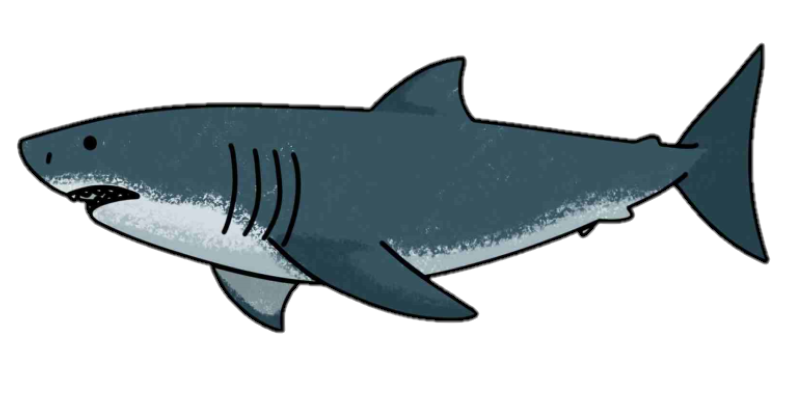
Grey above, white below, with the tips of the pectorals, and upper and lower caudal-fin lobes black; other fins dusky.
Biology
Length: Maximum size was 102 cm total length (TL); size at birth was <32 cm TL.
Gestation Period: Unknown
Litter Size: Unknown
Life Expectancy: Generation length is inferred from another small species of coastal carcharhinid shark, the Smalltail Shark (Carcharhinus porosus) which has an age-at-maturity of 6 years and a maximum age of 12 years resulting in a generation length of 9 years.
Diet: Probably feeds on small fishes, cephalopods, and crustaceans.
Habitat and distribution
Habitat: A little-known shark found on the continental and insular shelves.
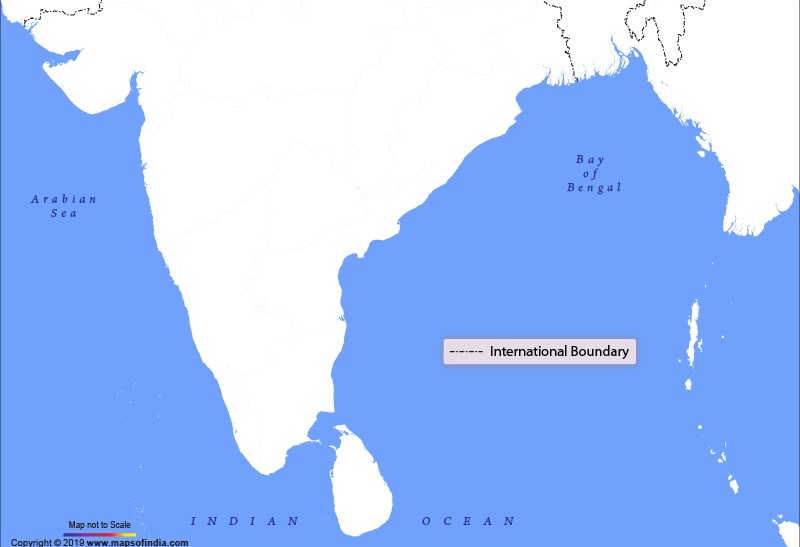
Distribution: Historically, the Pondicherry Shark ranged from the Arabian Sea (Oman) to the South China Sea. However, it had only been recorded from a limited number of individuals from widely-separated locations in the Indo-West Pacific including Oman (Muscat), Pakistan, India, Borneo, and Java. The Pondicherry Shark is represented by fewer than twenty specimens in museum collections, all collected prior to 1960. Historical reports from Sri Lanka have not been verified, while recent records are erroneous.
Depth: 10-150 m
Landing site: Thoothukudi, Threshpuram, Tharuvaikulam, Vembar, Vellapatti, Junglighat, Burma Nallah
Commercial Value
This species was probably utilized locally for human consumption.
Threats
Shallow-water demersal coastal fisheries resources have been severely depleted across the range of the Pondicherry Shark, and this species is unlikely to have found any refuge as fishing effort in coastal waters and on the continental shelf has been extensive.
References
Akcakaya, H. R.; Keith, D. A.; Burgman, M.; Butchart, S. H. M.; Hoffmann, M.; Regan, H. M.; Harrison, I.; Boakes, E. (2017)
Inferring extinctions III: a cost-benefit framework for listing extinct species. Biological Conservation 214: 336-342.
Compagno, L.J.V., White, W. and Fowler, S. (2003)
Carcharhinus hemiodon.
The IUCN Red List of Threatened Species 2003: e.T39369A10185838. Available at: http://dx.doi.org/10.2305/IUCN.UK.2003.RLTS.T39369A10185838.en. (Accessed: 05 June 2017).
Stobutzki, I.C., Silvestre, G.T., Abu Talib, A., Krongprom, A., Supongpan, M., Khemakorn, P., Armada, N., and Garces, L.R. (2006)
Decline of demersal coastal fisheries resources in three developing Asian countries. Fisheries Research 78: 130-142.
Ebert, D.A., Fowler, S. and Compagno, L. (2013)
Sharks of the World. Wild Nature Press, Plymouth.
Garrick, J.A.F. (1985)
Additions to a revision of the shark genus Carcharhinus: synonymy of Aprionodon and Hypoprion, and description of a new species of Carcharhinus. NOAA Tech. Rep., Nat. Mar. Fish. Serv. (34), 14 fig., 4 tab. Cited record from Guyana.
De Silva, R.I. (2014)
The pondicherry shark Carcharhinus hemiodon in marine and freshwater habitats in Sri Lanka. Loris 27: 46–48.
Related Species
- Tiger Shark
- Silky Shark
- Blacktip Reef Shark
- Common Blacktip Shark
- Spot-tail Shark
- Milk Shark
- Spadenose Shark
- Bignose Shark
- Blackspot Shark
- Blue Shark
- Broadfin Shark
- Bull Shark
- Dusky Shark
- Ganges Shark
- Graceful Shark
- Grey Reef Shark
- Grey Sharpnose Shark
- Hardnose Shark
- Sliteye Shark
- Silvertip Shark
- Sharptooth Lemon Shark
- Sandbar Shark
- Pigeye Shark
- Oceanic Whitetip Shark
- Irrawaddy River Shark
- Speartooth Shark
- Spinner Shark
- Whitecheek Shark
- Whitetip Reef Shark