

Species Name
Sharptooth Lemon Shark
Scientific Name
Negaprion acutidens
Family Name
Carcharhinidae
IUCN Status
Not Evaluated
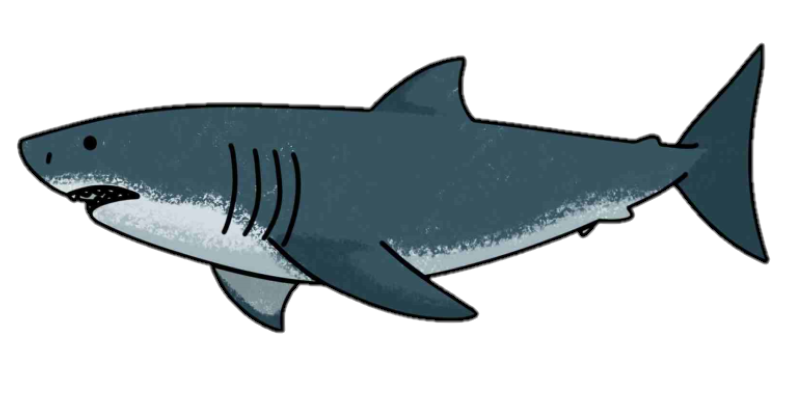
A large, stocky, yellowish shark with a broad, blunt snout, narrow, smooth-cusped teeth in both jaws, and equal-sized dorsal fins. Yellowish brown above, paler below. With two nearly equally large dorsal fins.
Biology
Length: Maturity size at 220 cm TL, size at birth is 60 cm TL. Maximum size 300 cm TL.
Gestation Period: 10-11 months
Litter Size: 6-12
Life Expectancy: The generation length is suspected to be around 16.5 years.
Diet: Feeds on smaller sharks, stingrays and on benthic bony fishes.
Habitat and distribution
Habitat: The Sharptooth Lemon Shark is demersal in shallow inshore and offshore waters.
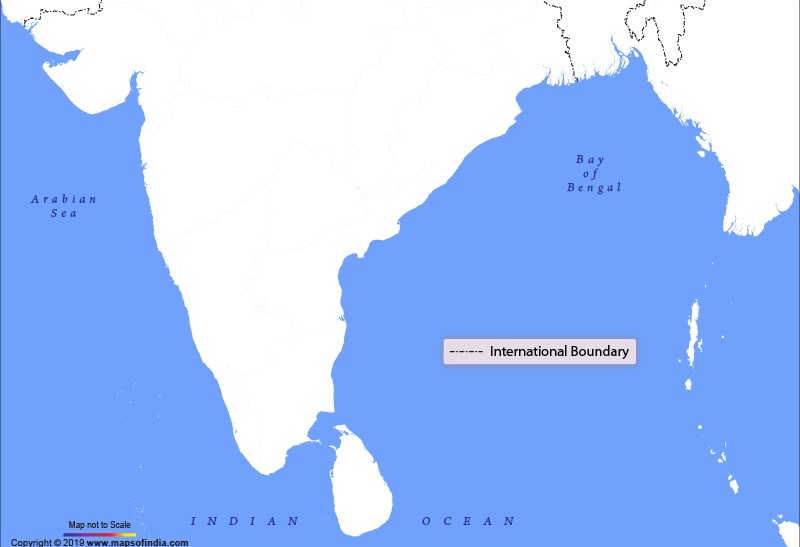
Distribution: The Sharptooth Lemon Shark is widespread in coastal waters of the tropical and subtropical Indian and Northwest, Western Central, and Eastern Central Pacific Oceans.
Depth: 0-90 m
Landing sites:
Commercial Value
The meat of the Sharptooth Lemon Shark is used fresh, dried, salted, frozen, or smoked. Fields et al. (2018) reported that Sharptooth Lemon Shark made up 0.6% of fin trimmings sold in Hong Kong. The species is occasionally displayed in aquaria. In the Western and Central Pacific, the species is a key component of the tourism industry where diving and interactions with this shark regularly occur. It is estimated that the species generates around $5.4 million USD per year within a shark feeding ecotourism operation in French Polynesia.
Threats
The Sharptooth Lemon Shark is caught throughout much of its range in industrial and small-scale longline, gillnet, trawl, and handline fisheries that occur in coastal waters, including around coral reefs and mangrove habitats. It is retained for the meat and fins where possible. There is little data available on the capture of this species in fisheries of island nations in the Pacific Ocean where the species show little trend in population size. Throughout the coastal waters of Asia, it is caught in gillnets, longlines, trawls and handlines and landed. However, in recent years it has rarely been reported in surveys of landings sites.
References
Ebert, D.A., Fowler, S. and Compagno, L. (2013)
Sharks of the World. A Fully Illustrated Guide. Wild Nature Press, Plymouth, United Kingdom.
Last, P.R. and Stevens, J.D. (2009)
Sharks and Rays of Australia. Second Edition. CSIRO Publishing, Collingwood.
Bonfil, R. (2003)
Consultancy on Elasmobranch Identification and Stock Assessment in the Red Sea and Gulf of Aden. Regional Organization for the Conservation of the Environment of the Red Sea and Gulf of Aden.
Brown, C.A. and Gruber, S.H. (1988)
Age assessment of the lemon shark, Negaprion brevirostris, using tetracycline validated vertebral centra. Copeia 3: 747–753.
Compagno, L.J.V. (1998)
Carcharhinidae. In: K.E. Carpenter and V.H. Niem (eds). FAO species identification guide for fishery purposes. The living marine resources of the Western Central Pacific. Volume 2. Cephalopods, crustaceans, holothurians and sharks. FAO, Rome, pp. 1312-1360.
Clua, E., Buray, N., Legendre, P., Mourier, J. and Planes, S. (2011) Business partner or simple catch? The economic value of the sicklefin lemon shark in French Polynesia. Marine and Freshwater Research 62: 764–770.
Compagno, L.J.V., D.A. Ebert and M.J. Smale (1989)
Guide to the sharks and rays of southern Africa. New Holland (Publ.) Ltd., London. 158 p.
Myers, R.F. (1999)
Micronesian reef fishes: a comprehensive guide to the coral reef fishes of Micronesia, 3rd revised and expanded edition. Coral Graphics, Barrigada, Guam. 330 p.
Winter, S.T., Rudianto, D., Laglbauer, B.J., Ender, I. and Simpfendorfer, C.A. (2020)
Immature individuals dominate elasmobranch fisheries of the Bali Strait. Marine and Freshwater Research 71: 1488–1500.
Related Species
- Tiger Shark
- Silky Shark
- Blacktip Reef Shark
- Common Blacktip Shark
- Spot-tail Shark
- Milk Shark
- Spadenose Shark
- Bignose Shark
- Blackspot Shark
- Blue Shark
- Broadfin Shark
- Bull Shark
- Dusky Shark
- Ganges Shark
- Graceful Shark
- Grey Reef Shark
- Grey Sharpnose Shark
- Hardnose Shark
- Sliteye Shark
- Silvertip Shark
- Sandbar Shark
- Pondicherry Shark
- Pigeye Shark
- Oceanic Whitetip Shark
- Irrawaddy River Shark
- Speartooth Shark
- Spinner Shark
- Whitecheek Shark
- Whitetip Reef Shark