
Species Name
Ganges Shark
Scientific Name
Glyphis gangeticus (müller & henle, 1839)
Family Name
Carcharhinidae
IUCN Status
Critically Endangered
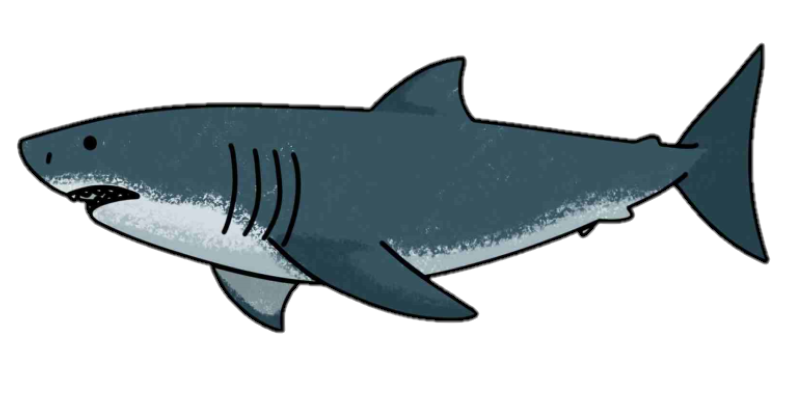
Broadly rounded short snout, small eyes, the absence of an interdorsal ridge, first dorsal fin origin over rear third of pectoral base, second dorsal-fin height about half of first dorsal-fin height and an anal fin with deeply notched posterior margins, characteristic upper teeth with high broad serrated triangular hooked cusps and lower medials moderately large, erect and hooked-cusped, narrowly symmetrical with arched roots with weakly serrated cutting edges.
Biology
Length: It reaches a maximum size of 266 cm total length (TL) which was measured; however, jaws collected in Pakistan have been estimated to come from a larger individual of ~275 cm TL. Males mature at ~178 cm TL and female size-at-maturity is unknown. Size-at-birth is 56–61 cm TL.
Gestation Period: Unknown
Litter Size: Unknown
Life Expectancy: As the Ganges Shark is a tropical Indo-Pacific species, the generation length from tropical northern Australia, within the Indo-Pacific, is considered the most appropriate, where female age-at-maturity is 9.5 years and maximum age is 26 years, resulting in a generation length of 18 years.
Diet: Unknown
Habitat and distributions
Habitat: The Ganges Shark is euryhaline and occurs in tropical rivers in freshwater and estuarine conditions, in estuaries, and in coastal habitats. Juvenile and subadult Glyphis species generally occur in rivers while adults are generally coastal and marine.
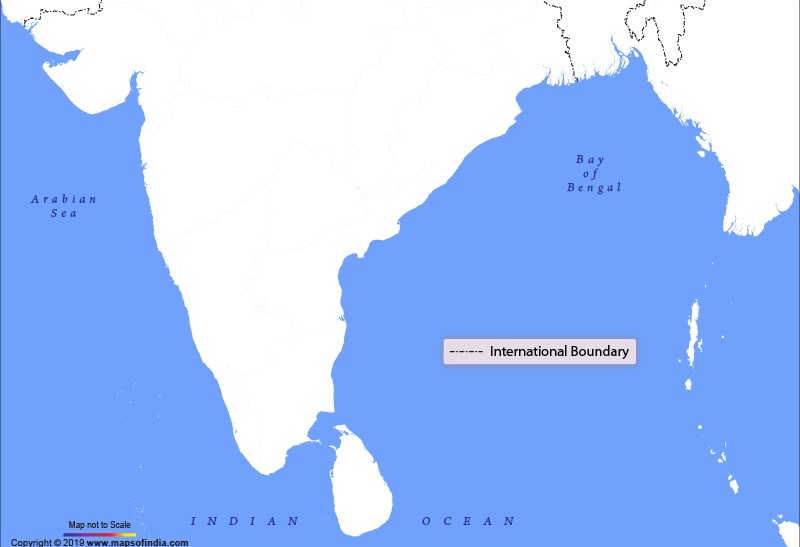
Distribution: The Ganges Shark has a patchy distribution across the Indo-West Pacific. It is difficult to ascertain its historical distribution. In Pakistan, there are several records from fishers and jaw traders in the Karachi, Sindh Province of Pakistan (mostly from 2001 to 2005) that are likely from south of Karachi and lower Indus River and the adjacent inshore coast. There is no suitable habitat for the species west of the Indus River. There is a single record of an adult landed in Mumbai in 2016 on the west coast of India, although it is unlikely to have been caught locally. It is known from the lower Ganges River Basin, West Bengal, India with most historic records from the Hooghly River, and east to at least the Bangladesh-Myanmar border. In Myanmar, it is known from a single 19th century specimen collected in the Yangon River (originally described as Carcharhinus siamensis). In Sabah, Borneo, the species is known from 14 specimens collected from the Kinabatangan River in 1996–2003 (described as Glyphis fowlerae) and it was previously recorded from Borneo around the turn of the 20th century. In Indonesia, a set of jaws obtained in Cirebon, Java, were identified as Ganges Shark. Due to a lack of local suitable habitat, and Cirebon’s position as a major trading node of fish products, it is likely that this specimen originated elsewhere.
Depth: 0-50 m
Landing sites: Junglighat, Burma Nallah
Commercial Value
The species is used for its meat, fins, and skin. In Bangladesh, fins of the Ganges Shark were identified at shark processing centres. Glyphis spp. fins have been reported in international trade in Hong Kong and China.
Threats
The species is caught as bycatch in subsistence, small-scale, and industrial fisheries and retained for its meat and fins. The Ganges Shark occupies large tidal rivers, estuaries and coastal areas. The habitat specificity of the Ganges Shark increases its susceptibility to the impacts of human activities, particularly fishing and habitat modification. The habitat of this species is subject to intense anthropogenic pressure, from river and coastal fisheries, habitat degradation and pollution (including untreated discharge from industrial and chemical plants), increasing river use, sand mining in rivers, power plants, and the construction of dams and barrages which alter flow and affect river productivity.
References
Akhilesh, K.V., Bineesh, K.K., Gopalakrishnan, A., Jena, J.K., Basheer, V.S. and Pillai, N.G.K. (2014)
Checklist of Chondrichthyans in Indian waters. Journal of the Marine Biological Association of India 56(1): 109-120.
Chowdhury, G.W., Akash, M. and Haque, A.B. (2017)
Status of the Ganges River Shark Glyphis gangeticus (Müller & Henle, 1839). Dhaka University Journal of Biological Sciences 26: 111–116.
Compagno, L.J.V. (1984)
FAO species catalogue. Vol. 4. Sharks of the world. An annotated and illustrated catalogue of shark species known to date. Part 1. Hexanchiformes to Lamniformes. FAO, Rome.
Compagno, L.J.V. and Cook, S.F. (1995)
The exploitation and conservation of freshwater elasmobranchs: status of taxa and prospects for the future. In: M.I. Oetinger and G.D. Zorzi (eds), The biology of freshwater elasmobranchs. Journal of Aquariculture and Aquatic Sciences, pp. 62–90.
Ebert, D.A., Fowler, S. and Compagno, L. (2013)
Sharks of the World. A Fully Illustrated Guide. Wild Nature Press, Plymouth, United Kingdom.
Government of India Ministry of Environment and Forests (2006)
Schedule I, Part II A, Indian Wildlife Protection Act 1972. (Accessed on 15 November 2006).
Haque, A.B. and Das S.A. (2019)
New records of the Critically Endangered Ganges shark Glyphis gangeticus in Bangladeshi waters: urgent monitoring needed. Endangered Species Research 40: 65–73.
Jabado, R.W., Al Ghais, S.M., Hamza, W., Henderson, A.C., Spaet, J.L.Y., Shivji, M.S. and Hanner, R.H. (2015)
The trade in sharks and their products in the United Arab Emirates. Biological Conservation 181: 190-198.
Jabado, R.W., Kyne, P.M., Pollom, R.A., Ebert, D.A., Simpfendorfer, C.A., Ralph, G.M. and Dulvy, N.K. (eds.). (2017)
The conservation status of sharks, rays, and chimaeras in the Arabian Sea and adjacent waters. Environment Agency – Abu Dhabi, UAE and IUCN Species Survival Commission Shark Specialist Group, Vancouver, Canada.
Li, C., Corrigan, S., Yang, L., Straube, N., Harris, M., Hofreiter, M., White, W.T. and Naylor, G.J.P. (2015)
DNA capture reveals transoceanic gene flow in endangered river sharks. Proceedings of the National Academy of Sciences of the United States of America 112(43): 13302–13307.
Pauly, D., Zeller, D. and Palomares, M.L.D. (2020)
Sea Around Us Concepts, Design and Data. Available at: seaaroundus.org. (Accessed: April 2020).
Sen, K. and Mandal, R. (2019)
Fish diversity and conservation aspects in an aquatic ecosystem in Indian Sundarban. International Journal of Zoology Studies 4: 16–26.
Related Species
- Tiger Shark
- Silky Shark
- Blacktip Reef Shark
- Common Blacktip Shark
- Spot-tail Shark
- Milk Shark
- Spadenose Shark
- Bignose Shark
- Blackspot Shark
- Blue Shark
- Broadfin Shark
- Bull Shark
- Dusky Shark
- Graceful Shark
- Grey Reef Shark
- Grey Sharpnose Shark
- Hardnose Shark
- Sliteye Shark
- Silvertip Shark
- Sharptooth Lemon Shark
- Sandbar Shark
- Pondicherry Shark
- Pigeye Shark
- Oceanic Whitetip Shark
- Irrawaddy River Shark
- Speartooth Shark
- Spinner Shark
- Whitecheek Shark
- Whitetip Reef Shark