

Species Name
Hardnose Shark
Scientific Name
Carcharhinus macloti (müller & henle, 1839)
Family Name
Carcharhinidae
IUCN Status
Near Threatened
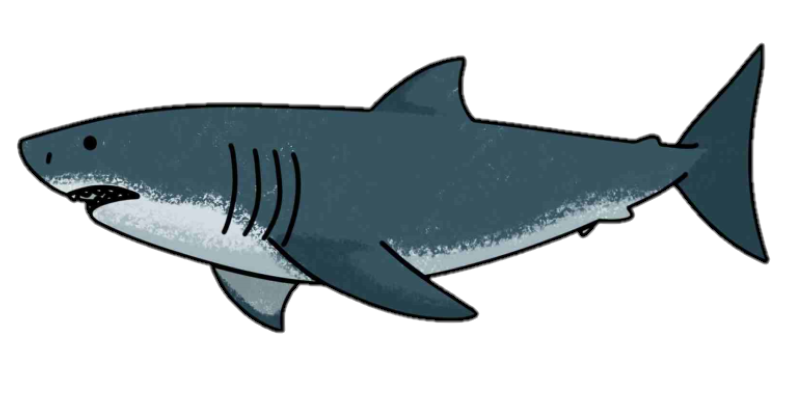
A small slender shark with a long narrowly rounded or somewhat pointed snout, no interdorsal ridge, small pectoral fins, a small first dorsal fin with an extremely long rear tip and a small low second dorsal fin with a long rear tip. Back grayish or grey-brown, belly white; posterior margin of pectorals and ventral caudal fin lobe with an inconspicuous white edge; posterioventral and dorsal margins of caudal fin with a narrow black edge.
Biology
Length: It reaches a maximum size of 110 cm total length, males mature at 69–74 cm TL and females mature at 70–89 cm TL. Size-at-birth of 40–49 cm TL.
Gestation Period: 12 months
Litter Size: 1-3
Life Expectancy: In Australia, female age-at-maturity is estimated as 4 years and maximum age as 11.8 years; generation length is therefore 8 years.
Diet: Feeds mainly on fishes, also cephalopods and crustaceans.
Habitat and distribution
Habitat: Found in inshore and offshore waters of continental and insular shelves.
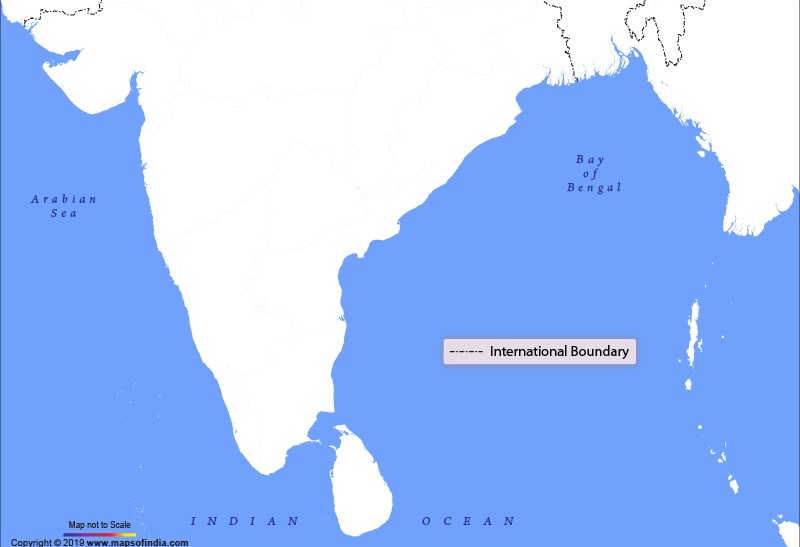
Distribution: The Hardnose Shark occurs from East Africa to southern Japan and the Australian east coast, that is, it ranges across the Indian Ocean and Northwest and Western Central Pacific.
Depth: 0-200 m
Landing sites: Satpati, Sassoon Dock, New Ferry Wharf, Royapuram Fishing Harbour, Cuddalore Fishing Harbour, Nagapattinam Fishing Harbour, Junglighat, Burmanallah, Wandoor, and Dignabad, Cochin Fisheries Harbour, Veraval, Mangrol, Porbander, Okha
Commercial Value
The species is used for its meat which is often consumed fresh but also dried and salted for domestic sales or trade with neighbouring countries. Fins are not considered valuable due to their small size but are still traded internationally.
Threats
The Hardnose Shark is caught as bycatch in industrial and small-scale fisheries by multiple fishing gears including trawl, gillnet, trawl, hook and line, and longline. The species is generally retained for the meat and to a lesser extent, for the low value fins.
In the Western Indian Ocean, catches of marine resources reported to FAO have increased over the past 30 years but have levelled off since 1999, suggesting stocks are fully fished. Almost 3 million people are directly dependent on artisanal fishing for their livelihood along the shores of East Africa. Artisanal catches are under-reported and most small-scale, artisanal, and subsistence coastal fisheries within the Western Indian Ocean are considered to be fully- or over-exploited, especially where they are found close to population centres.
In the Arabian Seas region, there is high and increasing fishing pressure on the Hardnose Shark's inshore habitats.
References
Akhilesh, K.V., Ganga, U., Pillai, N.G.K., Vivekanandan, E., Bineesh, K.K., Shanis, C.P.R. and Hashim, M. (2011)
Deep-sea fishing for chondrichthyan resources and sustainability concerns— a case study from southwest coast of India. Indian Journal of Geo-Marine Sciences 40(3): 347-355.
Ebert, D.A., Fowler, S. and Compagno, L. (2013)
Sharks of the World. A Fully Illustrated Guide. Wild Nature Press, Plymouth, United Kingdom.
Jabado, R.W., Al Ghais, S.M., Hamza, W., Henderson, A.C., Spaet, J.L.Y., Shivji, M.S. and Hanner, R.H. (2015a)
The trade in sharks and their products in the United Arab Emirates. Biological Conservation 181: 190–198.
Krajangdara, T. (2019)
Sharks and Rays of Thailand. Country Report. Department of Fisheries, Thailand.
Kumar, R.R., Venu, S., Akhilesh, K.V., Bineesh, K.K. and Rajan, P.T. (2018)
First report of four deep-sea chondrichthyans (Elasmobranchii and Holocephali) from Andaman waters, India with an updated checklist from the region. Acta Ichthyologica et Piscatoria 48(3): 289–301.
Last, P.R., White, W.T., Caira, J.N., Dharmadi, Fahmi, Jensen, K., Lim, A.P.K., Manjaji-Matsumoto, B.M., Naylor, G.J.P., Pogonoski, J.J., Stevens, J.D., Yearsley, G.K. (2010)
Sharks and Rays of Borneo. CSIRO Marine and Atmospheric Research, Collingwood.
Motomura, H., Alama, U. B., Muto, N., Babaran, R. P., Ishikawa, S. (2017)
Commercial and bycatch market fishes of Panay Island, Republic of the Philippines. The Kagoshima University Museum, Kagoshima, University of the Philippines Visayas, Iloilo, and Research Institute for Humanity and Nature, Kyoto, Iloilo City, Philippines and Kagoshima, Japan.
van der Elst, R., Everett, B., Jiddawi, N., Mwatha, G., Afonso, P.S. and Boulle, D. (2005)
Fish, fishers and fisheries of the Western Indian Ocean: their diversity and status. A preliminary assessment. Philosophical Transactions of the Royal Society of London A: Mathematical, Physical and Engineering Sciences 363(1826): 263-284.
White, W.T., Last, P.R., Stevens, J.D., Yearsley, G.K., Fahmi and Dharmadi. (2006)
Economically Important Sharks and Rays of Indonesia. Australian Centre for International Agricultural Research, Canberra, Australia.
Related Species
- Tiger Shark
- Silky Shark
- Blacktip Reef Shark
- Common Blacktip Shark
- Spot-tail Shark
- Milk Shark
- Spadenose Shark
- Bignose Shark
- Blackspot Shark
- Blue Shark
- Broadfin Shark
- Bull Shark
- Dusky Shark
- Ganges Shark
- Graceful Shark
- Grey Reef Shark
- Grey Sharpnose Shark
- Sliteye Shark
- Silvertip Shark
- Sharptooth Lemon Shark
- Sandbar Shark
- Pondicherry Shark
- Pigeye Shark
- Oceanic Whitetip Shark
- Irrawaddy River Shark
- Speartooth Shark
- Spinner Shark
- Whitecheek Shark
- Whitetip Reef Shark