

Species Name
Silvertip Shark
Scientific Name
Carcharhinus albimarginatus (rüppell, 1837)
Family Name
Carcharhinidae
IUCN Status
Vulnerable
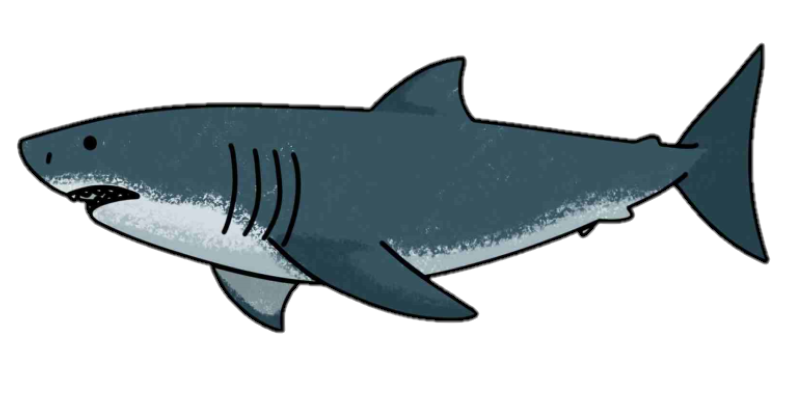
First dorsal fin and pectoral fins angular, and not expanded; upper teeth triangular; interdorsal ridge present. Dark grey or grey-brown above, white below; all fins with conspicuous white tips and posterior margins.
Biology
Length: Size at birth is reported at 63-68 cm total length (TL) and 73-81 cm TL. Compagno et al. (2005) report that males mature at 160-180 cm TL and females at 160-199 cm TL. White et al. (2006) report that males mature at 190-200 cm TL and females at ~195 cm TL. It reaches a maximum size of 300 cm TL.
Gestation Period: 12 months
Litter Size: 1-11 pups
Life Expectancy: Estimated generation length 21.5 years
Diet: Feeds mainly on benthic and midwater fishes (including scombrids), also rays, cephalopods, and small sharks and crustaceans.
Habitat and distribution
Habitat: An inshore and offshore shark found over or adjacent to continental and insular shelves and offshore banks. Prefers offshore islands, coral reefs and banks. Benthopelagic.
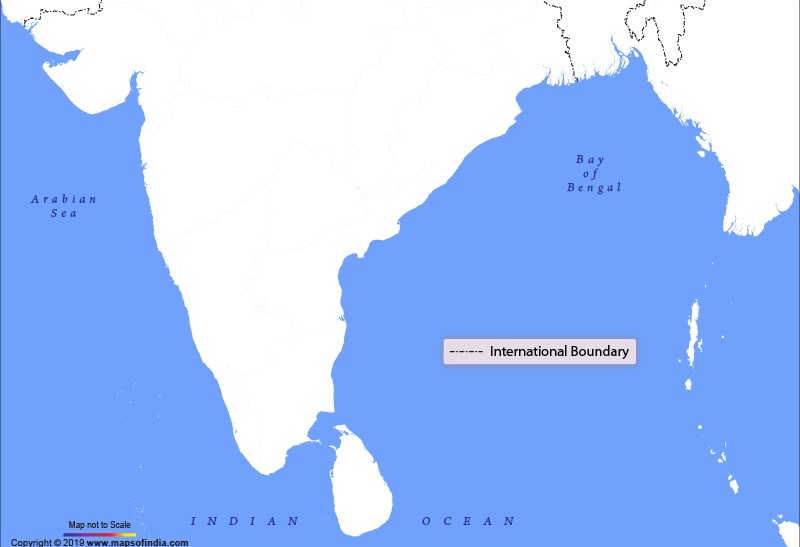
Distribution: The Silvertip Shark has a tropical Indo-Pacific distribution that is wide-ranging but fragmented. In the Western Indian Ocean, the Silvertip Shark occurs in the Red Sea, off South Africa, Mozambique, Kenya, Madagascar, Aldabra Islands, Mauritius, Seychelles, and Chagos Archipelago. In the Western Central Pacific, it occurs off Indonesia, Taiwan, Guam, New Caledonia, Philippines, Palau, Marshall, Solomon and Phoenix Islands, Tahiti, Tuvalu, and Papua New Guinea. It also occurs in northern Australian waters from Carnarvon (Western Australia) to Bundaberg (Queensland), except for the Gulf of Carpentaria and Arafura Sea. In the Eastern Central Pacific, the Silvertip Shark is known from southern Baja California, south to Guatemala and Colombia, including the Revillagigedo and Clipperton Islands, Cocos Island and Galápagos Islands. The species possibly also occurs in the Western Central Atlantic (Mexico, Gulf of Mexico, and Caribbean Sea), although its presence in that region is unconfirmed.
Depth: 0-800 m
Landing sites: Cochin Fisheries Harbour, Junglighat, Burmanallah, Wandoor, and Dignabad
Commercial Value
The Silvertip Shark is utilized for its fins, meat, cartilage, liver, teeth, jaws, and skin. The meat, teeth, and jaws are generally sold locally, whereas fins, skin, and cartilage are generally exported.
Threats
The Silvertip Shark is a bycatch in high seas fisheries and in artisanal longline, gillnet, and trawl fisheries throughout its range. The number of pelagic sharks landed by fishing fleets in all oceans has increased in economic importance. However, catch statistics are generally not available and where they are, they are under-reported. The Silvertip Shark is one of the nine main species landed by high seas longline and net fleets. The majority of these fleets target tunas in all of the world's oceans and as a result have a large bycatch of pelagic sharks.
References
Myers, R.F. (1991)
Micronesian reef fishes. Second Ed. Coral Graphics, Barrigada, Guam. 298 p.
Compagno, L.J.V., D.A. Ebert and M.J. Smale (1989)
Guide to the sharks and rays of southern Africa. New Holland (Publ.) Ltd., London. 158 p.
Compagno, L.J.V. and V.H. Niem (1998)
Carcharhinidae. Requiem sharks. p. 1312-1360. In K.E. Carpenter and V.H. Niem (eds.) FAO Identification Guide for Fishery Purposes. The Living Marine Resources of the Western Central Pacific. FAO, Rome.
Compagno, L.J.V. (1984)
FAO Species Catalogue. Vol. 4. Sharks of the world. An annotated and illustrated catalogue of shark species known to date. Part 2 - Carcharhiniformes. FAO Fish. Synop. 125(4/2):251-655. Rome: FAO.
Barnett, A., Abrantes, K.G., Seymour, J. and Fitzpatrick, R. (2012)
Residency and spatial use by reef sharks of an isolated seamount and its implications for conservation. PLOS ONE 7(5): e36574.
Ebert, D.A., Fowler, S. and Compagno, L. (2013)
Sharks of the World. Wild Nature Press, Plymouth.
Espinoza, M., Heupel, M.R., Tobin, A.J. and Simpfendorfer, C.A. (2015)
Movement patterns of silvertip sharks (Carcharhinus albimarginatus) on coral reefs. Coral Reefs.
Grace, M.A. (2001)
Field guide to requiem sharks (Elasmobranchiomorphi: Carcharhinidae) of the Western North Atlantic. NOAA Technical Report no. 153. NMFS, U.S. Department of Commerce.
Jones, G.P., Kaly. U.L. and Clements, K. (1991)
Preliminary records of the coral reef fishes of Tuvalu. South Pacific Journal of Natural Science 11(3): 40-57.
Last, P.R. and Stevens, J.D. (2009)
Sharks and Rays of Australia. Second Edition. CSIRO Publishing, Collingwood.
MIRC (2007)
Papua New Guinea Marine Biodiversity Database (Draft). Electronic database compiled by the Motupore Island Marine Biodiversity Unit (MIMBU).
White, W.T. (2007)
Catch composition and reproductive biology of whaler sharks (Carcharhiniformes: Carcharhinidae) caught by fisheries in Indonesia. Journal of Fish Biology 71(5): 1510-1540.
White, W.T., Last, P.R., Stevens, J.D., Yearsley, G.K., Fahmi and Dharmadi (2006)
Economically Important Sharks and Rays of Indonesia. ACIAR Publishing, Canberra, Australia.
Related Species
- Tiger Shark
- Silky Shark
- Blacktip Reef Shark
- Common Blacktip Shark
- Spot-tail Shark
- Milk Shark
- Spadenose Shark
- Bignose Shark
- Blackspot Shark
- Blue Shark
- Broadfin Shark
- Bull Shark
- Dusky Shark
- Ganges Shark
- Graceful Shark
- Grey Reef Shark
- Grey Sharpnose Shark
- Hardnose Shark
- Sliteye Shark
- Sharptooth Lemon Shark
- Sandbar Shark
- Pondicherry Shark
- Pigeye Shark
- Oceanic Whitetip Shark
- Irrawaddy River Shark
- Speartooth Shark
- Spinner Shark
- Whitecheek Shark
- Whitetip Reef Shark