

Species Name
Blue Shark
Scientific Name
Prionace glauca (linnaeus, 1758)
Family Name
Carcharhinidae
IUCN Status
Near Threatened
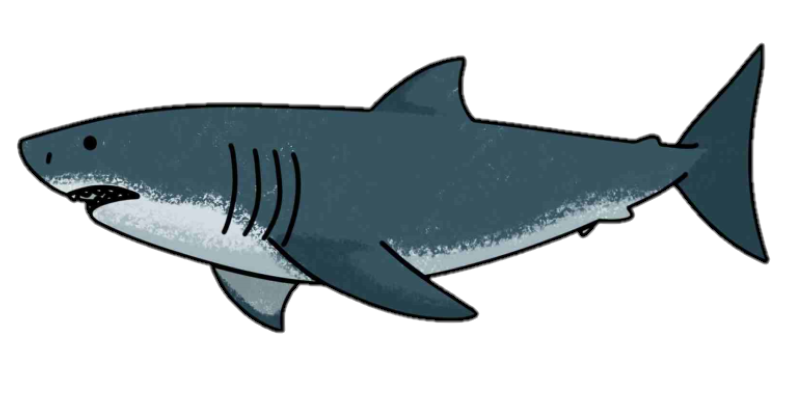
A slim, graceful blue shark with a long, conical snout, large eyes, and curved triangular upper teeth with saw edges; pectorals long and narrow; no interdorsal ridge. Dark blue dorsally, bright blue on the sides, white ventrally. Tips of pectoral fins and anal fin dusky. The first case of diprosopus tetrophthalmus (cranofacial duplication) in a foetus of this species was reported from South Atlantic.
Biology
Length: The species reaches a maximum size of about 380 cm total length (TL) (Hart 1973). Males mature at 183–218 cm TL, females mature at 183–221 cm TL.
Gestation Period: 9-12 months.
Litter Size: 4-135 (usually 25-35)
Life Expectancy: There is minor regional variation in female age at maturity at 5–6 years in the Atlantic and 5–8 years in the Pacific with a maximum age of 15.5–16 years in both regions; generation length is therefore 10 years in the Atlantic and 10.5 years in the Pacific. There are age studies with a greater maximum age of up to 28.6 years, however these are theoretical longevity estimates and the maximum ages have not been validated.
Diet: Feeds on fishes (herring, silver hake, white hake, red hake, cod, haddock, pollock, mackerel, butterfish, sea raven and flounders), small sharks, squids, pelagic red crabs, cetacean carrion, occasional sea birds and garbage.
Habitat and distribution
Habitat: The Blue Shark is an oceanic pelagic shark, that occurs close inshore where the continental shelf is narrow.
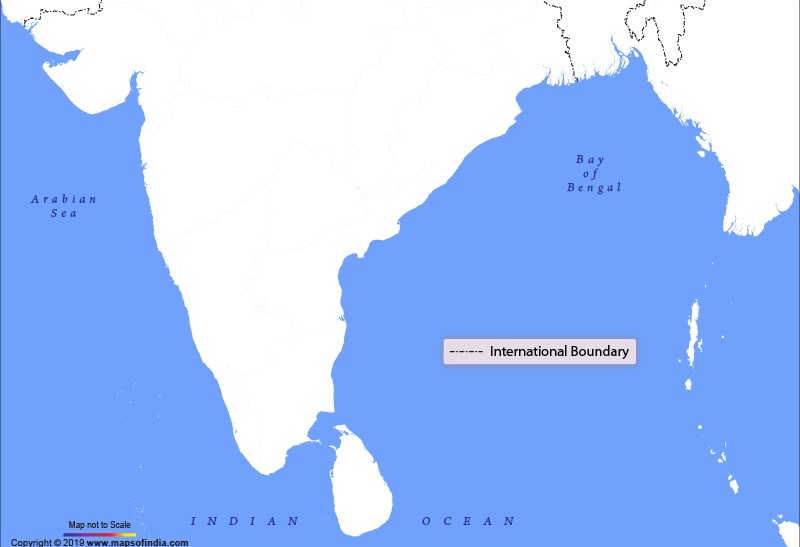
Distribution: The Blue Shark is one of the most wide-ranging of all sharks, found throughout all oceans in tropical and temperate waters.
Depth: 0-1000 m
Landing sites: Royapuram Fishing Harbour, Cuddalore Fishing Harbour, Nagapattinam Fishing Harbour, Cochin Fisheries Harbour, Junglighat, Burma Nallah
Commercial Value
The Blue Shark is the most prevelent species in the shark fin trade. It comprises the majority of shark fins imported in Hong Kong; 17.3% in 1991–2001 and 49% in 2014. The meat is often discarded but demand may be increasing and it is used in some regions where it is sold fresh locally and frozen or dried for international trade.
Threats
The Blue Shark is caught globally as target and bycatch in commercial and small-scale pelagic longline, purse seine, and gillnet fisheries. Most of the catch is taken as bycatch of industrial pelagic fleets in offshore and high-seas waters. It is also captured in coastal longlines, gillnets, trammel nets, and sometimes trawls, particularly in areas with narrow continental shelves. The species is generally retained for the meat and fins, unless regulations prohibit retention. Under-reporting of catches in the pelagic and domestic fisheries is likely. The species is highly valued by big-game recreational fishers, and although many practice catch and release, recreational fishing could be a threat due to post-release mortality. At-vessel hooking mortality from commercial Portuguese longlines in the Atlantic is relatively low (13.3%), but smaller individuals have higher probabilities of mortality than larger adults. The post-release mortality of only a few pelagic shark species has been studied. It has been reported as 10–35% for the Blue Shark. The species is taken in beach protection programs that target large sharks.
References
Andrade, I., Rosa, D., Muñoz-Lechuga, R. and Coelho, R. (2019)
Age and growth of the blue shark (Prionace glauca) in the Indian Ocean. Fisheries Research 211: 238-246.
Bailleul, D., Mackenzie, A., Sacchi, O., Poisson, F., Bierne, N. and Arnaud-Haond, S. (2018)
Large-scale genetic panmixia in the blue shark (Prionace glauca): A single worldwide population, or a genetic lag-time effect of the “grey zone” of differentiation? Evolutionary Applications 11(5): 614-630.
Blanco-Parra, M., Galvan-Magana, F. and Marquez-Farias, F. (2008)
Age and growth of the blue shark, Prionace glauca Linneaus, 1758, in the Northwest coast off Mexico. Revista de Biologia Marina y Oceangrafia 43(3): 513-520.
Camhi, M.D., Pikitch, E.K. and Babcock, E.A. (2008)
Sharks of the Open Ocean: Biology, Fisheries and Conservation . John Wiley & Sons.
Campana, S.E., Joyce, W. and Manning, M.J. (2009)
Bycatch and discard mortality in commercially caught blue sharks Prionace glauca assessed using archival satellite pop-up tags. Marine Ecology Progress Series 387: 241-253.
Campana, S.E., Joyce, W., Fowler, M. and Showell, M. (2016)
Discards, hooking, and post-release mortality of porbeagle (Lamna nasus), shortfin mako (Isurus oxyrinchus), and blue shark (Prionace glauca) in the Canadian pelagic longline fishery. ICES Journal of Marine Science 73(2): 520–528.
Carrera-Fernandez, M., Glavan-Magana, F. and Ceballos-Vazquez, B.P. (2010)
Reproductive biology of the blue shark Prionace glauca, (Chondrichthyes: Carcharhinidae) off Baja California Sur, Mexico. Aqua, International Journal of Ichthyology 16(3): 101-110.
Carvalho, F. and Winker, H. (2015)
Stock assessment of south Atlantic Blue Shark (Prionace glauca) through 2013. SCRS/2015/153. Collect. Vol. Sci. Pap. ICCAT.
Weigmann, S. (2016)
Annotated checklist of the living sharks, batoids and chimaeras (Chondrichthyes) of the world, with a focus on biogeographical diversity. Journal of Fish Biology 88(3): 837-1037.
Winker, H., Carvalho, F. and Kapur, M. (2018)
JABBA: Just Another Bayesian Biomass Assessment. Fisheries Research 204: 275–288.
Related Species
- Tiger Shark
- Silky Shark
- Blacktip Reef Shark
- Common Blacktip Shark
- Spot-tail Shark
- Milk Shark
- Spadenose Shark
- Bignose Shark
- Blackspot Shark
- Broadfin Shark
- Bull Shark
- Dusky Shark
- Ganges Shark
- Graceful Shark
- Grey Reef Shark
- Grey Sharpnose Shark
- Hardnose Shark
- Sliteye Shark
- Silvertip Shark
- Sharptooth Lemon Shark
- Sandbar Shark
- Pondicherry Shark
- Pigeye Shark
- Oceanic Whitetip Shark
- Irrawaddy River Shark
- Speartooth Shark
- Spinner Shark
- Whitecheek Shark
- Whitetip Reef Shark