

Species Name
Broadfin Shark
Scientific Name
Lamiopsis temminckii (müller & henle, 1839)
Family Name
Carcharhinidae
IUCN Status
Endangered
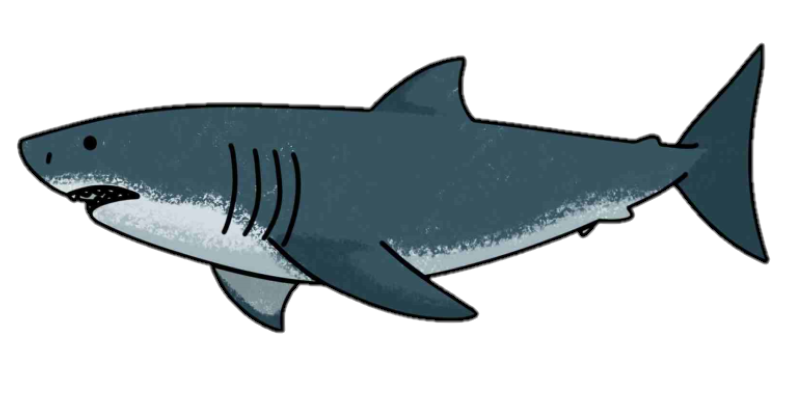
Grey or yellow-grey above, lighter below; no conspicuous markings.
Biology
Length: It attains a maximum size of 178 cm total length (TL), males mature at ~137 cm TL and females are suspected to mature ~143 cm TL. Size-at-birth of 42–65 cm TL.
Gestation Period: 8 months
Litter Size: 4-8
Life Expectancy: The generation length is suspected to be around 6.5 years.
Diet: Probably feeds on small fishes and invertebrates.
Habitat and distribution
Habitat: A little-known shark found in coastal, inshore waters.
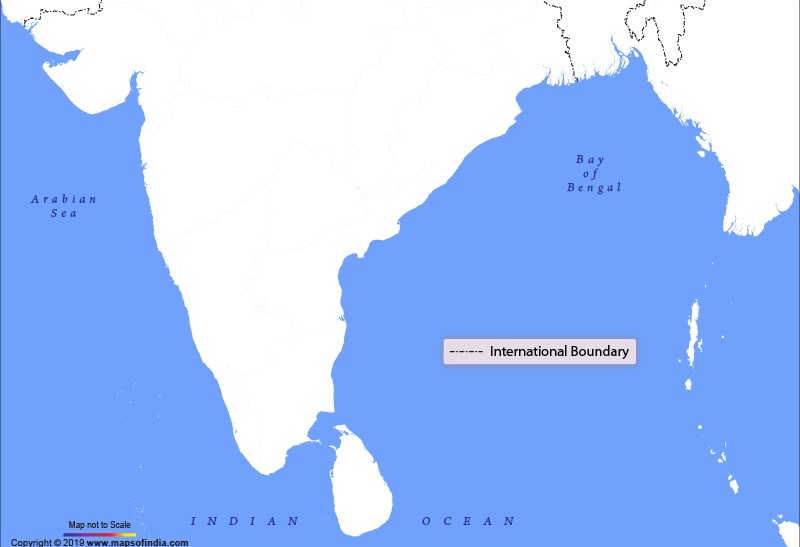
Distribution: The Broadfin Shark occurs in the northern Indian Ocean where it ranges from Pakistan to Thailand. However, the easternmost distribution boundary is uncertain, not least due to the occurrence of the sister species, the Borneo Broadfin Shark (L. tephrodes) found further east. The species has not been recorded on the species list of Thailand. There are two records of the Broadfin Shark from extensive landings surveys at Tanjung Luar (East Lombok), Indonesia in 2016, one reportedly captured in West Nusa Tenggara waters (around Belongas Bay area in West Lombok) another caught in East Nusa Tenggara waters.
Depth: 0-50 m
Landing sites: Machilipatnam, Nizampatnam, Vodarevu, Pakala, Mumbai (Versova, Sassoon Docks, Satpati, Naigaon, New Ferry Wharf)
Commercial Value
The meat of this species is often sold fresh for human consumption at local markets across the region. In Pakistan and India, the meat is cut into fillets, dried and salted for domestic sales or trade with neighbouring countries. The fins are dried and traded internationally.
Threats
There is little information on catches of the Broadfin Shark as species-specific data are not usually recorded. The species is taken in a variety of gear including bottom trawls, gillnets, hook and line, stake net, and dol (bag net) fisheries. Around 30% of landings from dol nets and trawlers are juveniles. The high level of exploitation on its habitat is of concern.
References
Akhilesh, K. V., White, W. T., Bineesh, K. K., Purushottama, G. B., Singh, V. V., Zacharia, P. U. (2016)
Redescription of the rare and endangered Broadfin Shark Lamiopsis temminckii (Müller & Henle, 1839) (Carcharhiniformes:Carcharhinidae) from the northeastern Arabian Sea. Zootaxa 4175(2): 155-166.
Cardeñosa, D., Shea, K.H., Zhang, H., Feldheim, K., Fischer, G.A. and Chapman, D.D. (2020)
Small fins, large trade: a snapshot of the species composition of low‐value shark fins in the Hong Kong markets. Animal Conservation 23: 203–211.
CMFRI (2010)
Marine Fisheries Census (2010), Part 1. India, Govt. of India, Ministry of Agriculture, Dept. of Animal Husbandry, Dairying & Fisheries and Central Marine Fisheries Research Institute, Indian Council of Agricultural Research. New Dehli.
Compagno, L.J.V. (2005)
Sharks of the World. An annotated and illustrated catalogue of the shark species known to date. Volume 3: Carcharhiniformes. FAO, Rome.
IUCN (2021)
The IUCN Red List of Threatened Species. Version 2021-2. Available at: www.iucnredlist.org. (Accessed: 04 September 2021).
Jabado, R.W. and Spaet, J.L.Y. (2017)
Elasmobranch fisheries in the Arabian Seas Region: Characteristics, trade and management. Fish and Fisheries 18: 1096–1118.
Related Species
- Tiger Shark
- Silky Shark
- Blacktip Reef Shark
- Common Blacktip Shark
- Spot-tail Shark
- Milk Shark
- Spadenose Shark
- Bignose Shark
- Blackspot Shark
- Blue Shark
- Bull Shark
- Dusky Shark
- Ganges Shark
- Graceful Shark
- Grey Reef Shark
- Grey Sharpnose Shark
- Hardnose Shark
- Sliteye Shark
- Silvertip Shark
- Sharptooth Lemon Shark
- Sandbar Shark
- Pondicherry Shark
- Pigeye Shark
- Oceanic Whitetip Shark
- Irrawaddy River Shark
- Speartooth Shark
- Spinner Shark
- Whitecheek Shark
- Whitetip Reef Shark