

Species Name
Bignose Shark
Scientific Name
Carcharhinus altimus (springer, 1950)
Family Name
Carcharhinidae
IUCN Status
Near Threatened
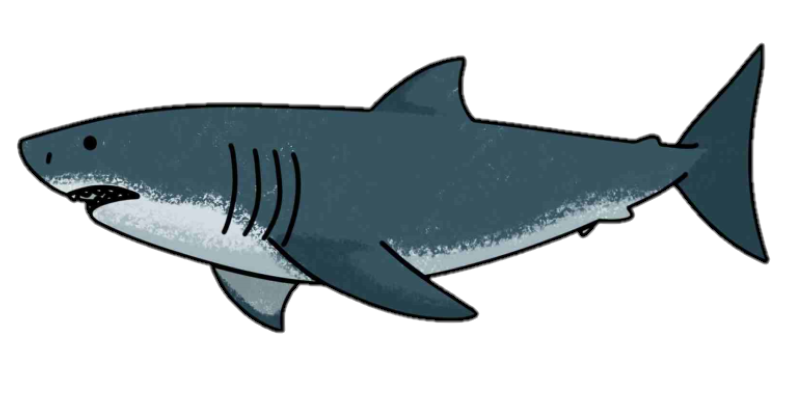
A heavily-bodied, cylindrical shark with a large, long and broad snout, long nasal flaps and high, triangular, saw-edged upper teeth; interdorsal ridge high and prominent; pectoral and dorsal fins large and straight. Grayish with no conspicuous markings, white below; inner corners of pectoral fins blackish.
Biology
Length: It reaches a maximum size of 300 cm total length (TL), males mature at 190 cm TL and females mature at 205 cm TL. Size at birth of 60–90 cm.
Gestation Period: Unknown
Litter Size: 3-15
Life Expectancy: Preliminary verified age parameters indicate female age-at-maturity of 17 years and maximum age of 23 years; generation length is therefore 20 years.
Diet: Feeds on bony fishes, other sharks, stingrays, and cuttlefish.
Habitat and distribution
Habitat: The Bignose Shark occurs in warm temperate and tropical waters on continental shelves and upper continental slopes.
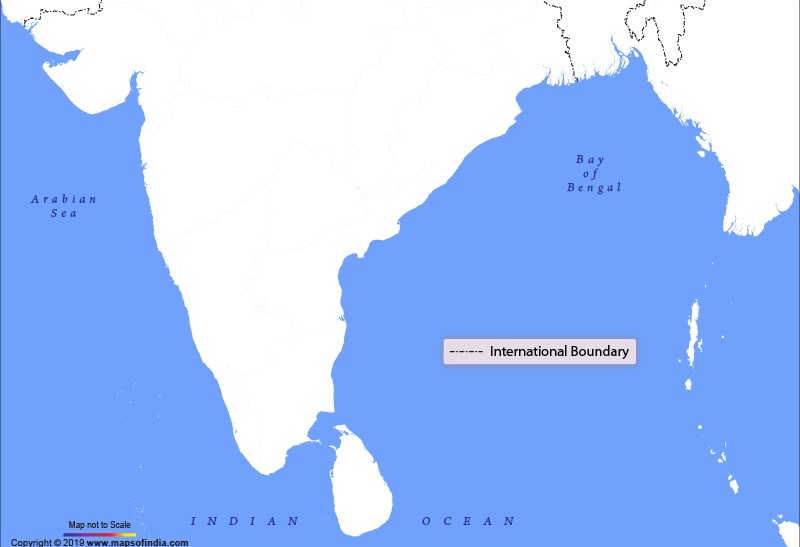
Distribution: The Bignose Shark has a circumglobal but patchy distribution.
Depth: 0-810 m
Landing sites: Cochin Fisheries Harbour
Commercial Value
The species is used for its meat, fins, skin, liver oil, and cartilage; the fins of adults are large and of high-value.
Threats
The Bignose Shark is caught globally as mostly bycatch in pelagic longline and purse seine, gillnet, and bottom trawl fisheries and generally retained for the meat and fins. Its migratory behaviour from the seafloor to shallow waters at night increases its susceptibility to capture in the widespread pelagic tuna fisheries.
References
Duffy, C.A.J. and Struthers, C.D. (2017)
A major range extension for Carcharhinus altimus (Springer, 1950) in the South Pacific Ocean. Zootaxa 4323(1): 132-138.
Ebert, D.A., Fowler, S. and Compagno, L. (2013)
Sharks of the World. A Fully Illustrated Guide. Wild Nature Press, Plymouth, United Kingdom.
Crow, G.L., Lowe, C.G. and Wetherbee, B.M. (1996)
Shark records from longline fishing programs in Hawai'i with comments on Pacific Ocean distributions. Pacific Science 50(4): 382-392.
da Silva, C., Booth, A.J., Dudley, S.F.J., Kerwath, S.E., Lamberth, S.J., Leslie, R.W., McCord, M.E., Sauer, W.H.H. and Zweig, T. (2015)
The current status and management of South Africa's chondrichthyan fisheries. African Journal of Marine Science 37(2): 233-248.
Compagno, L.J.V., D.A. Ebert and M.J. Smale (1989)
Guide to the sharks and rays of southern Africa. New Holland (Publ.) Ltd., London. 158 p.
Compagno, L.J.V. and V.H. Niem (1998)
Carcharhinidae. Requiem sharks. p. 1312-1360. In K.E. Carpenter and V.H. Niem (eds.) FAO Identification Guide for Fishery Purposes. The Living Marine Resources of the Western Central Pacific. FAO, Rome.
Related Species
- Tiger Shark
- Silky Shark
- Blacktip Reef Shark
- Common Blacktip Shark
- Spot-tail Shark
- Milk Shark
- Spadenose Shark
- Blackspot Shark
- Blue Shark
- Broadfin Shark
- Bull Shark
- Dusky Shark
- Ganges Shark
- Graceful Shark
- Grey Reef Shark
- Grey Sharpnose Shark
- Hardnose Shark
- Sliteye Shark
- Silvertip Shark
- Sharptooth Lemon Shark
- Sandbar Shark
- Pondicherry Shark
- Pigeye Shark
- Oceanic Whitetip Shark
- Irrawaddy River Shark
- Speartooth Shark
- Spinner Shark
- Whitecheek Shark
- Whitetip Reef Shark