

Species Name
Pigeye Shark
Scientific Name
Carcharhinus amboinensis (müller & henle, 1839)
Family Name
Carcharhinidae
IUCN Status
Vulnerable
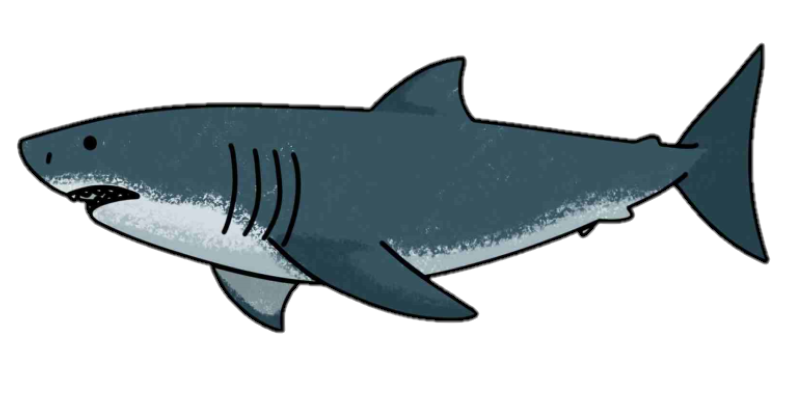
A massive shark with a thick-set head, a short, broad and blunt snout, small eyes and large, triangular, saw-edged upper teeth; 1st dorsal fin high and erect, at leas 3.2 times height of 2nd dorsal fin; no interdorsal ridge. Grayish in color, white below; fins with dusky tips.
Biology
Length: Males mature at about 210 cm and females at 215–220 cm. The largest Australian individuals were a 231 cm male and a 242 cm female; in South Africa they were a 238 cm male and a 245 cm female. Fourmanoir (1961) recorded a 280 cm female from west Madagascar. Size at birth is 60–75 cm. In Australia the largest embryo was 59 cm and the smallest free-swimming individual was 66 cm. In South Africa the smallest free-swimming individual was 75 cm and the largest embryo 79 cm.
Gestation Period: 12 months
Litter Size: 3-13
Life Expectancy: Unknown
Diet: Feeds on pelagic and demersal bony fishes, sharks and rays, squid, shrimps, cuttlefish, octopi, lobsters, gastropods and mammalian carrion.
Habitat and distribution
Habitat: An inshore species of the continental and insular shelves, commonly inhabiting shallow waters close inshore, near the surf line and along beaches. It also occasionally enters brackish water, and may be found in shallow bays and estuaries, as well as off the open coast but not ascending rivers. Predominantly demersal but found throughout the water column.
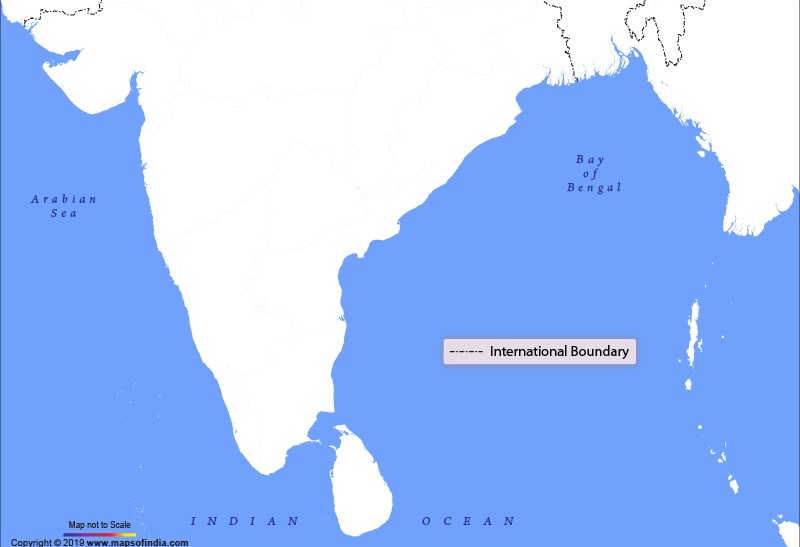
Distribution: This subpopulation occurs in the Southwest Indian Ocean from Madagascar, Mozambique and South Africa.
Depth: 0-60 m
Landing sites: Cochin Fisheries Harbour, New Ferry Wharf, Veraval, Mangrol, Porbander, Okha, Junglighat, Burmanallah, Wandoor, and Dignabad
Commercial Value
Pigeye Sharks are used for their meat and fins (high value in adults) and other products, such as skin, cartilage, and jaws. In the Arabian Seas region, meat of juveniles of this species is often sold fresh for human consumption at local markets and there is a preference for its meat at local markets; adults are frequently traded whole with their meat cut into small cubes, dried and exported to international markets (one route is from Dubai to Sri Lanka). The fins of this species are utilised in the fin trade, with Fields et al. (2018) reporting that this species accounted for ~0.4% of trimmings in Hong Kong fin markets.
Threats
The Pigeye Shark is taken in coastal waters throughout its range as bycatch in industrial and small-scale fisheries by a variety of fishing gears, including gillnet, longline, trawl, and handline. Its large size makes it a frequently retained species due to the value of its fins and meat. The meat is prized in some markets and attracts a price premium. Data for the species is particularly sparse because of its similarity in appearance to the Bull Shark which has a similar size and an overlapping distribution.
References
Cliff, G. and Dudley, S.F.J. (1991)
Sharks caught in the protective nets off Natal, South Africa. 5. Java shark Carcharhinus amboinensis (Müller and Henle). South African Journal of Marine Science 11: 443–453.
Compagno, L.J.V., D.A. Ebert and M.J. Smale, (1989)
Guide to the sharks and rays of southern Africa. New Holland (Publ.) Ltd., London. 158 p.
Compagno, L.J.V. and V.H. Niem (1998)
Carcharhinidae. Requiem sharks. p. 1312-1360. In K.E. Carpenter and V.H. Niem (eds.) FAO Identification Guide for Fishery Purposes. The Living Marine Resources of the Western Central Pacific. FAO, Rome.
Last, P.R. and J.D. Stevens (1994)
Sharks and rays of Australia. CSIRO, Australia. 513 p.
Fermon, Y., N. Bailly, F. Cardiec, R. Causse, E. Chartrain, L. Chirio, G. De Bruyne, P. Deynat, C.D. Hopkins, A. Lamboj, M.I. Mennesson, J.-H. Mve Beh, D. Paugy, B. Sidlauskas, J.P. Sullivan, J.-P. Van de Weghe, T.R. Vigliotta and Van der Zee (2022)
An annotated checklist of the fishes of Gabon. Cybium 46(2-3):69-317.
Fowler, S.L., Cavanagh, R.D., Camhi, M., Burgess, G.H., Cailliet, G.M., Fordham, S.V., Simpfendorfer, C.A. and Musick, J.A. (comps and eds) (2005)
Sharks, Rays and Chimaeras: The Status of the Chondrichthyan Fishes. Status Survey. pp. x + 461. IUCN/SSC Shark Specialist Group, IUCN, Gland, Switzerland and Cambridge, UK.
IUCN (2009)
IUCN Red List of Threatened Species (ver. 2009.2). Available at: www.iucnredlist.org. (Accessed: 3 November 2009).
Shark Specialist Group (2000)
IUCN Shark Specialist Group Red List Assessments, 2000 (unpublished report)
Related Species
- Tiger Shark
- Silky Shark
- Blacktip Reef Shark
- Common Blacktip Shark
- Spot-tail Shark
- Milk Shark
- Spadenose Shark
- Bignose Shark
- Blackspot Shark
- Blue Shark
- Broadfin Shark
- Bull Shark
- Dusky Shark
- Ganges Shark
- Graceful Shark
- Grey Reef Shark
- Grey Sharpnose Shark
- Hardnose Shark
- Sliteye Shark
- Silvertip Shark
- Sharptooth Lemon Shark
- Sandbar Shark
- Pondicherry Shark
- Oceanic Whitetip Shark
- Irrawaddy River Shark
- Speartooth Shark
- Spinner Shark
- Whitecheek Shark
- Whitetip Reef Shark