

Species Name
Whitecheek Shark
Scientific Name
Carcharhinus dussumieri (valenciennes in müller & henle, 1839)
Family Name
Carcharhinidae
IUCN Status
Endangered
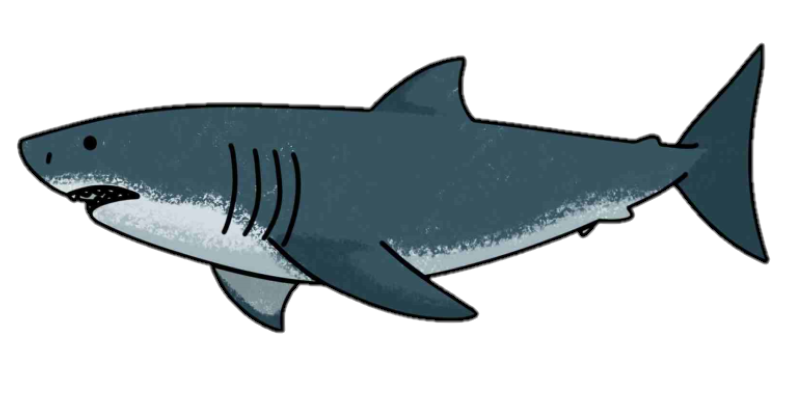
This small species is distinguished by the following characters: snout relatively long and narrowly rounded to almost pointed; upper anterior teeth are oblique and blade-like, coarsely serrated, with lateral margin deeply notched and with several large and serrated basal cusplets; lower anterior teeth are narrower, slightly oblique, lateral margins notched and usually without large basal serrae, finely serrated; total tooth row counts 27-29/24-30, or 52-59; interdorsal space often without a ridge, 17.9-20.8% TL.
Biology
Length: It reaches a maximum size of 100 cm total length (TL) with males maturing at 72 cm TL and females at about 80 cm TL.
Gestation Period: Unknown
Litter Size: litters of 2-5 pups.
Life Expectancy: 4 years
Diet: Feeds mainly on fishes but also on cephalopods, and crustaceans.
Habitat and distributions
Habitat: The Whitecheek Shark is a small species of carcharhinid shark that is common in inshore waters over soft substrates, neritic.
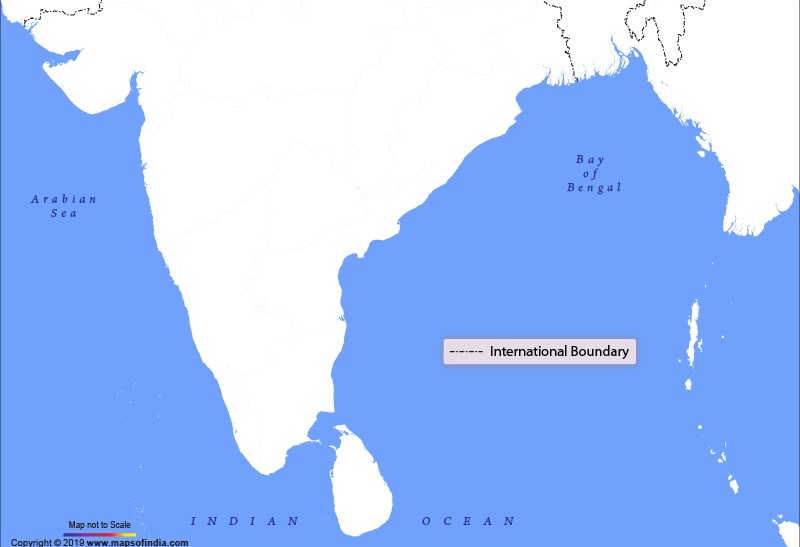
Distribution: The Whitecheek Shark is widespread along the north coast of the Arabian Sea and the Arabian/Persian Gulf in the Western and Eastern Indian Ocean. It is more patchily distributed along the southwest coast of India but has been recorded from the northern coast of Sri Lanka (Gulf of Mannar) and the east coast of India (Tamil Nadu State to Pondicherry where it was first described). Bonfil (2003) reported this species from the lower Red Sea and Gulf of Aden, but these records may have been of Human's Whaler Shark (Carcharhinus humani) which was only recently described from the northwest Indian Ocean.
Depth: 0-100 m
Landing sites: Digha Mohana, Royapuram Fishing Harbour, Cuddalore Fishing Harbour, Nagapattinam Fishing Harbour, Junglighat, Burmanallah, Wandoor, Dignabad, Cochin Fisheries Harbour
Commercial Value
The meat of this species is often sold fresh for human consumption at local markets across its range. In some countries, such as Oman, Saudi Arabia (Arabian/Persian Gulf), Pakistan, and India the meat is cut into fillets, dried and salted for domestic sales or trade with neighbouring countries. Fins are not considered valuable due to their small size but are still traded internationally.
Threats
There is little information on catches of the Whitecheek Shark as species-specific data is not usually recorded. Carcharhinids are susceptible to and caught in a variety of fishing gear types, particularly gillnets and longlines, as well as trawl nets (which generally capture smaller individuals and species).
References
Related Species
- Tiger Shark
- Silky Shark
- Blacktip Reef Shark
- Common Blacktip Shark
- Spot-tail Shark
- Milk Shark
- Spadenose Shark
- Bignose Shark
- Blackspot Shark
- Blue Shark
- Broadfin Shark
- Bull Shark
- Dusky Shark
- Ganges Shark
- Graceful Shark
- Grey Reef Shark
- Grey Sharpnose Shark
- Hardnose Shark
- Sliteye Shark
- Silvertip Shark
- Sharptooth Lemon Shark
- Sandbar Shark
- Pondicherry Shark
- Pigeye Shark
- Oceanic Whitetip Shark
- Irrawaddy River Shark
- Speartooth Shark
- Spinner Shark
- Whitetip Reef Shark