

Species Name
Blackspot Shark
Scientific Name
Carcharhinus sealei (pietschmann, 1913)
Family Name
Carcharhinidae
IUCN Status
Vulnerable
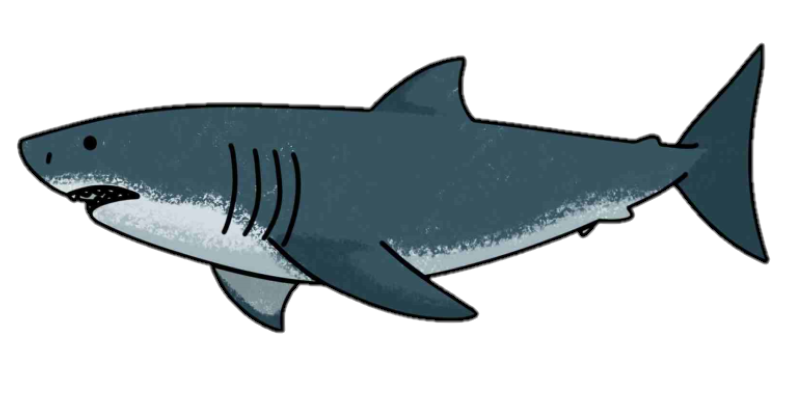
A small species which is distinguished by the following characters: snout moderately long and bluntly pointed; upper anterior teeth oblique and blade-like, coarsely serrated laterally, lateral margin deeply notched and with several large and smooth basal cusplets; lower anterior teeth narrower, slightly oblique, lateral margins usually not notched and with several large basal serrae, mostly smooth; total tooth row 24-28/22-27 or 47-55; interdorsal space often without a ridge on midline, 19.0-22.4% TL; first dorsal fin is moderately tall and falcate, origin about opposite pectoral-fin free rear tip, length 14.7-16.0% TL, 1.3-1.7 times height, inner margin 2.1-2.7 in base; second dorsal fin is much smaller, broadly triangular, height 31-37% of first dorsal fin height, its origin slightly posterior to anal-fin origin; anal fin falcate, height 0.9-1.2 times second dorsal height, base 1.0-1.3 times second dorsal-fin base; body colour pale brownish to grey dorsally, whitish ventrally; second dorsal fin with a black blotch covering most of fin and often extending slightly onto upper surface of body, usually diffuse-edged and poorly defined from ground colour of fin; other fins are plain or with pale outer margins; total vertebral 146-163; monospondylous precaudal 42-48; diplospondylous precaudal 26-38; diplospondylous caudal 74-81; precaudal 71-82.
Biology
Length: It reaches a maximum size of 95 cm total length (TL); males mature at 70–80 cm TL and females mature at 68–75 cm TL. Size–at–birth of 33–36 cm TL
Gestation Period: 9 months
Litter Size: 1-2 pups
Life Expectancy: There is no age estimate for this species and the only data are available from the sister species, the Australian Blackspot Shark (C. coatesi), which has an age-at-maturity of 5 years and maximum age estimated at 11 years, resulting in a generation length of 8 years.
Diet: Feeds on small bony fishes (including sea horses), prawns, and squid.
Habitat and distribution
Habitat: Found on the continental and insular shelves, from the surf line and intertidal region to deeper water.
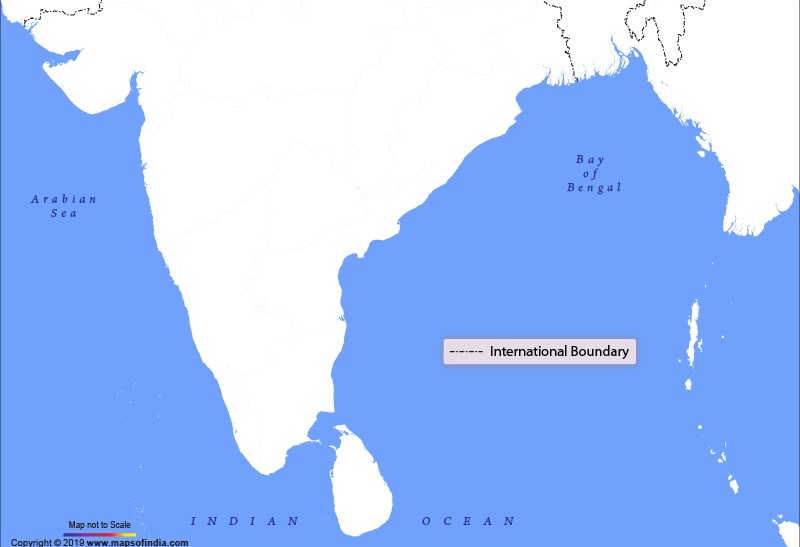
Distribution: The Blackspot Shark is distributed through the Andaman and Nicobar Islands (India) and Indo-Malay peninsula ranging from Myanmar to the Philippines in the Eastern Indian and Western Central Pacific Oceans. This species was formerly thought to be more widely distributed ranging from South Africa to China, however, it is easily confused with the other four members of the C. sealei–dussumieri group and any records further west of the known range require validation.
Depth: 0-40 m
Landing sites: New Ferry Wharf, Junglighat, Burma Nallah
Commercial Value
This species is used for its fins and meat but is of limited value due to its small size. By contrast, in the Andaman and Nicobar Islands, there is very high demand for fresh meat due to the small size of individuals, but there is no value for the fins.
Threats
Shallow-water demersal coastal fisheries resources have been severely depleted in Southeast Asia, and this species is unlikely to have found any refuge as fishing effort in coastal waters and on the continental shelf has been extensive. Shark fishing (targeted or bycatch) is widespread, intensive, and generally unregulated across the region and practices are well known to be unsustainable. Sharks are captured in commercial, artisanal, and subsistence fisheries with multiple fishing gears, including gillnet, trawl, hook and line, traps, and seine nets. In the Andaman Islands, this species is commonly caught in trawls, longlines, gillnets and landed daily with up to 20–30 individuals landed per boat and an estimated total catch of 500–700 individuals per year.
References
Arunrugstichai, S., True, J.D. and White, W.T. (2018)
Catch composition and aspects of the biology of sharks caught by Thai commercial fisheries in the Andaman Sea. Journal of Fish Biology 92: 1487–1504.
White, W.T., P.R. Last, J.D. Stevens, G.K. Yearsley, Fahmi and Dharmadi, (2006)
Economically important sharks and rays of Indonesia. [Hiu dan pari yang bernilai ekonomis penting di Indonesia]. Australian Centre for International Agricultural Research, Canberra, Australia.
Baje, L., Smart, J.J., Grant, M.I., Chin, A., White, W.T. and Simpfendorfer, C.A. (2019)
Age, growth and maturity of the Australian blackspot shark (Carcharhinus coatesi) in the Gulf of Papua. Pacific Conservation Biology 25: 403–412.
Dharmadi, Fahmi and Satria, F. (2015)
Fisheries management and conservation of sharks in Indonesia. African Journal of Marine Science 37(2): 249–258.
Kumar, R.R., Venu, S., Akhilesh, K.V., Bineesh, K.K. and Rajan, P.T. (2018)
First report of four deep-sea chondrichthyans (Elasmobranchii and Holocephali) from Andaman waters, India with an updated checklist from the region. Acta Ichthyologica et Piscatoria 48(3): 289–301.
Stobutzki, I.C., Silvestre, G.T., Abu Talib, A., Krongprom, A., Supongpan, M., Khemakorn, P., Armada, N., and Garces, L.R. (2006)
Decline of demersal coastal fisheries resources in three developing Asian countries. Fisheries Research 78: 130-142.
White, W.T. (2012)
A redescription of Carcharhinus dussumieri and C. seali, with resurrection of C. coatesi and C. tjutjot as valid species (Chondrichthyes: Carcharhinidae). Zootaxa 3241: 1-34.
Related Species
- Tiger Shark
- Silky Shark
- Blacktip Reef Shark
- Common Blacktip Shark
- Spot-tail Shark
- Milk Shark
- Spadenose Shark
- Bignose Shark
- Blue Shark
- Broadfin Shark
- Bull Shark
- Dusky Shark
- Ganges Shark
- Graceful Shark
- Grey Reef Shark
- Grey Sharpnose Shark
- Hardnose Shark
- Sliteye Shark
- Silvertip Shark
- Sharptooth Lemon Shark
- Sandbar Shark
- Pondicherry Shark
- Pigeye Shark
- Oceanic Whitetip Shark
- Irrawaddy River Shark
- Speartooth Shark
- Spinner Shark
- Whitecheek Shark
- Whitetip Reef Shark