

Species Name
Arabian Banded Whipray
Scientific Name
Maculabatis randalli (last, manjaji-matsumoto & moore, 2012)
Family Name
Dasyatidae
IUCN Status
Least Concern
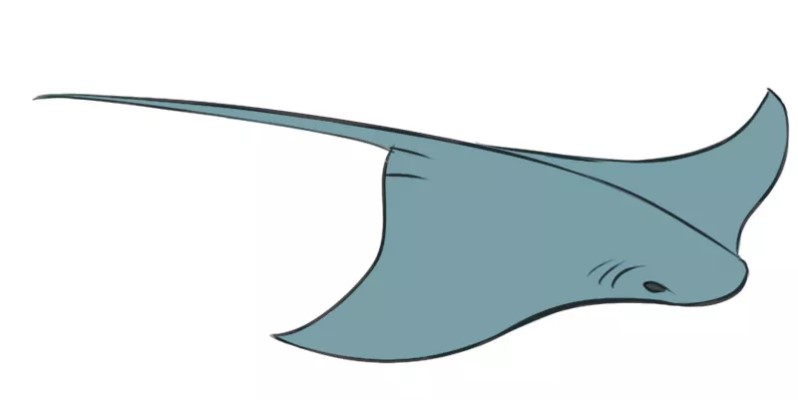
Disc weakly rhomboidal; preorbital snout moderately elongate with weak apical lobe. In juveniles, the tail behind sting is subcircular with deep longitudinal ventral groove and prominent mid-lateral ridge, in adults, it is weakly depressed. Dorsal surface mainly uniformly coloured (occasionally with dark flecks in specimens smaller than 25 cm DW). Disc margin sometimes paler dorsally; ventral disc uniformly whitish, not black edged; in adults, darker dorsal surface of tail sharply demarcated from paler ventral surface; in neonates and juveniles, dark tail with conspicuous white saddles, its distal portion usually almost uniformly dark
Biology
Length: It reaches a maximum size of 62 cm disc width (DW), males are mature at 40 cm DW, and size at birth is 15-17 cm DW.
Gestation Period: Unknown
Litter Size: Unknown
Life Expectancy: Unknown
Diet: Unknown
Habitat and distribution
Habitat: This species is known to occur in soft bottom habitats.
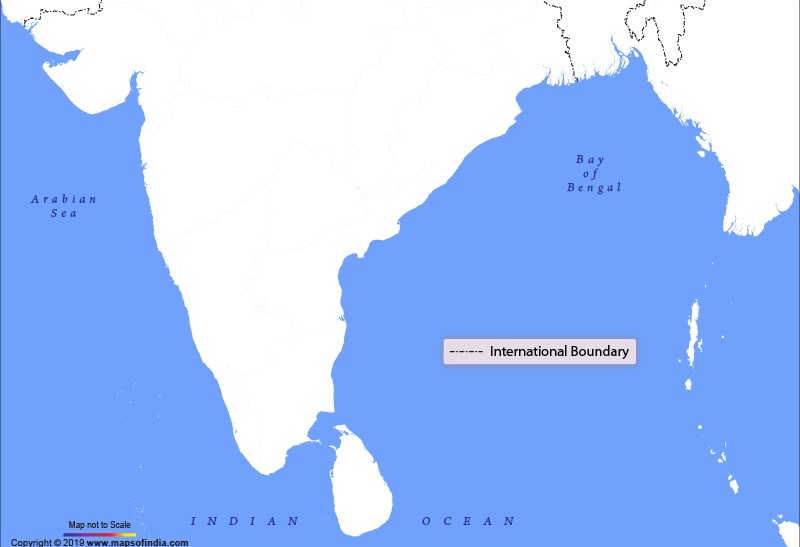
Distribution: The Arabian Banded Whipray is endemic to the Arabian Seas region, occurring only in the Gulf.
Depth: 0-60 m
Landing sites:
Commercial Value
This species is commonly discarded or retained as low value incidental catch.
Threats
The main threat to this species is incidental capture in trawl and gillnet fisheries. Marine habitats in the Gulf are experiencing high levels of disturbance and quickly deteriorating due to major impacts from development activities (including dredging and reclamation), desalination plants, industrial activities, habitat destruction through the removal of shallow productive areas and major shipping lanes which is likely to impact this species.
References
Moore, A.B.M., McCarthy, I.D., Carvalho, G.R. and Peirce, R. (2012)
Species, sex, size and male maturity composition of previously unreported elasmobranch landings in Kuwait, Qatar and Abu Dhabi Emirate. Journal of Fish Biology 80: 1619-1642.
Sheppard, C., Al-Husiani, M., Al-Jamali, F., Al-Yamani, F., Baldwin, R., Bishop, J., Benzoni, F. and Dutrieux, E. (2010)
The Gulf: A young sea in decline. Marine Pollution Bulletin 60: 13-38.
Last, P.R., Manjaji-Matsumoto, B.M. and Moore, A.B.M. (2012)
Himantura randalli sp. nov., a new whipray (Myliobatoidea: Dasyatidae) from the Persian Gulf. Zootaxa 3327(1): 20-23.
Related Species
- Jenkins Whipray
- Cowtail Ray
- Coach Whipray
- Scaly Whipray
- Whitespotted Whipray
- Bengal Whipray
- Bennett's Stingray
- Blackedge Whipray
- Bleeker’s Whipray
- Blotched Fantail Ray
- Bluespotted Lagoon Ray
- Bluespotted Maskray
- Broad Cowtail Ray
- Brown Stingray
- Giant Freshwater Whipray
- Honeycomb Whipray
- Indian Sharpnose Ray
- Kuhl's Maskray
- Leopard Whipray
- Mangrove Whipray
- Narrow Cowtail Ray
- Pakistan Whipray
- Pale-edge Sharpnose Ray
- Pelagic Stingray
- Pink Whipray
- Porcupine Ray
- Roughtail Stingray
- Round Whipray
- Shorttail Whipray
- Smalleye Stingray