

Species Name
Porcupine Ray
Scientific Name
Urogymnus asperrimus (bloch & schneider,1801)
Family Name
Dasyatidae
IUCN Status
Vulnerable
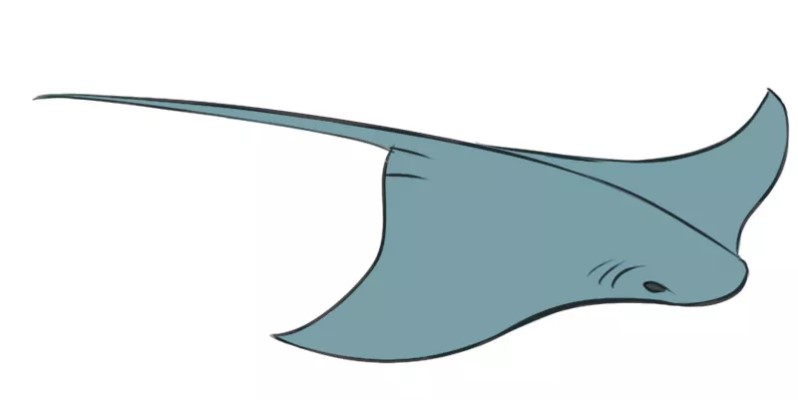
A heavily armored stingray lacking a venomous barb; young with large, flat denticles on upper surface, and large juveniles and adults with additional sharp conical thorns and small, pointed denticles.
Biology
Length: The Porcupine Ray reaches a maximum size of at least 115 cm disc width (DW) with females mature by ~100 cm DW and males at ~90 cm DW.
Gestation Period: Unknown
Litter Size: Unknown
Life Expectancy: Attempts to collect size-at-age data from vertebral counts have proved difficult due to the fragile nature of vertebra. Generation time for the Porcupine Ray is inferred to be 21.5 years.
Diet: Unknown
Habitat and distribution
Habitat: Occurrence appears to be patchy with localised hotspots. Juveniles appear to be site-attached, and highly resident to small areas of shallow coastal mud and mangrove habitats. It has been recorded from coral reefs, sandy reef lagoons, beaches, mud flats and mangroves.
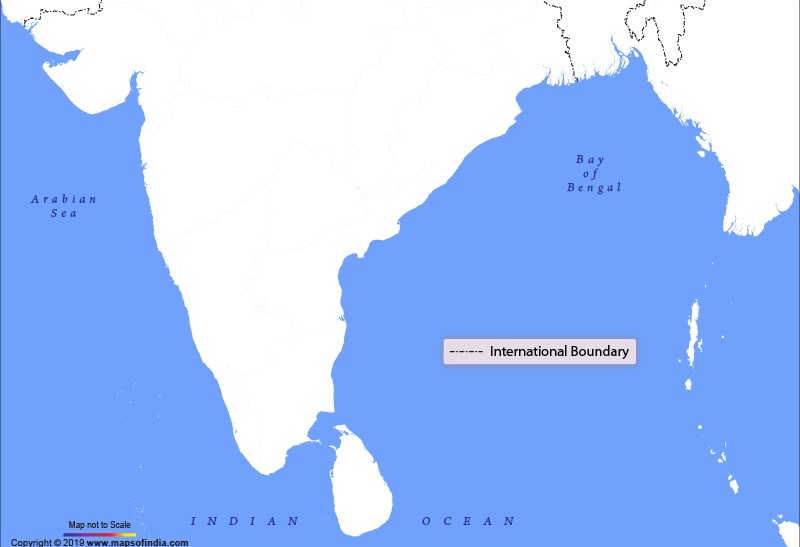
Distribution: The Porcupine Ray is a widely distributed but relatively uncommon species found in the Indo-West Pacific; it is also possibly tropical West Africa (Senegal, Guinea, Ivory Coast) and as an invasive in the eastern Mediterranean (via the Suez Canal).
Localities include South Africa, Madagascar, Kenya, Seychelles, Red Sea (Koseir), Saudi Arabia, Oman (Muscat), Gulf of Oman, Arabian Sea and Persian Gulf, Pakistan, India (Bombay, Madras, Malpe, South Canara on Malabar Coast), Sri Lanka, Myanmar, Malaysia (Malay Peninsula, Penang), Singapore, Taiwan, Thailand, Indonesia (Jakarta, Java, Kalimantan), possibly the Philippines, Viet Nam (Cholon), Australia (Queensland, Western Australia, Northern Territory), New Guinea and Melanesia.
The species appears to have patchy localized distributions with local hotspots recorded at D'Arros Island in the Seychelles, and specific sites in Ningaloo Reef and the Great Barrier Reef, Australia.
Depth: 1-30 m
Landing sites: Junglighat, Mumbai
Commercial Value
This species is caught in net fisheries in Indonesia and used for its meat, and the skin is considered very valuable. This species is sometimes taken by traditional hunters in northern Australia.
Threats
The species is presumably largely taken as bycatch in unregulated fisheries in nearshore waters. It has been recorded as a high value catch in Indonesian net fisheries. It appears to have disappeared or become extremely rare (compared to certain other batoids) in the batoid catches landed in Bangkok from the Gulf of Thailand in recent decades. This suggests probable local over-exploitation here and possibly also in the Bay of Bengal. Similar trends are likely to be occurring or will occur in other areas where batoids are taken in multi-species fisheries. Certainly, demersal fishery resources in the Gulf of Thailand and Southeast Asia have been severely depleted from historical levels. Human modification and degradation of the ray's habitat is also possibly occurring in some of the more highly populated and polluted coastal areas as a result of human influences. The loss of coastal habitats such as mangroves may be of particular concern for this species which is suspected to have highly localized habitat use.
This species was occasionally taken in northern Australian trawl fisheries. However, the introduction of turtle exclusion devices appears to have successfully excluded this species from continuing capture in trawl nets. The Porcupine Ray is considered to be potentially one of the most vulnerable chondrichthyans to the impacts of climate change in northern Australia
References
Blaber, S., Dichmont, C.M., White, W.T., Buckworth, R.C., Sadiyah, L., Iskandar, B., Nurhakim, S., Pillans, R.D., Andamari, R., Dharmadi and Fahmi (2009)
Elasmobranchs in southern Indonesian fisheries: the fisheries, the status of the stocks and management options. Reviews in Fish Biology and Fisheries 19: 367–391.
Brewer, D., Heales, D., Milton, D., Dell, Q., Fry, G., Venables, B. and Jones, P. (2006)
The impact of turtle excluder devices and bycatch reduction devices on diverse tropical marine communities in Australia's northern prawn trawl fishery. Fisheries Research 81: 176-188.
Chin, A., Kyne, P.M., Walker, T.I. and McAuley, R.B. (2010)
An integrated risk assessment for climate change: analysing the vulnerability of sharks and rays on Australia’s Great Barrier Reef. Global Change Biology 16: 1936–1953.
Ebert, D.A., White, W.T., Ho, H.-C., Last, P.R., Nakaya, K., Séret, B., Straube, N., Naylor, G.J.P. and de Carvalho, M.R. (2013)
An annotated checklist of the chondrichthyans of Taiwan. Zootaxa 3752(1): 279-386.
Fowler, H.W. (1941)
The fishes of the groups Elasmobranchii, Holocephali, Isospondyli, and Ostariophysi obtained by United States Bureau of Fisheries Steamer Albatross in 1907 to 1910, chiefly in the Philippine Islands and adjacent seas. Bulletin of the United States National Museum 100: 13.
Last, P.R. and Compagno, L.J.V. (1999)
Order Myliobatiformes. Dasyatidae. Stingrays. In: K.E Carpenter and V.H. Niem (eds), FAO species identification guide for fishery purposes. The living marine resources of the Western Central Pacific, pp. 1,479–1,505. FAO, Rome, Italy.
Stobutzki, I.C., Silvestre, G.T., Abu Talib, A., Krongprom, A., Supongpan, M., Khemakorn, P., Armada, N., and Garces, L.R. (2006)
Decline of demersal coastal fisheries resources in three developing Asian countries. Fisheries Research 78: 130-142.
Compagno, L.J.V., D.A. Ebert and M.J. Smale, (1989)
Guide to the sharks and rays of southern Africa. New Holland (Publ.) Ltd., London. 158 p.
Related Species
- Jenkins Whipray
- Cowtail Ray
- Coach Whipray
- Scaly Whipray
- Whitespotted Whipray
- Arabian Banded Whipray
- Bengal Whipray
- Bennett's Stingray
- Blackedge Whipray
- Bleeker’s Whipray
- Blotched Fantail Ray
- Bluespotted Lagoon Ray
- Bluespotted Maskray
- Broad Cowtail Ray
- Brown Stingray
- Giant Freshwater Whipray
- Honeycomb Whipray
- Indian Sharpnose Ray
- Kuhl's Maskray
- Leopard Whipray
- Mangrove Whipray
- Narrow Cowtail Ray
- Pakistan Whipray
- Pale-edge Sharpnose Ray
- Pelagic Stingray
- Pink Whipray
- Roughtail Stingray
- Round Whipray
- Shorttail Whipray
- Smalleye Stingray