

Species Name
Leopard Whipray
Scientific Name
Himantura leoparda (manjaji-matsumoto & last, 2008)
Family Name
Dasyatidae
IUCN Status
Vulnerable
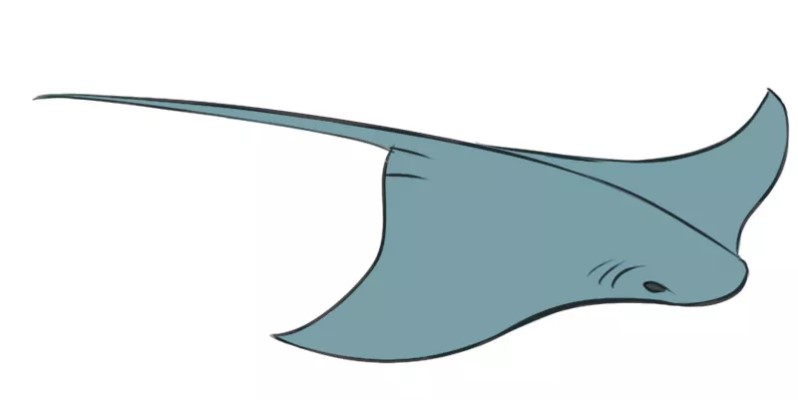
Disc rhomboidal; preorbital snout moderately long, with a distinct apical lobe; lateral apices moderately angular to narrowly rounded; orbits moderately large, protruded slightly; dorsal surface entirely covered with moderately large dark brown polygonal spots in young, large (>550 mm DW) specimens with thick, dark brown irregular rings (often incomplete, leopard-like ‘spots’); tail of young with dark spots on each dorsolateral surface between base and sting; tail banded behind sting, with alternating dark and pale rings dorsally, uniformly pale ventrally. Primary denticle band forming a single row of enlarged, widely spaced, narrow, heart-shaped denticles; two prominent broad heart-shaped suprascapular denticles, preceded and followed by up to 9 and 5 smaller primary denticles, respectively; pectoral-fin radials 148–158; vertebral centra (excluding synarcual) 117–123; including synarcual 120–126.
Biology
Length: It attains about 140 cm disc width (DW); born at about 20 cm DW; males mature at 70–94 cm DW.
Gestation Period: Unknown
Litter Size: Unknown
Life Expectancy: generation length of 19-20 years based on estimates from congener.
Diet: Unknown
Habitat and distribution
Habitat: The Leopard Whipray is demersal on soft substrates and is mainly inshore and coastal though it also occurs on the continental shelf.
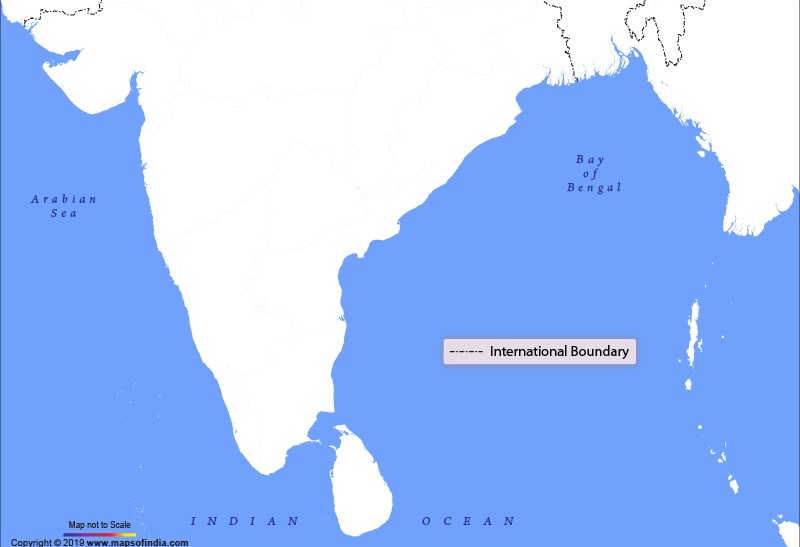
Distribution: The Leopard Whipray is possibly widespread in the Indo-West Pacific. Its range is based on current knowledge, however there are ongoing taxonomic issues that are being investigated and the outcomes of these may affect the known range. It is currently known from Southeast Asia to the Japanese Archipelago and south to northern Australia, where it occurs from Coral Bay, Western Australia to the Torres Strait, Queensland. It is currently considered absent from the Western Indian Ocean.
Depth: 1-70 m
Landing sites: Mangaluru and Malpe Fisheries Harbours, Mumbai, Junglighat, Burmanallah, Wandoor, and Dignabad
Commercial Value
In large parts of its range outside of Australia (i.e., Southeast Asia) this species is used for its cartilage, meat and its highly-valued skin.
Threats
The threats to the Leopard Whipray are many of those faced by other Himantura species within its range. However, the Leopard Whipray may be more vulnerable than some of its congeners due to its large size at maturity and maximum size and its preference for inshore coastal waters that are heavily fished and degraded in many parts of its range outside Australian waters.
References
Manjaji-Matsumoto, B.M. and Last, P.R. (2008) Himantura leoparda sp. nov., a new whipray (Myliobatoidei: Dasyatidae) from the Indo-Pacific. In: Last, P.R., White, W.T. and Pogonoski, J.J. (eds), Descriptions of new Australian Chondrichthyans, pp. 293-301. CSIRO Marine and Atmospheric Research Paper No 022.
Last, P.R. and Stevens, J.D. (1994)
Sharks and Rays of Australia. First Edition. CSIRO Division of Fisheries, Hobart.
Last, P.R. and Stevens, J.D. (2009)
Sharks and Rays of Australia. Second Edition. CSIRO Publishing, Collingwood, Australia.
Manjaji, B.M. and White, W.T. (2004)
Himantura toshi. Available at: www.iucnredlist.org. (Accessed: 18/07/2011).
White, W.T. and Dharmadi (2007)
Species and size compositions and reproductive biology of rays (Chondrichthyes, Batoidea) caught in target and non-target fisheries in eastern Indonesia. Journal of Fish Biology 70: 1809-1837.
White, W.T., Last, P.R., Stevens, J.D., Yearsley, G.K., Fahmi and Dharmadi (2006)
Economically Important Sharks and Rays of Indonesia. Australian Centre for International Agricultural Research, Canberra, Australia.
Related Species
- Jenkins Whipray
- Cowtail Ray
- Coach Whipray
- Scaly Whipray
- Whitespotted Whipray
- Arabian Banded Whipray
- Bengal Whipray
- Bennett's Stingray
- Blackedge Whipray
- Bleeker’s Whipray
- Blotched Fantail Ray
- Bluespotted Lagoon Ray
- Bluespotted Maskray
- Broad Cowtail Ray
- Brown Stingray
- Giant Freshwater Whipray
- Honeycomb Whipray
- Indian Sharpnose Ray
- Kuhl's Maskray
- Mangrove Whipray
- Narrow Cowtail Ray
- Pakistan Whipray
- Pale-edge Sharpnose Ray
- Pelagic Stingray
- Pink Whipray
- Porcupine Ray
- Roughtail Stingray
- Round Whipray
- Shorttail Whipray
- Smalleye Stingray