

Species Name
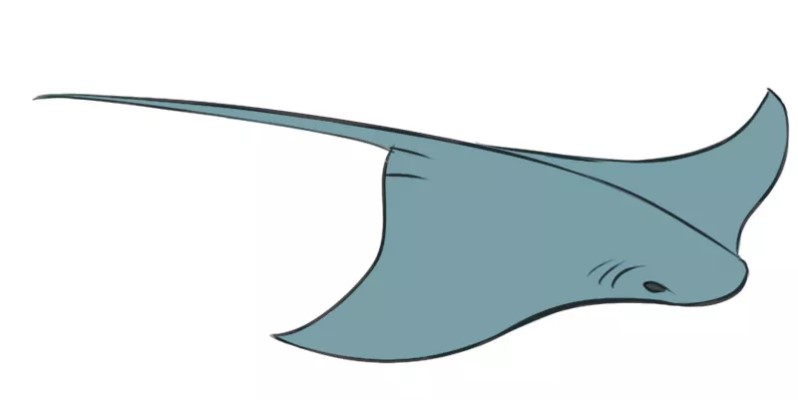
Narrow Cowtail Ray
Scientific Name
Pastinachus gracilicaudus (last & manjaji-matsumoto, 2010)
Family Name
Dasyatidae
IUCN Status
Endangered
This medium-sized species is distinguished by the following set of characters: snout rounded, not produced, angle more than 115°, apex largely naked and lacking enlarged denticles; disc length 83-89% DW; head length 38-41% DW; preoral length 15-17% DW; distance between nostrils 7-8% DW; distance between first gill slits 18-20% DW; tail compressed above mid-base of ventral cutaneous fold, its width 0.5-0.8 times its height; ventral fold low and slender, length 0.7-1.0 times DW, 17-22 times its depth below its mid-base, depth 2.0-3.6 times tail height at its mid-base; distance from anterior cloaca to sting 0.8-1 in precloacal length; two large, midscapular pearl thorns, usually preceded by a smaller irregular thorn; 120-122 pectoral-fin radials; monospondylous vertebral centra (exc. synarcual) 37-40.
Biology
Length: It reaches a maximum size of 83 cm disc width (DW), males mature at ~67 cm DW and female size-at-maturity is unknown. Size-at-birth is 19–26 cm DW.
Gestation Period: Unknown
Litter Size: Unknown
Life Expectancy: Generation length was inferred as 20 years.
Diet: Unknown
Habitat and distribution
Habitat: The Narrow Cowtail Ray is demersal inshore on continental insular shelves from the surface to a depth of 60 m.
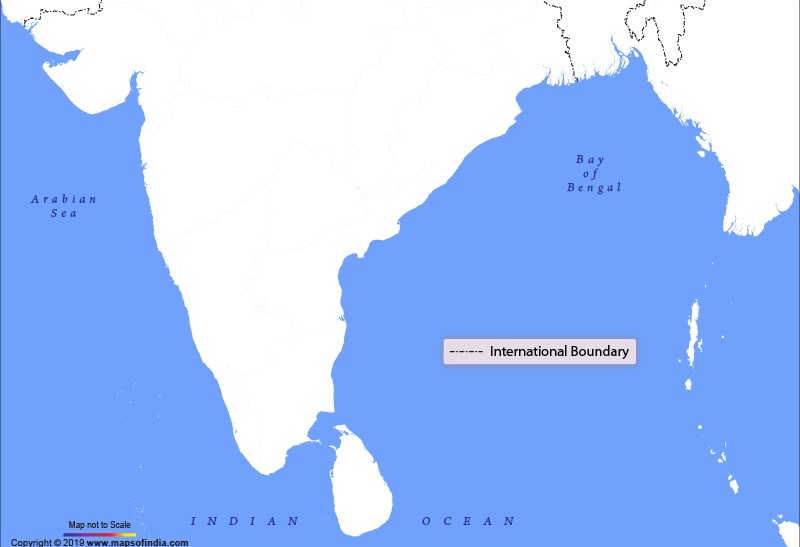
Distribution: The Narrow Cowtail Ray has a patchy distribution throughout the Eastern Indian and Western Central Pacific Oceans and is found from West Bengal to Bangladesh and from Thailand to Malaysia.
Depth: 0-60 m
Landing sites: Mangaluru and Malpe Fisheries Harbours
Commercial Value
The flesh of the Narrow Cowtail Ray is in high demand in India and is used fresh or salted, dried, and/or smoked for human consumption throughout its range. For other Pastinachus species, vertebrae are dried and exported, and the skin is dried and used for wallets, belts, shoes, handbags (high value) etc. most of which are exported; this likely also occurs with this species.
Threats
Throughout its distribution, the Narrow Cowtail Ray is caught in coastal fisheries by demersal trawl, tangle nets, set nets, gill nets, droplines, longlines, and Danish seine. It is taken as retained bycatch in industrial and artisanal fisheries.
References
Blaber, S., Dichmont, C.M., White, W.T., Buckworth, R.C., Sadiyah, L., Iskandar, B., Nurhakim, S., Pillans, R.D., Andamari, R., Dharmadi and Fahmi (2009)
Elasmobranchs in southern Indonesian fisheries: the fisheries, the status of the stocks and management options. Reviews in Fish Biology and Fisheries 19: 367–391.
Jacobsen, I.P. (2007)
The Biology of Five Benthic Elasmobranch Species from Northern and North-East Australia, Incorprating a Taxonomic Review of the Indo-West Pacific Gymnuridae. PhD Thesis, University of Queensland.
Last, P.R. and Manjaji-Matsumoto, B.M. (2010) Description of a new stingray, Pastinachus gracilicaudus sp nov. (Elasmobranchii: Myliobatiformes), based on material from the Indo-Malay Archipelago. In: Descriptions of new sharks and rays from Borneo. CSIRO Marine and Atmospheric Research Paper 032: 115-127.
Last, P.R., White, W.T., Caira, J.N., Dharmadi, Fahmi, Jensen, K., Lim, A.P.K., Manjaji-Matsumoto, B.M., Naylor, G.J.P., Pogonoski, J.J., Stevens, J.D., Yearsley, G.K. (2010)
Sharks and Rays of Borneo. CSIRO Marine and Atmospheric Research, Collingwood.
White, W.T. and Dharmadi (2007)
Species and size compositions and reproductive biology of rays (Chondrichthyes, Batoidea) caught in target and non-target fisheries in eastern Indonesia. Journal of Fish Biology 70: 1809-1837.
White, W.T., Last, P.R., Stevens, J.D., Yearsley, G.K., Fahmi and Dharmadi (2006)
Economically Important Sharks and Rays of Indonesia. Australian Centre for International Agricultural Research, Canberra, Australia.
Related Species
- Jenkins Whipray
- Cowtail Ray
- Coach Whipray
- Scaly Whipray
- Whitespotted Whipray
- Arabian Banded Whipray
- Bengal Whipray
- Bennett's Stingray
- Blackedge Whipray
- Bleeker’s Whipray
- Blotched Fantail Ray
- Bluespotted Lagoon Ray
- Bluespotted Maskray
- Broad Cowtail Ray
- Brown Stingray
- Giant Freshwater Whipray
- Honeycomb Whipray
- Indian Sharpnose Ray
- Kuhl's Maskray
- Leopard Whipray
- Mangrove Whipray
- Pakistan Whipray
- Pale-edge Sharpnose Ray
- Pelagic Stingray
- Pink Whipray
- Porcupine Ray
- Roughtail Stingray
- Round Whipray
- Shorttail Whipray
- Smalleye Stingray