

Species Name
Bluespotted Maskray
Scientific Name
Neotrygon caeruleopunctata (last, white & séret, 2016)
Family Name
Dasyatidae
IUCN Status
Least Concern
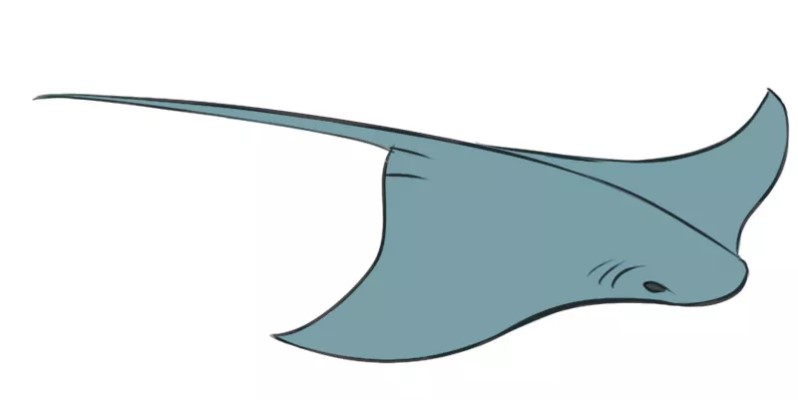
This large species of the kuhlii-complex. Mask-like marking dark, not covered with dark peppery spots; ventral surface of disc and pelvic fins are with sharply defined dark greyish brown submarginal bands; dark ventral tail before caudal sting; ventral tail fold is almost entirely dark in young
Biology
Length: It reaches a maximum size of 47 cm disc width (DW) and males mature at 31 cm DW. Size-at-birth of ~17 cm DW
Gestation Period: 4 months
Litter Size: 2 pups
Life Expectancy: As there is no information on the age-at-maturity and maximum age of this species, generation length was inferred to be 12 years based on the slightly smaller Coral Sea Maskray (Neotrygon trigonoides), which attains a maximum size of 35 cm DW.
Diet: Known to feed at high tide on coastal sand and mud flats, preying on a variety benthic invertebrates and small teleosts.
Habitat and distribution
Habitat: The Bluespotted Maskray is benthic on the continental shelf from the surface to depths of 100 m, although usually shallower than 50 m.
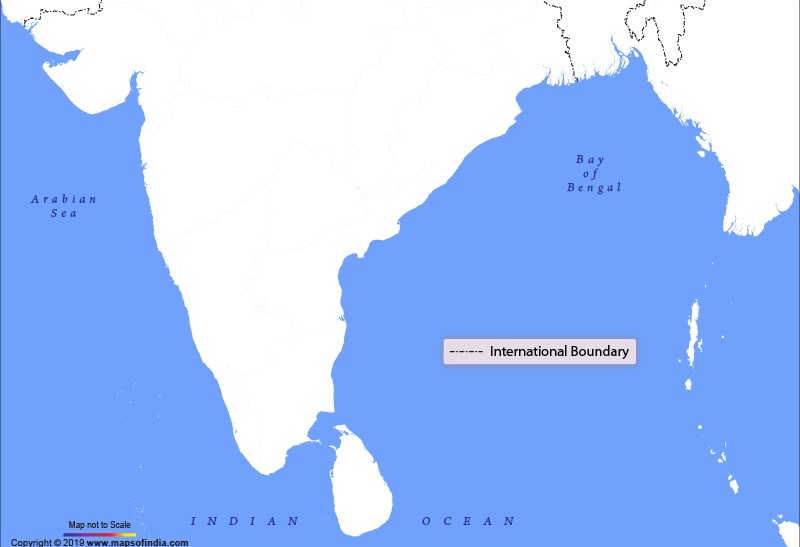
Distribution: The Bluespotted Maskray is widespread in the Indian Ocean from Mozambique to southern Indonesia. However, its true distribution is not entirely resolved due to taxonomic uncertainty.
Depth: 0-100 m
Landing sites: Colachel, Muttom, Junglighat, Malvan
Commercial Value
The species' meat is used fresh or salted and dried for human consumption throughout most of its range. Members of the Neotrygon genus are important for Bajau Laut in Indonesia, who use this species for local consumption (Noh et al. 2018).
Threats
The Bted Maskray is targeted and taken as bycatch in large numbers in artisanal and industrial fisheries throughout its range. It is captured by trawl, longline, handline, gill net, trammel net, and harpoons and retained for the meat. Members of the Neotrygon genus are commonly caught by Bajau Laut in Indonesia using harpoons.
References
Pierce, S. J., Pardo, S. A., & Bennett, M. B. (2009)
Reproduction of the blue-spotted maskray Neotrygon kuhlii(Myliobatoidei: Dasyatidae) in south-east Queensland, Australia. Journal of Fish Biology, 74(6), 1291–1308. doi:10.1111/j.1095-8649.2009.02202.x
White, W.T. and Dharmadi (2007)
Species and size compositions and reproductive biology of rays (Chondrichthyes, Batoidea) caught in target and non-target fisheries in eastern Indonesia. Journal of Fish Biology 70: 1809-1837.
Last, P. R., White, W. T. and Naylor, G. (2016a)
Three new stingrays (Myliobatiformes: Dasyatidae) from the Indo–West Pacific. Zootaxa 4147(4): 377–402.
Jacobsen, I.P. and Bennett, M.B. (2010)
Age and growth of Neotrygon picta, Neotrygon annotata and Neotrygon kuhlii from north-east Australia, with notes on their reproductive biology. Journal of Fish Biology 77: 2405-2422.
Last, P.R., White, W.T. and B. Séret (2016)
Taxonomic status of maskrays of the Neotrygon kuhlii species complex (Myliobatoidei: Dasyatidae) with the description of three new species from the Indo-West Pacific. Zootaxa 4083(4):533-561
Related Species
- Jenkins Whipray
- Cowtail Ray
- Coach Whipray
- Scaly Whipray
- Whitespotted Whipray
- Arabian Banded Whipray
- Bengal Whipray
- Bennett's Stingray
- Blackedge Whipray
- Bleeker’s Whipray
- Blotched Fantail Ray
- Bluespotted Lagoon Ray
- Broad Cowtail Ray
- Brown Stingray
- Giant Freshwater Whipray
- Honeycomb Whipray
- Indian Sharpnose Ray
- Kuhl's Maskray
- Leopard Whipray
- Mangrove Whipray
- Narrow Cowtail Ray
- Pakistan Whipray
- Pale-edge Sharpnose Ray
- Pelagic Stingray
- Pink Whipray
- Porcupine Ray
- Roughtail Stingray
- Round Whipray
- Shorttail Whipray
- Smalleye Stingray