

Species Name
Pale-edge Sharpnose Ray
Scientific Name
Telatrygon zugei (müller & henle, 1841)
Family Name
Dasyatidae
IUCN Status
Vulnerable
Last et al. (2016a) revised the family Dasyatidae, erecting the morphologically conservative genus Telatrygon and moving zugei across to this new genus. Telatrygon crozieri from the northern Indian Ocean is considered distinct from T. zugei (which occurs in the western Pacific).
Biology
Length: It reaches a maximum size of ~29 cm disc width (DW) (~80 cm total length), male and female size-at-maturity is unknown. Size-at-birth of ~8 cm DW.
Gestation Period: Unknown
Litter Size: 1-3
Life Expectancy: Generation length of 8.5 years.
Diet: Feed on bottom-dwelling organisms; primarily small crustaceans, but also small fishes.
Habitat and distribution
Habitat: The Pale-edge Sharpnose Stingray is demersal on the continental shelf.
Distribution: The Pale-edge Sharpnose Stingray is endemic to the Northwest and Western Central Pacific from southern Japan to Viet Nam, including China and Taiwan; the presence of the species in Thailand and the Philippines is uncertain.
Depth: 0-100 m
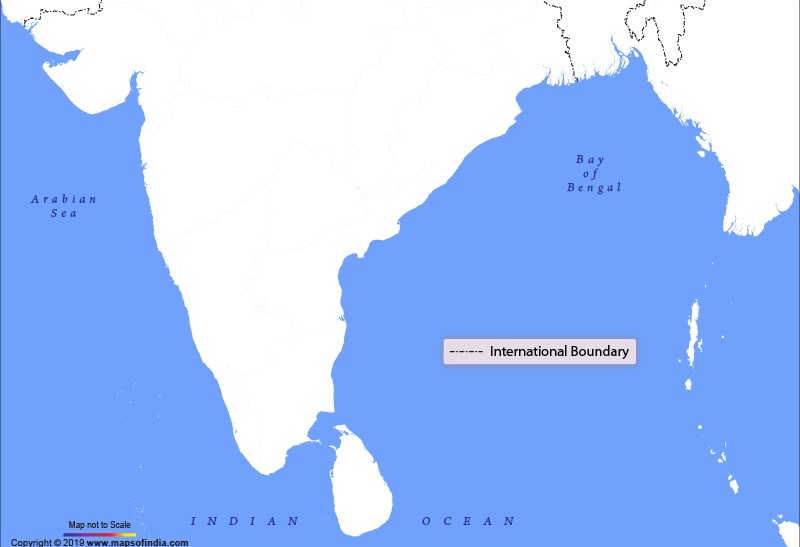
Landing sites: Machilipatnam, Nizampatnam, Vodarevu, Pakala, Okha, Porbandar, Mangrol, Veraval, Diu, Digha Mohana, Royapuram Fishing Harbour, Cuddalore Fishing Harbour, Nagapattinam Fishing Harbour
Commercial Value
This species is used for human consumption and possibly fish meal. In China, this species is preferred for consumption, as it is small with good quality flesh.
Threats
The Pale-edge Sharpnose Stingray is subject to fishing pressure across its spatial and depth range. It is taken as bycatch in industrial and artisanal fisheries with multiple fishing gears, including trawl, set net, and gillnet, and retained for human consumption and possibly fish meal.
References
Last, P.R., G.J.P Naylor and B.M. Manjaji-Matsumoto (2016)
A revised classification of the family Dasyatidae (Chondrichthyes: Myliobatiformes) based on new morphological and molecular insights. Zootaxa 4139(3):345-368.
Jacobsen, I.P. and Bennett, M.B. (2010)
Age and growth of Neotrygon picta, Neotrygon annotata and Neotrygon kuhlii from north-east Australia, with notes on their reproductive biology. Journal of Fish Biology 77: 2405-2422.
Cao, L., Naylor, R., Henriksson, P., Leadbitter, D., Metian, M., Troell, M. and Zhang, W. (2015)
China’s aquaculture and the worlds wild fisheries. Science 347: 133–135.
Kuo, D. and Booth, S. (2011)
From local to global: A catch reconstruction of Taiwan's fisheries from 1950–2007. In: Harper, S. and Zeller, D. (eds), Fisheries Catch Reconstructions: Islands, Part II. Fisheries Centre Research Reports 19(4), pp. 97–106. University of British Columbia, Vancouver (Canada).
Weigmann, S. (2016)
Annotated checklist of the living sharks, batoids and chimaeras (Chondrichthyes) of the world, with a focus on biogeographical diversity. Journal of Fish Biology 88(3): 837-1037.
Zeller, D. and Pauly. D. (2016)
Marine fisheries catch reconstruction: definitions, sources, methodology and challenges. In: Pauly, D. and Zeller, D. (eds), Global Atlas of Marine Fisheries: Ecosystem Impacts and Analysis. Washington, D.C.
Related Species
- Jenkins Whipray
- Cowtail Ray
- Coach Whipray
- Scaly Whipray
- Whitespotted Whipray
- Arabian Banded Whipray
- Bengal Whipray
- Bennett's Stingray
- Blackedge Whipray
- Bleeker’s Whipray
- Blotched Fantail Ray
- Bluespotted Lagoon Ray
- Bluespotted Maskray
- Broad Cowtail Ray
- Brown Stingray
- Giant Freshwater Whipray
- Honeycomb Whipray
- Indian Sharpnose Ray
- Kuhl's Maskray
- Leopard Whipray
- Mangrove Whipray
- Narrow Cowtail Ray
- Pakistan Whipray
- Pelagic Stingray
- Pink Whipray
- Porcupine Ray
- Roughtail Stingray
- Round Whipray
- Shorttail Whipray
- Smalleye Stingray