

Species Name
Bennett's Stingray
Scientific Name
Hemitrygon bennetti (müller & henle, 1841)
Family Name
Dasyatidae
IUCN Status
Vulnerable
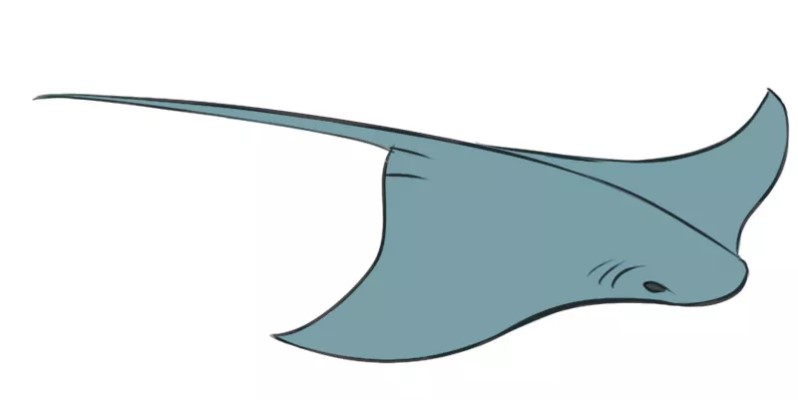
Medium-sized stingray with brownish to greenish-brown dorsal colouration and dorsal disc with median row of small denticles extending to tail. Disc weakly rhombic, disc width nearly equal to disc length, disc width 1.03 times in disc length; dorsal surface with denticles and row of in disc length; dorsal surface with denticles and row of spines; ventral surface smooth. Body depressed, flat and slightly elevated trunk; snout short, broadly triangular or pointed, with anterior margin nearly straight to slightly concave, outer margins rounded.
Biology
Length: The species reaches a maximum size of 61 cm disc width (DW), males mature at ~32 cm DW with female size-at-maturity unknown. Size-at-birth is ~13 cm DW.
Gestation Period: estimated to be aroung 3 months gestation period of closely related species Hemitrygon akajeiI
Litter Size: Unknown
Life Expectancy: Ages are inferred from the related Kuhl's Maskray (Neotrygon kuhlii) that has a verified female age-at-maturity of 6.5 years and a maximum age of 17 years, resulting in a generation length of 12 years.
Diet: It feeds on small bony fishes and crustaceans.
Habitat and distribution
Habitat: Bennett's Stingray is demersal across rocky, coral, and soft-sediment habitats, and occurs inshore on the continental shelf.
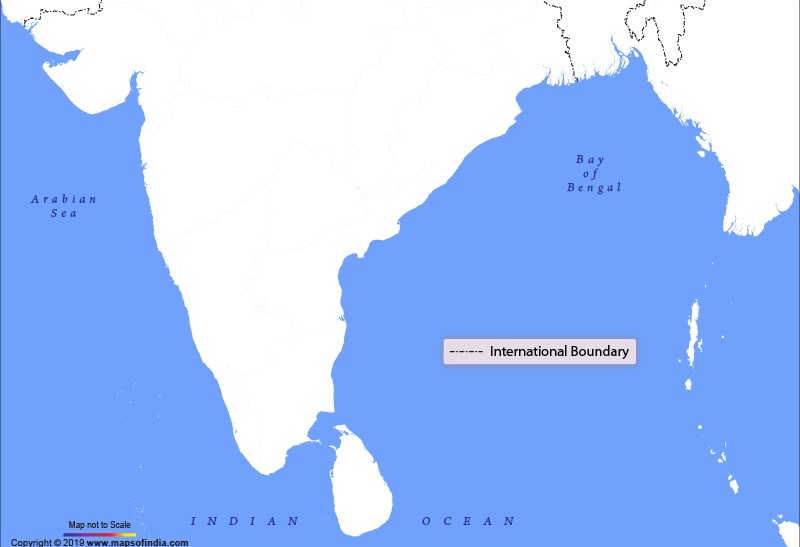
Distribution: Bennett's Stingray is endemic to the Northwest Pacific and Western Central Pacific and Eastern Indian Oceans from northern China to Java, Indonesia, including Taiwan, Viet Nam, Cambodia, Thailand, and Malaysia. A single specimen has recently been reported on the east coast of India. Records from Bangladesh require further verification.
Depth: 25-36 m
Landing sites: Visakhapatnam Fishing Harbour
Commercial Value
This species is used for human consumption, and is retained live for sale in China to increase the market value.
Threats
Bennett's Stingray is subject to fishing pressure across its spatial and depth range. It is taken as bycatch in industrial and artisanal fisheries with multiple fishing gears, likely including trawl, set net, and gillnet, and retained for human consumption. The freshwater population in the Zuojiang River is subject to commercial fishing pressure. There is a high level of fisheries resource use across the range of Bennett's Stingray.
References
Menon Muktha, K.V. Akhilesh, S. Sukumaran, and S.J. Kizhakudan (2019)
A new report confirming the presence of Bennett's Stingray, Hemitrygon bennetti (Elasmobranchii: Myliobatiformes: Dasyatidae), from the Western Bay of Bengal.
Cao, L., Naylor, R., Henriksson, P., Leadbitter, D., Metian, M., Troell, M. and Zhang, W. (2015)
China’s aquaculture and the worlds wild fisheries. Science 347: 133–135.
Zhang, J., Yamaguchi, A., Zhou, Q. and Zhang, C. (2010)
Rare occurrences of Dasyatis bennettii (Chondrichthyes: Dasyatidae) in freshwaters of Southern China. Journal of Applied Ichthyology 26: 939–941.
Zhu, Y.-T., and Meng, Q.-W. (eds). (2001)
Fauna Sinica. Cyclostomata, Chondrichthyes. Science Press, Beijing.
Last, P., White, W., de Carvalho, M., Séret, B., Stehmann, M. and Naylor, G. (2016b)
Rays of the World. CSIRO Publishing, Clayton
Related Species
- Jenkins Whipray
- Cowtail Ray
- Coach Whipray
- Scaly Whipray
- Whitespotted Whipray
- Arabian Banded Whipray
- Bengal Whipray
- Blackedge Whipray
- Bleeker’s Whipray
- Blotched Fantail Ray
- Bluespotted Lagoon Ray
- Bluespotted Maskray
- Broad Cowtail Ray
- Brown Stingray
- Giant Freshwater Whipray
- Honeycomb Whipray
- Indian Sharpnose Ray
- Kuhl's Maskray
- Leopard Whipray
- Mangrove Whipray
- Narrow Cowtail Ray
- Pakistan Whipray
- Pale-edge Sharpnose Ray
- Pelagic Stingray
- Pink Whipray
- Porcupine Ray
- Roughtail Stingray
- Round Whipray
- Shorttail Whipray
- Smalleye Stingray