

Species Name
Honeycomb Whipray
Scientific Name
Himantura undulata (bleeker, 1852)
Family Name
Dasyatidae
IUCN Status
Endangered
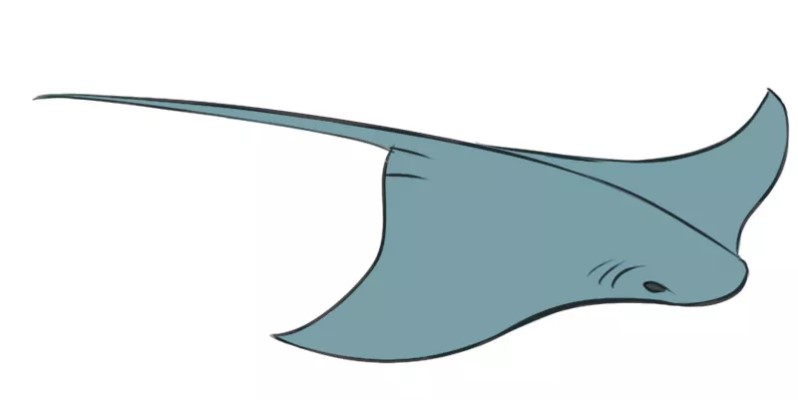
Has a diamond-shaped disc with rounded corners and a projecting, pointed snout. Its tail is long and whip like without fin folds. Adults have a striking dorsal color pattern consisting of large, dark brown rings and reticulations declined by thin yellow lines, while juveniles have a pattern of large dark spots.
Biology
Length: It reaches a maximum size of at least 130 cm disc width (DW), males mature between 60–70 cm DW and size-at-birth is 26–27 cm DW.
Gestation Period: Unknown
Litter Size: Unknown
Life Expectancy: Suspected the generation length of Honeycomb Whipray is 25 years.
Diet: Unknown
Habitat and distribution
Habitat: The Honeycomb Whipray is demersal inshore on soft substrates on continental and insular shelves.
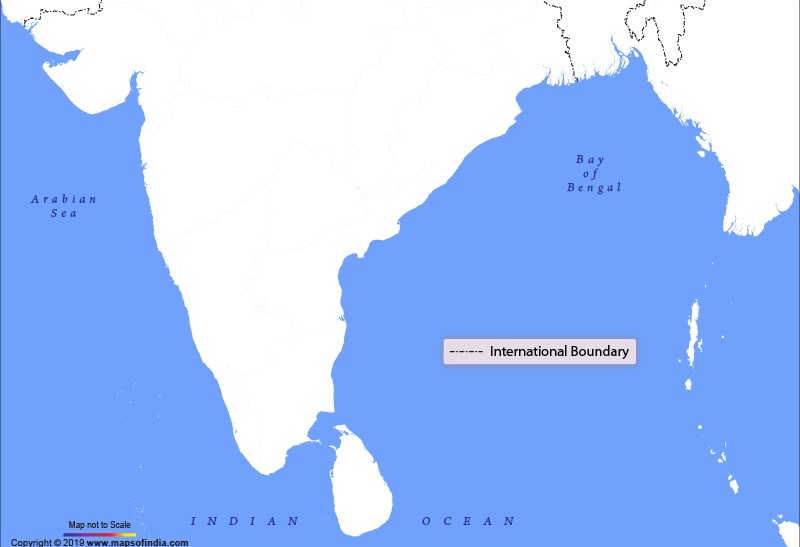
Distribution: The Honeycomb Whipray occurs in the Indo-West Pacific Oceans from eastern India to the Philippines.
Depth: 0-70 m
Landing sites: Royapuram Fishing Harbour, Cuddalore Fishing Harbour, Nagapattinam Fishing Harbour, Machilipatnam, Nizampatnam, Vodarevu, Pakala, Mumbai, Malvani, Mangaluru and Malpe Fisheries Harbours, Junglighat, Burmanallah, Wandoor, and Dignabad
Commercial Value
The flesh of the Honeycomb Whipray is used fresh or salted and dried for human consumption. The skin of this species is particularly valuable and is dried and used for wallets, belts, shoes, and handbags, most of which are exported. Ray meat is increasing in demand and therefore prices in India are also increasing. Larger rays, like this species, are very desirable in Bangladesh for their meat and skin. Ray meat is consumed locally and exported. The skins from large rays are exported to Myanmar to be made into accessories (e.g. handbags). Smaller rays are retained for their meat but the skins are too small to be utilized. Small rays are often dried whole for local consumption and export. There has been some increase in the demand for ray meat in cosmopolitan areas and restaurants.
Threats
Throughout its distribution, the Honeycomb Whipray is caught in coastal fisheries by demersal trawl, tangle nets, set nets, gill nets, droplines, longlines, and Danish seine. It is taken as retained bycatch in industrial and artisanal fisheries.
In India, juveniles are found in estuaries and high fishing effort, particularly with stake and doll nets, occurs in this habitat. The majority of the geographic distribution of this species in the region overlaps with intense coastal fisheries. Approximately 24,554 trawl vessels are operating in the Indian part of the range. The shallow depth distribution means this species is unlikely to have a depth refuge. There has been a significant increase in coastal fishing effort and power over the past 30 years (just over one generation length). About 6,600 trawlers were operating in the Indian state of Gujarat in the early 2000s. This number increased to 11,582 trawlers in 2010. Furthermore, there are over 13,400 gill netters operating along the west coast, with many other types of net gear also deployed in coastal areas. In the Andaman and Nicobar Islands there is a targeted fishery for rays that began two years ago and consists of 20–40 boats and catch up to 6 tonnes of rays per trip. Honeycomb Whiprays contribute 15–20% of the catch.
References
Blaber, S., Dichmont, C.M., White, W.T., Buckworth, R.C., Sadiyah, L., Iskandar, B., Nurhakim, S., Pillans, R.D., Andamari, R., Dharmadi and Fahmi (2009)
Elasmobranchs in southern Indonesian fisheries: the fisheries, the status of the stocks and management options. Reviews in Fish Biology and Fisheries 19: 367–391.
CMFRI (2010)
Marine Fisheries Census (2010), Part 1. India, Govt. of India, Ministry of Agriculture, Dept. of Animal Husbandry, Dairying & Fisheries and Central Marine Fisheries Research Institute, Indian Council of Agricultural Research. New Dehli.
Last, P.R., White, W.T., Caira, J.N., Dharmadi, Fahmi, Jensen, K., Lim, A.P.K., Manjaji-Matsumoto, B.M., Naylor, G.J.P., Pogonoski, J.J., Stevens, J.D., Yearsley, G.K. (2010)
Sharks and Rays of Borneo. CSIRO Marine and Atmospheric Research, Collingwood.
Manjaji-Matsumoto, B.M. and Last, P.R. (2008) Himantura leoparda sp. nov., a new whipray (Myliobatoidei: Dasyatidae) from the Indo-Pacific. In: Last, P.R., White, W.T. and Pogonoski, J.J. (eds), Descriptions of new Australian Chondrichthyans, pp. 293-301. CSIRO Marine and Atmospheric Research Paper No 022.
White, W.T. and Dharmadi. (2007)
Species and size compositions and reproductive biology of rays (Chondrichthyes, Batoidea) caught in target and non-target fisheries in eastern Indonesia. Journal of Fish Biology 70: 1809-1837.
Zeller, D. and Pauly. D. (2016)
Marine fisheries catch reconstruction: definitions, sources, methodology and challenges. In: Pauly, D. and Zeller, D. (eds), Global Atlas of Marine Fisheries: Ecosystem Impacts and Analysis. Washington, D.C.
Zynudheen, A.A., Ninan, G., Sen, A. and Badonia, R. (2004)
Utilization of trawl bycatch in Gujarat (India). 27 NAGA Worldfish Center Quarterly((3&4)): 20-23.
Related Species
- Jenkins Whipray
- Cowtail Ray
- Coach Whipray
- Scaly Whipray
- Whitespotted Whipray
- Arabian Banded Whipray
- Bengal Whipray
- Bennett's Stingray
- Blackedge Whipray
- Bleeker’s Whipray
- Blotched Fantail Ray
- Bluespotted Lagoon Ray
- Bluespotted Maskray
- Broad Cowtail Ray
- Brown Stingray
- Giant Freshwater Whipray
- Indian Sharpnose Ray
- Kuhl's Maskray
- Leopard Whipray
- Mangrove Whipray
- Narrow Cowtail Ray
- Pakistan Whipray
- Pale-edge Sharpnose Ray
- Pelagic Stingray
- Pink Whipray
- Porcupine Ray
- Roughtail Stingray
- Round Whipray
- Shorttail Whipray
- Smalleye Stingray