

Species Name
Kuhl's Maskray
Scientific Name
Neotrygon kuhlii
Family Name
Dasyatidae
IUCN Status
Data Deficient
Disc is broader than long, its width ca. 1.2 times length; pectoral apices are narrowly rounded; snout rather fleshy, broadly angular, its angle ca. 107°, its length 1.7-2.1 times interorbital width; maximum width is relatively well back on disc, the length from snout tip to pectoral-fin insertion 1.8-1.9 times and disc width 2.5-2.6 times horizontal distance from snout tip to maximum disc width; preoral length is 2.4-2.8 times mouth width; internasal distance is 1.5-1.8 in prenasal length; interspiracular distance is 13-15% DW; nostril length is 2.8-4.1% DW; nasal curtain width is 8-8.3% DW; mouth small, its width 6.4-6.8% DW; horizontal distance from cloaca to caudal sting base ca. 55% of disc length; nuchal region with thornlets, none from tail in all sizes; no dermal denticles; 113 pectoral-fin radials (based on new specimen); 133 total vertebral centra (including synarcual), 39 trunk centra (including synarcual); presence of blue spots that are very small and sparse, largest spot on disc 0.3-0.5 times eye width; median belt with 0-6 (mean 3.0) blue spots, largest ~2.1% DW; pronounced mask-like marking, not covered with dark peppery spots; ventral surface of disc and pelvic fins with broad dark greyish submarginal bands; when fresh, ventral tail fold and adjacent tail bluish grey.
Biology
Length: Maximum size is at least 30 cm disc width. Litters size at birth 16 cm; Java form born at 11-16 cm DW, Bali form born at ~17 cm DW.
Gestation Period: Unknown
Litter Size: 1-2
Life Expectancy: Unknown
Diet: Feeds on crabs and shrimps.
Habitat and distributions
Habitat: A solitary species found on sandy bottoms near rocky or coral reefs. Usually found in deeper water but moves onto the reef flat and into shallow lagoons at high tide. Occasionally covers itself with sand, leaving only its eyes and tail visible.
Distribution: The distribution of Kuhl's Maskray is poorly-defined: currently it is known from the Solomon Islands in the Western Central Pacific, but it may be more widespread in Oceania. The recent taxonomic resolution of part of the Neotrygon kuhlii species-complex should assist in clarifying the occurrence of the species.
Depth: Unknown
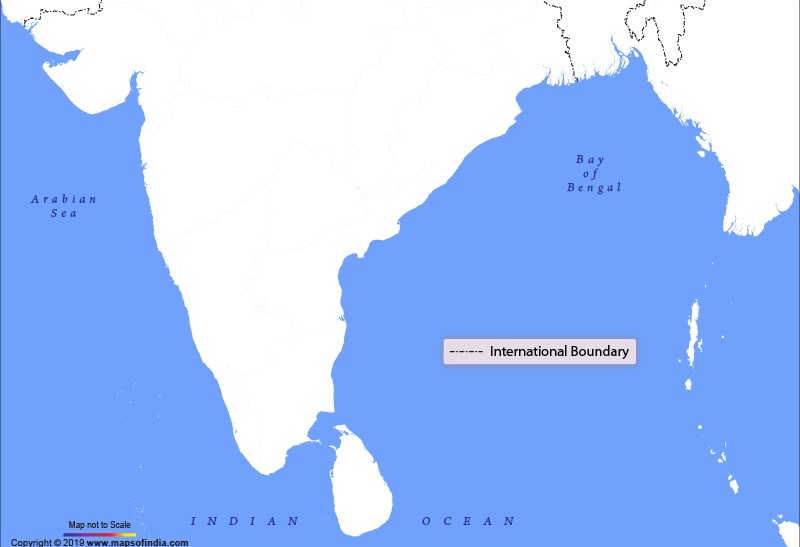
Landing sites: Thoothukudi, Royapuram Fishing Harbour, Cuddalore Fishing Harbour, Nagapattinam Fishing Harbour, Junglighat, Burmanallah, Wandoor, and Dignabad, Veraval, Malvan, Mangaluru and Malpe Fisheries Harbours
Commercial Value
This species is probably utilized for its meat if caught.
Threats
Kuhl's Maskray is probably taken in local artisanal fisheries, and has been collected from a fish market in the Solomon Islands. The extent of fishing pressure and harvest is unknown.
References
Last, P.R., White, W.T. and Serét, B. (2016) Taxonomic status of muskrays of the Neotrygon kuhlii speces complex (Myliobatoidae: Dasyatidae) with the description of three new species from the Indo-West Pacific. Zootaxa 4083(4): 533-561. DOI: http://dx.doi.org/10.11646/zootaxa.4083.4.5.
Myers, R.F. (1999)
Micronesian reef fishes: a comprehensive guide to the coral reef fishes of Micronesia, 3rd revised and expanded edition. Coral Graphics, Barrigada, Guam. 330 p.
White, W.T., P.R. Last, J.D. Stevens, G.K. Yearsley, Fahmi and Dharmadi (2006)
Economically important sharks and rays of Indonesia. [Hiu dan pari yang bernilai ekonomis penting di Indonesia]. Australian Centre for International Agricultural Research, Canberra, Australia.
Related Species
- Jenkins Whipray
- Cowtail Ray
- Coach Whipray
- Scaly Whipray
- Whitespotted Whipray
- Arabian Banded Whipray
- Bengal Whipray
- Bennett's Stingray
- Blackedge Whipray
- Bleeker’s Whipray
- Blotched Fantail Ray
- Bluespotted Lagoon Ray
- Bluespotted Maskray
- Broad Cowtail Ray
- Brown Stingray
- Giant Freshwater Whipray
- Honeycomb Whipray
- Indian Sharpnose Ray
- Leopard Whipray
- Mangrove Whipray
- Narrow Cowtail Ray
- Pakistan Whipray
- Pale-edge Sharpnose Ray
- Pelagic Stingray
- Pink Whipray
- Porcupine Ray
- Roughtail Stingray
- Round Whipray
- Shorttail Whipray
- Smalleye Stingray