

Species Name
Bluespotted Lagoon Ray
Scientific Name
Taeniura lymma (forsskål, 1775)
Family Name
Dasyatidae
IUCN Status
Least Concern
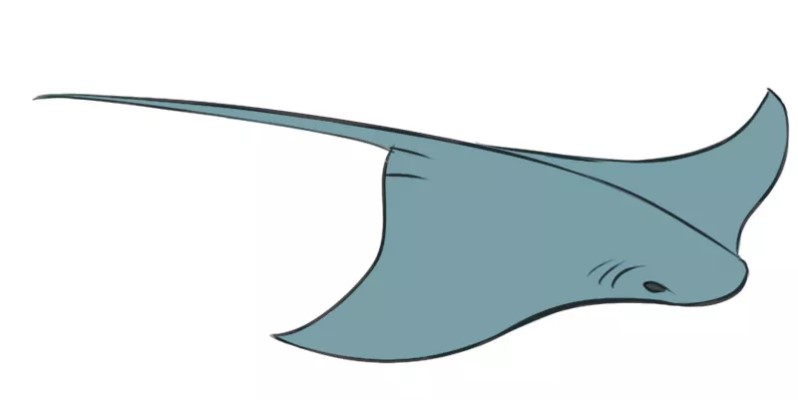
A colorful stingray with large bright blue spots on an oval, elongated disc and with blue side-stripes along the tail; snout rounded and angular, disc with broadly rounded outer corners, and tail stout, tapering and less than twice body length when intact, with a broad lower caudal finfold reaching the tail tip; disc with no large thorns but with small, flat denticles along midback (in adults); usually 1 medium-sized sting on tail further behind base than in most stingrays. Grey-brown to yellow, olive-green or reddish brown dorsally, white ventrally.
Biology
Length: It reaches a maximum size of 35 cm disc width (DW), males mature at 20 cm DW and female size-at-maturity is unknown. Size-at-birth is 13–14 cm DW.
Gestation Period: 5-6 months
Litter Size: upto 7 pups
Life Expectancy: Generation length is inferred from the similar sized Coral Sea Maskray (Neotrygon trigonoides), which has similar distribution and a generation length of 9.7 years.
Diet: Migrates in groups into shallow sandy areas during the rising tide to feed on mollusks, worms, shrimps, and crabs; disperses on falling tide to seek shelter in caves and under ledges.
Habitat and distribution
Habitat: Occurs around coral reefs.
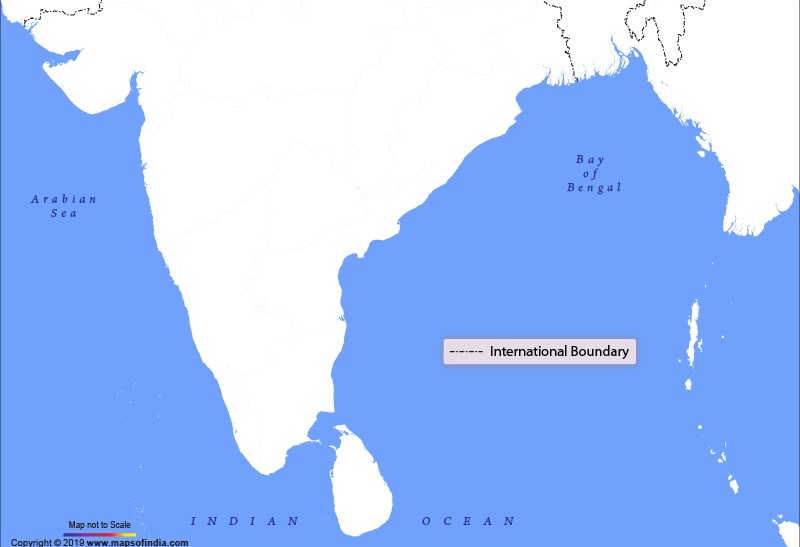
Distribution: The Bluespotted Lagoon Ray is widespread throughout the Indo-West Pacific from South Africa to Papua New Guinea.
Depth: 0-50 m
Landing sites:
Commercial Value
Bluespotted Lagoon Ray meat is used fresh or salted and dried for human consumption throughout most of its range. This is an important species for Bajau Laut in Indonesia and Malaysia, who use this species for local consumption.
Threats
The Bluespotted Lagoon Ray is caught intentionally and as retained bycatch in artisanal and commercial fisheries in low numbers throughout the Indo-Pacific. It is captured by longline, handline, gill net, trammel net, and harpoons.
References
N. Pereira, H. Batista, N. Baylina (2017)
Ultrasound assessment of pregnant ribbontail stingrays, Taeniura lymma (Forsskål, 1775). The Elasmobranch Husbandry Manual II: Recent Advances in the Care of Sharks, Rays and their Relatives (Ch 31)
Last, P.R., White, W.T., Caira, J.N., Dharmadi, Fahmi, Jensen, K., Lim, A.P.K., Manjaji-Matsumoto, B.M., Naylor, G.J.P., Pogonoski, J.J., Stevens, J.D., Yearsley, G.K. (2010)
Sharks and Rays of Borneo. CSIRO Marine and Atmospheric Research, Collingwood.
Last, P., White, W., de Carvalho, M., Séret, B., Stehmann, M. and Naylor, G. (2016)
Rays of the World. CSIRO Publishing, Clayton.
Pierce, S.J. and Bennett, M.B. (2009)
Validated annual band-pair periodicity and growth parameters of blue-spotted maskray Neotrygon kuhlii from south-east Queensland, Australlia. Journal of Fish Biology 75: 2490 - 2508.
Noh, A.F.M., Shuib, A., Yew, T.S., Ali, A., and Mohamed, N. (2018)
Dependency of artisanal fishers on sharks and rays in Sabah, Malaysia. Prosiding Simposium Nasional Hiu Pari Indonesia Ke-2 Tahun 2018: 349–358.
Related Species
- Jenkins Whipray
- Cowtail Ray
- Coach Whipray
- Scaly Whipray
- Whitespotted Whipray
- Arabian Banded Whipray
- Bengal Whipray
- Bennett's Stingray
- Blackedge Whipray
- Bleeker’s Whipray
- Blotched Fantail Ray
- Bluespotted Maskray
- Broad Cowtail Ray
- Brown Stingray
- Giant Freshwater Whipray
- Honeycomb Whipray
- Indian Sharpnose Ray
- Kuhl's Maskray
- Leopard Whipray
- Mangrove Whipray
- Narrow Cowtail Ray
- Pakistan Whipray
- Pale-edge Sharpnose Ray
- Pelagic Stingray
- Pink Whipray
- Porcupine Ray
- Roughtail Stingray
- Round Whipray
- Shorttail Whipray
- Smalleye Stingray