

Species Name
Giant Freshwater Whipray
Scientific Name
Urogymnus polylepis (bleeker, 1852)
Family Name
Dasyatidae
IUCN Status
Endangered
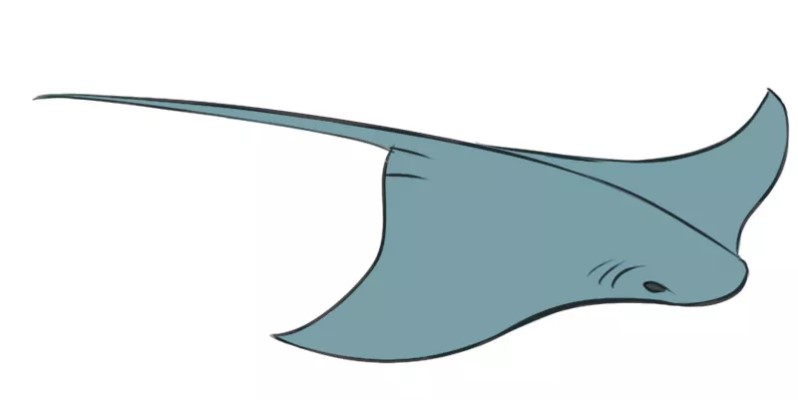
Absence of ventral and dorsal skin folds on the tail, and the broad greyish to blackish marginal band on the ventral surface of the disc. The dorsal surface of the disc is brown. Spiral valve with 21 turns; dorsal surface with uniform brown or grey coloration. Lacking caudal fin; with long whip-like tail.
Biology
Length: It reaches a maximum size of at least 223 cm disc width (DW), males mature at ~110 cm DW and female size-at-maturity is unknown. Size-at-birth of ~30 cm DW.
Gestation Period: Unknown
Litter Size: 1-3 pups
Life Expectancy: A cautious estimate of generation length of 8–22 years is inferred for the Giant Freshwater Whipray.
Diet: Feeds on benthic invertebrates and fishes.
Habitat and distribution
Habitat: The Giant Freshwater Whipray is a euryhaline species found in freshwater, estuarine, and inshore marine habitats.
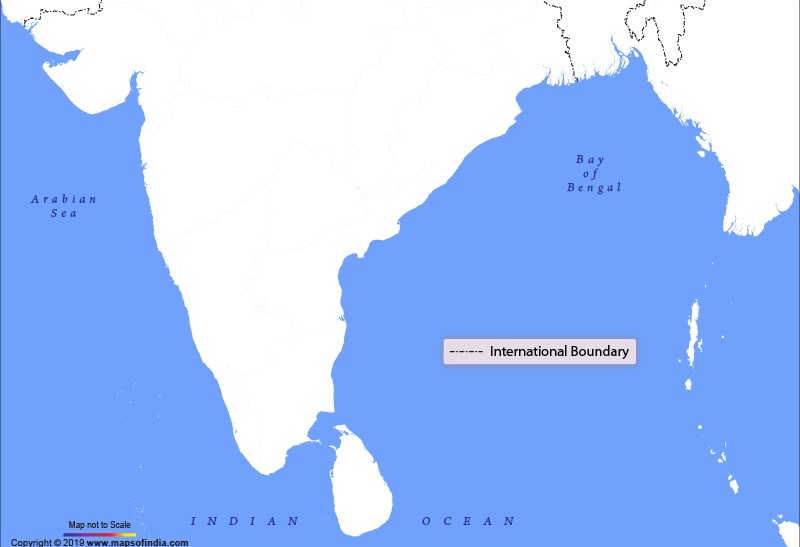
Distribution: The Giant Freshwater Whipray is endemic to Southeast Asia where it has a patchy distribution. In India, it occurs in the Ganges River and has recently been observed in east Indian fish markets, reportedly captured by trawl fishers in the Hooghly River. It also occurs in the Mahandi and Kandala Rivers, Cuttack, Odisha State, India.
Depth: Variable
Landing sites:
Commercial Value
The Giant Freshwater Whipray is reported from markets in India, West Bengal, Bangladesh, and possibly Myanmar, where it is sold for consumption and, at least in Bangladesh, exported. Skins from large rays, including this species, are exported from Bangladesh.
Threats
The species is targeted and caught as bycatch in subsistence, small-scale, recreational and industrial fisheries and is retained for consumption and for display in public aquaria. The species is subject to intensive fisheries and habitat degradation in most of its range, as it occurs in areas where human population has expanded dramatically in recent decades. It occurs in rivers that have been dammed, which may prevent migration and isolate parts of the reproductive populations, potentially reducing the genetic diversity of the species. In the Sundarbans region of India and Bangladesh, this species is caught by trawl fishers operating in river environments.
References
Wongrat, P. (1998)
Whip-tailed freshwater stingrays family Dasyatidae of Thailand. p. 35-40. In Adaptability and conservation of freshwater elasmobranchs. Report of Research Project, Grant-in-Aid for International Scientific Research (Field Research) in the financial year of 1996 and 1997. 119 p.
Rainboth, W.J. (1996)
Fishes of the Cambodian Mekong. FAO species identification field guide for fishery purposes. FAO, Rome, 265 p.
Kottelat, M. (2001)
Fishes of Laos. WHT Publications Ltd., Colombo 5, Sri Lanka. 198 p.
Compagno, L.J.V. and Cook, S.F. (2005)
Giant freshwater stingray or whipray Himantura chaophraya Monkolprasit & Roberts, 1990. In: Fowler, S.L., Cavanagh, R.D., Camhi, M., Burgess, G.H., Cailliet, G.M., Fordham, S.V., Simpfendorfer, C.A. and Musick, J.A (eds), Sharks, Rays and Chimaeras: the Status of Chondrichthyan Fishes, pp. 348–349. IUCN, Gland, Switzerland and Cambridge, UK.
de Jong, E.B.P., Ragas, A.M.J., Noteboom, G. and Mursidi, M. (2015)
Changing water quality in the middle Mahakam lakes: water quality trends in a context of rapid deforestation, mining and palm oil plantation development in Indonesia’s middle Mahakam wetlands. Wetlands 35(4): 733–744.
Related Species
- Jenkins Whipray
- Cowtail Ray
- Coach Whipray
- Scaly Whipray
- Whitespotted Whipray
- Arabian Banded Whipray
- Bengal Whipray
- Bennett's Stingray
- Blackedge Whipray
- Bleeker’s Whipray
- Blotched Fantail Ray
- Bluespotted Lagoon Ray
- Bluespotted Maskray
- Broad Cowtail Ray
- Brown Stingray
- Honeycomb Whipray
- Indian Sharpnose Ray
- Kuhl's Maskray
- Leopard Whipray
- Mangrove Whipray
- Narrow Cowtail Ray
- Pakistan Whipray
- Pale-edge Sharpnose Ray
- Pelagic Stingray
- Pink Whipray
- Porcupine Ray
- Roughtail Stingray
- Round Whipray
- Shorttail Whipray
- Smalleye Stingray